History of Barrow Neurological Institute
-
19501954
Seeds of a Partnership
Charles Barrow, an industrialist, donates a electroencephalography (EEG) machine to St. Joseph’s Hospital and the Sisters of Mercy.
-
1958
Barrow Neurological Institute Founded
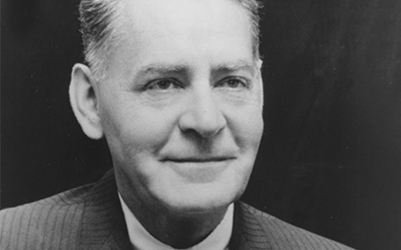
Charles Barrow made a donation of $500,000 to establish Barrow Neurological Institute in memory of his father, William E. Barrow. Charles’s wife, Julia, had been under the care of Dr. John Green for seven years as she battled an oligodendroglioma. She passed away in December 1959 after her fourth surgery.
-
1959
Barrow Neurological Foundation Formed
The Neurological Sciences Foundation—later known as the Barrow Neurological Foundation—was established as a nonprofit, tax-exempt organization dedicated to advancing the field of neurology and supporting the operations of the Institute.
-
19601960
Additional Support From the Barrow Family
The Barrow family made an additional contribution in honor of Julia Henderson Barrow, ensuring that her legacy would continue to shape the future of neurological medicine.
-
1961
Barrow Neurosurgery Residency Program Accredited
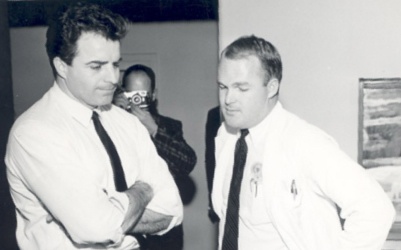
The Barrow Neurosurgery Residency Program received accreditation from the American Board of Neurosurgery. “Barrow was, at that time, the only residency not associated with a university,” Dr. Volker Sonntag said. “So that was a huge accomplishment for Dr. Green.” In this photo, actor Vincent Edwards (left) is pictured with Barrow’s first neurosurgical resident, Dr. David Scheetz.
-
1961
Barrow Gets a Home
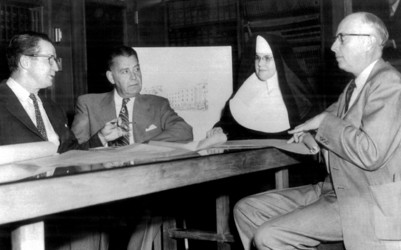
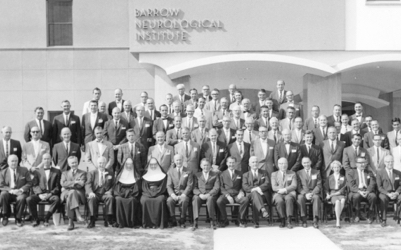
Construction begins on the state-of-the-art Barrow Neurological Institute building. The building now houses the Heart and Lung Tower of St. Joseph’s Hospital and Medical Center. The photo above was taken at the new building’s dedication in 1962.
-
1962
Barrow opens its doors
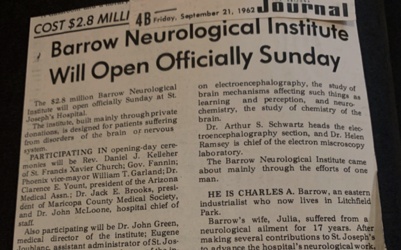
Sept. 23, 1962: Barrow opened its doors to patients with one neurosurgical operating room and 52 beds. It was one of only three neuroscience institutes in the entire country. It had five divisions: neurology, neurosurgery, neuroradiology, neurobiology, and neuropathology.
-
19701970
Growing Upward
By 1970, Barrow had grown into a thriving center for neuroscience. A $2.9 million expansion added three new floors to the existing tower.
-
1972
Level 1 Trauma Center Designation
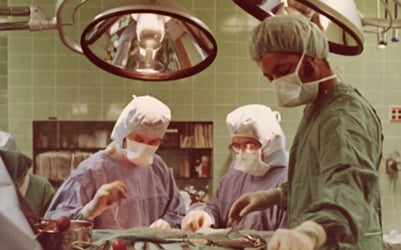
Barrow and St. Joseph’s are designated as Arizona’s first Level 1 Trauma Center, providing the most comprehensive and advanced care for severe injuries.
-
1975
At the Forefront of Diagnostic Imaging
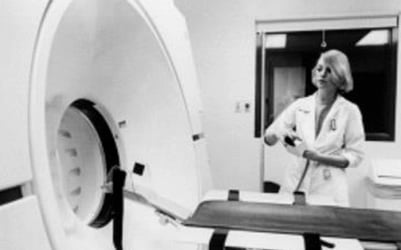
Barrow installs the first CT scanner in Phoenix, providing detailed, 3D images of the brain and spinal cord.
-
1979
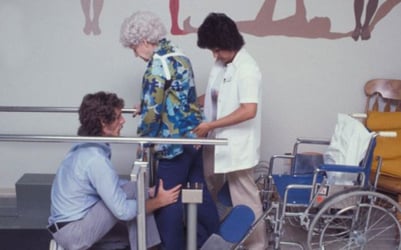
Neuro-Rehabilitation Center Opens
The center has continued to expand ever since, growing to offer the latest in Neuro-Rehabilitation technology and expertise, eventually earning distinction as a top center for rehabilitation by U.S News and World Report.
-
19801983
Dr. Robert F. Spetzler Joins Barrow
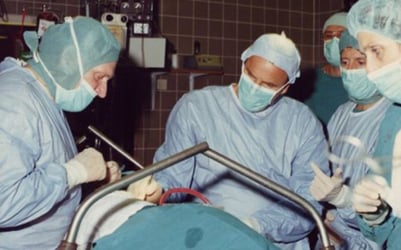
With a $1 million contribution from the J.N. Harber Foundation, the Barrow Women’s Board and the Barrow Neurological Foundation endowed the J.N Harber Chair of Neurological Surgery, enabling recruitment of the Institute’s next director, Robert F. Spetzler, MD. Spetzler’s vision and pioneering surgical techniques would define the Institute’s reputation for decades to come and propel it to international renown.
-
1984
Refining Cardiac Standstill Procedure
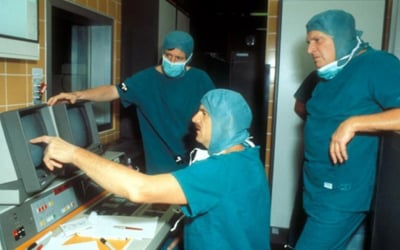
Dr. Robert Spetzler and Dr. Joseph Zabramski refine this radical procedure, which involves inducing hypothermia, stopping the heart, and removing blood from the patient, allows neurosurgeons to treat previously inoperable lesions in the brain.
-
1985
BNI Quarterly
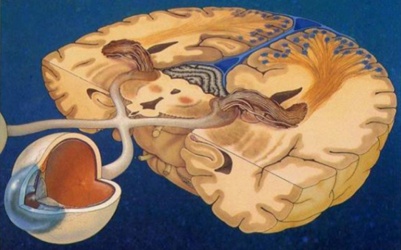
Dr. Robert Spetzler establishes the BNI Quarterly, the official academic journal of Barrow.
-
1986
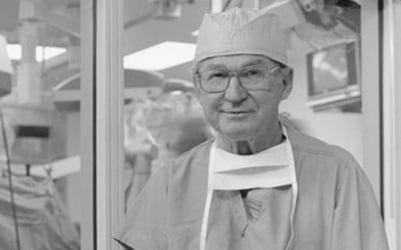
Dr. John Green Retires
Dr. John Green retires as director of Barrow and is succeeded by Dr. Robert Spetzler.
-
1987
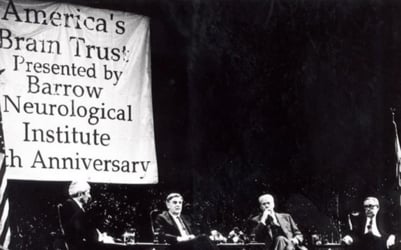
America’s Brain Trust Event
Barrow celebrates its 25th anniversary by sponsoring America’s Brain Trust, a forum for discussion paneled by Gerald Ford, Walter Mondale, and Henry Kissinger.
-
1987
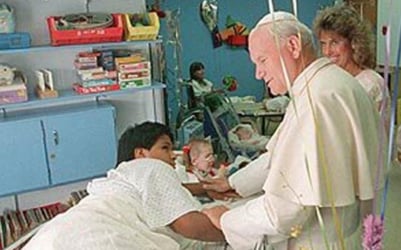
Papal Visit
Pope John Paul II Visits Barrow and St. Joseph’s. Barrow was the only hospital visited by the Pope on his tour of the United States.
-
1988
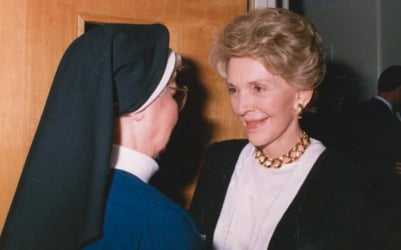
First Lady Nancy Reagan
First Lady Nancy Reagan visits Barrow to dedicate the Dr. Loyal and Edie Davis Neurological Research Laboratory. Her father, Dr. Loyal Davis—a distinguished Chicago neurosurgeon—had retired to Phoenix in 1963, where he served as a consultant for St. Joseph’s, Barrow Neurological Institute, and Barrow Neurological Foundation.
-
1989
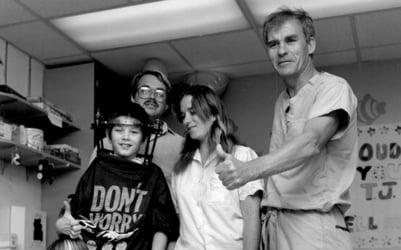
Internal Decapitation Patient Makes Remarkable Recovery
Barrow and Dr. Volker Sonntag make international headlines with an intricate and ultimately successful operation to reattach a boy’s skull that had been separated from his spine when he was hit by a car while riding his bike.
-
19901992
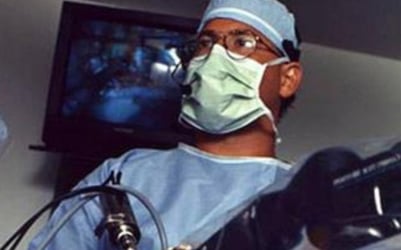
Advancements in Thoracoscopic Spine Surgery
Dr. Curtis Dickman refines and helps to popularize a method of operating on thoracic the spine using endoscopic tools inserted through small incisions in the chest.
-
1994
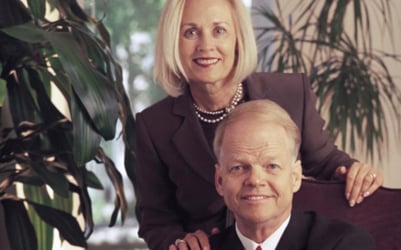
First Celebrity Fight Night Held
The first annual Celebrity Fight Night is held. The star-studded event has raised funds for the Muhammad Ali Parkinson Center at Barrow since its inception.
-
1997
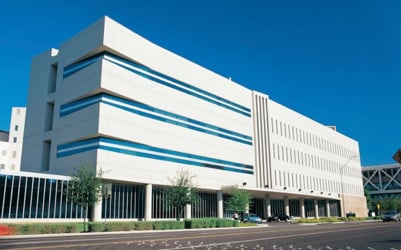
Neuroscience Research Tower Opens
A $40-million Neuroscience Research Center, now known as the Marian H. Rochelle Neuroscience Research Center, opens on the Barrow Campus.
-
1997
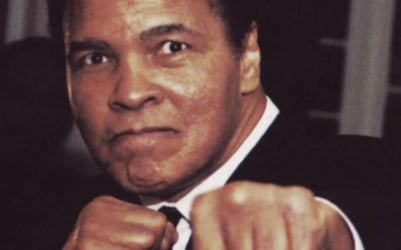
The Champ Teams with Barrow
The Muhammad Ali Parkinson Center at Barrow Neurological Institute is founded.
-
1999
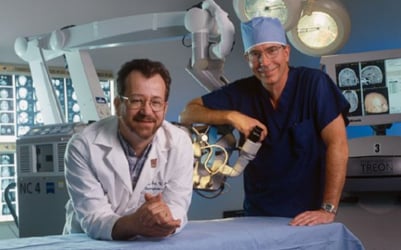
Researchers Untangle Genetic Origins of Cavernous Malformations
Barrow researchers, led by Dr. Joseph Zabramski and Dr. Eric Johnson, identify the gene that causes the inherited form of cerebral cavernous malformations.
-
20002002
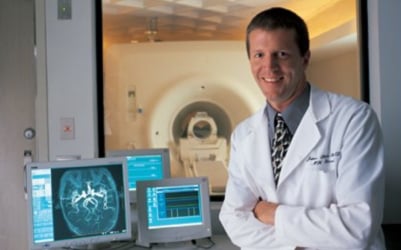
Dr. James Pipe Creates Propeller MRI
Dr. James Pipe creates the new PROPELLER method to assemble MRI scan images, allowing clinicians to obtain clear MRI images regardless of patient motion.
-
2005
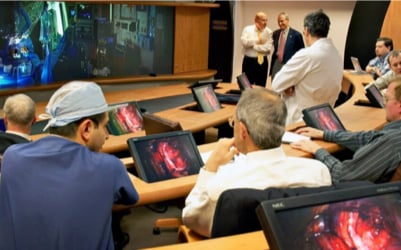
Eller Telepresence Conference Room Opens
Barrow installs the nation’s first Med Presence video-conferencing unit, facilitating real-time global consultations during surgery.
-
2006
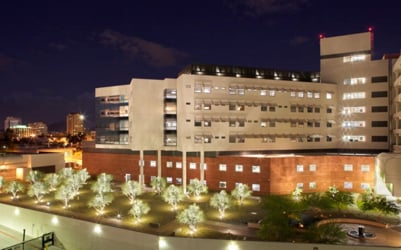
Neuroscience Tower Opens
The 430,000 square foot Barrow Neuroscience Tower opens, creating the largest neuroscience center in the nation. It houses some of the most advanced operating rooms in the world. It was later renamed the Robert F. Spetzler Neuroscience Tower.
-
2007
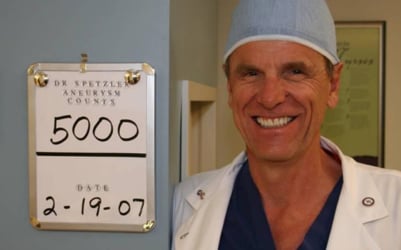
Dr. Spetzler’s 5,000th Aneurysm Clipping
Dr. Robert Spetzler clips his 5,000th aneurysm, believed to be the most of any neurosurgeon in the world at the time.
-
2009
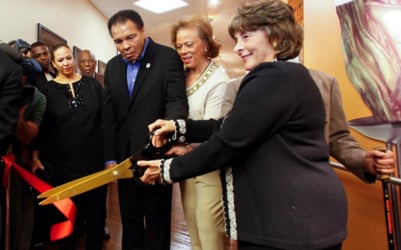
Muhammad Ali Parkinson Center Expands
The expansion makes the center the largest center for Parkinson’s disease treatment and outreach in the Southwestern United States.
-
20102016
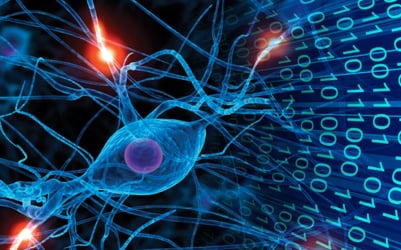
Using Artificial Intelligence to Fight ALS
Barrow Professor of Neurobiology Dr. Robert Bowser uses IBM’s Watson for Drug Discovery to identify five genes that had never before been linked to amyotrophic lateral sclerosis (ALS).
-
2017
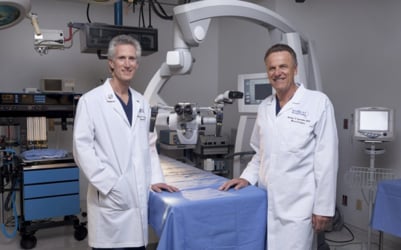
Dr. Michael Lawton Named President and CEO
Dr. Lawton spent his seven-year medical residency training at Barrow under Dr. Spetzler and went on to build a prominent cerebrovascular service in California. He returned to Barrow to succeed Dr. Spetzler after an extensive national search.
-
2018
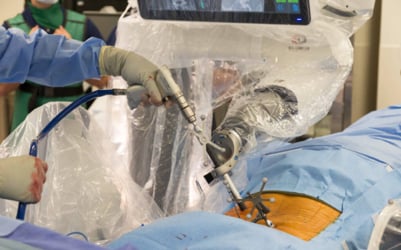
Redefining Spine Surgery with Surgical Robot
Barrow neurosurgeons begin performing spinal fusion surgeries with the Globus Medical ExcelsiusGPS. Developed at Barrow, the device utilizes navigation technology, imaging, and robotics to increase precision and reduce recovery times.
-
2019
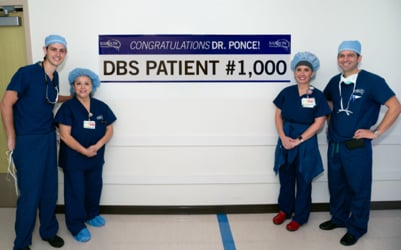
Dr. Francisco Ponce performs his 1000th DBS Procedure
Neurosurgeon Francisco Ponce, MD, performs his 1000th deep brain stimulation (DBS) procedure.
-
20202021
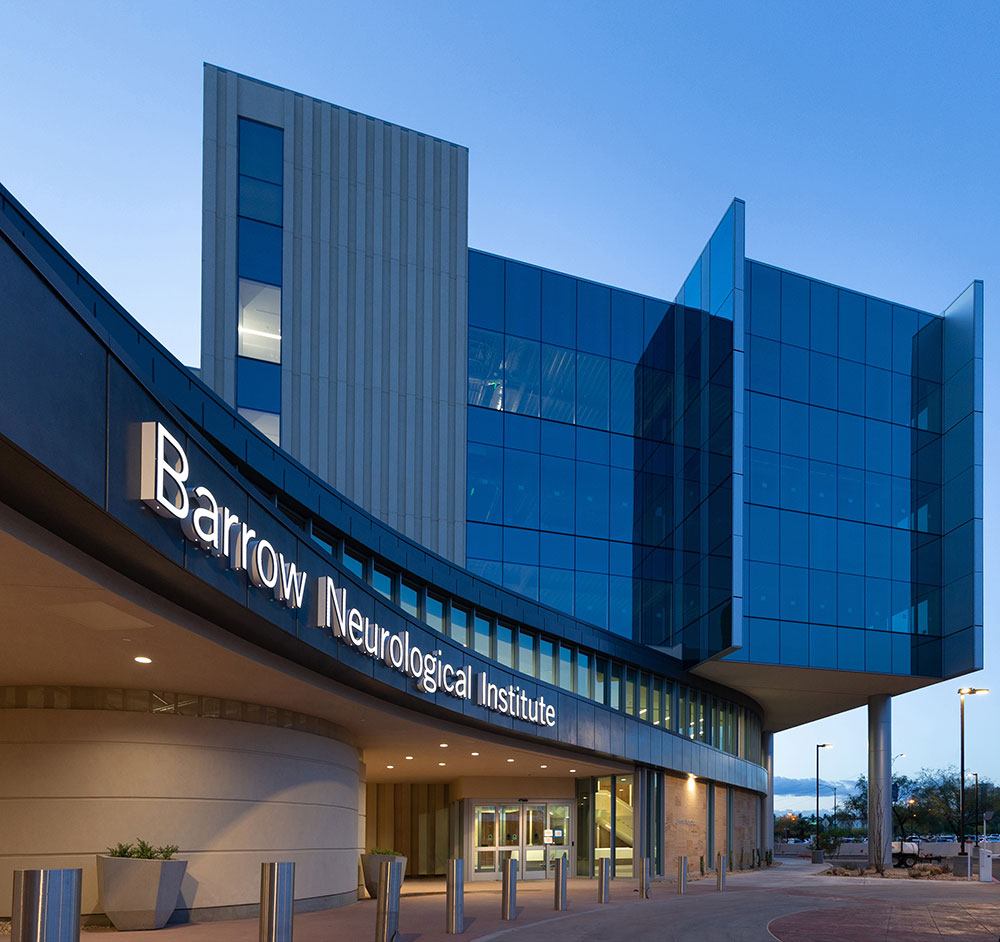
Neuroplex Opens
Fulfilling Dr. Robert Spetzler’s dream of a grand entry for Barrow, the Neuroplex will house our Department of Neurosurgery, an ambulatory surgery center, a pre-admission center for neurosurgery, a neuro-infusion suite, and the neuro-oncology, stroke, and neuro-endocrinrology divisions of our Department of Neurology.
-
2021
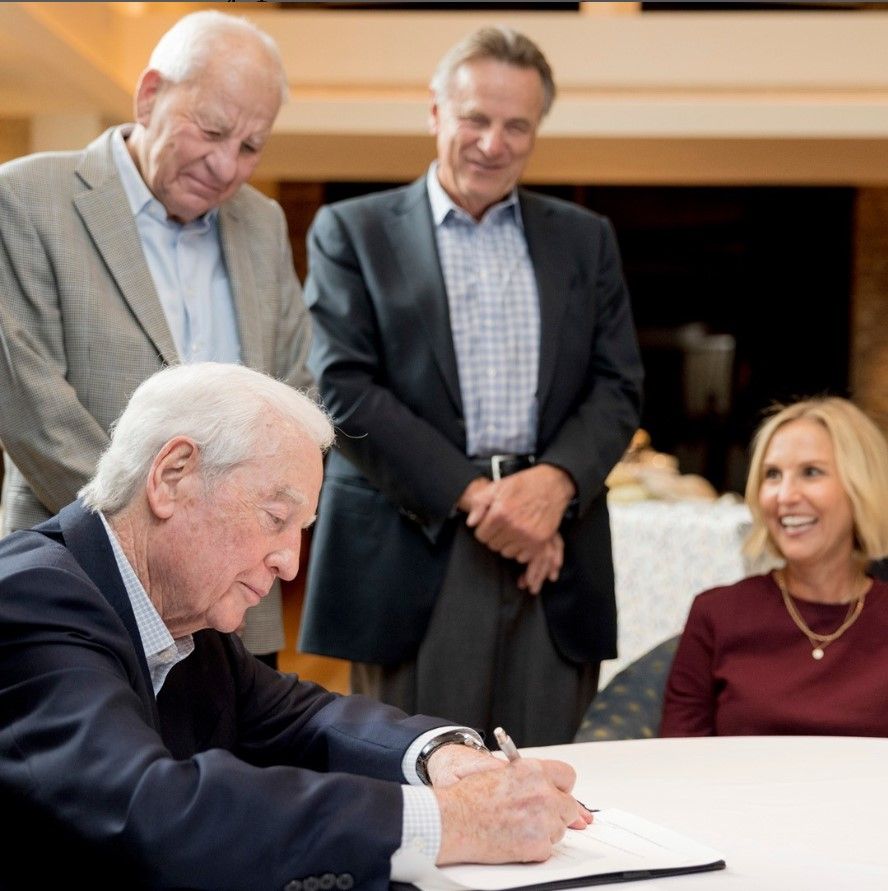
Franke Global Neuroscience Education Center Founded
Bill and Carolyn Franke create a $21 million endowment funding global neuroscience education programs at Barrow.
-
2022
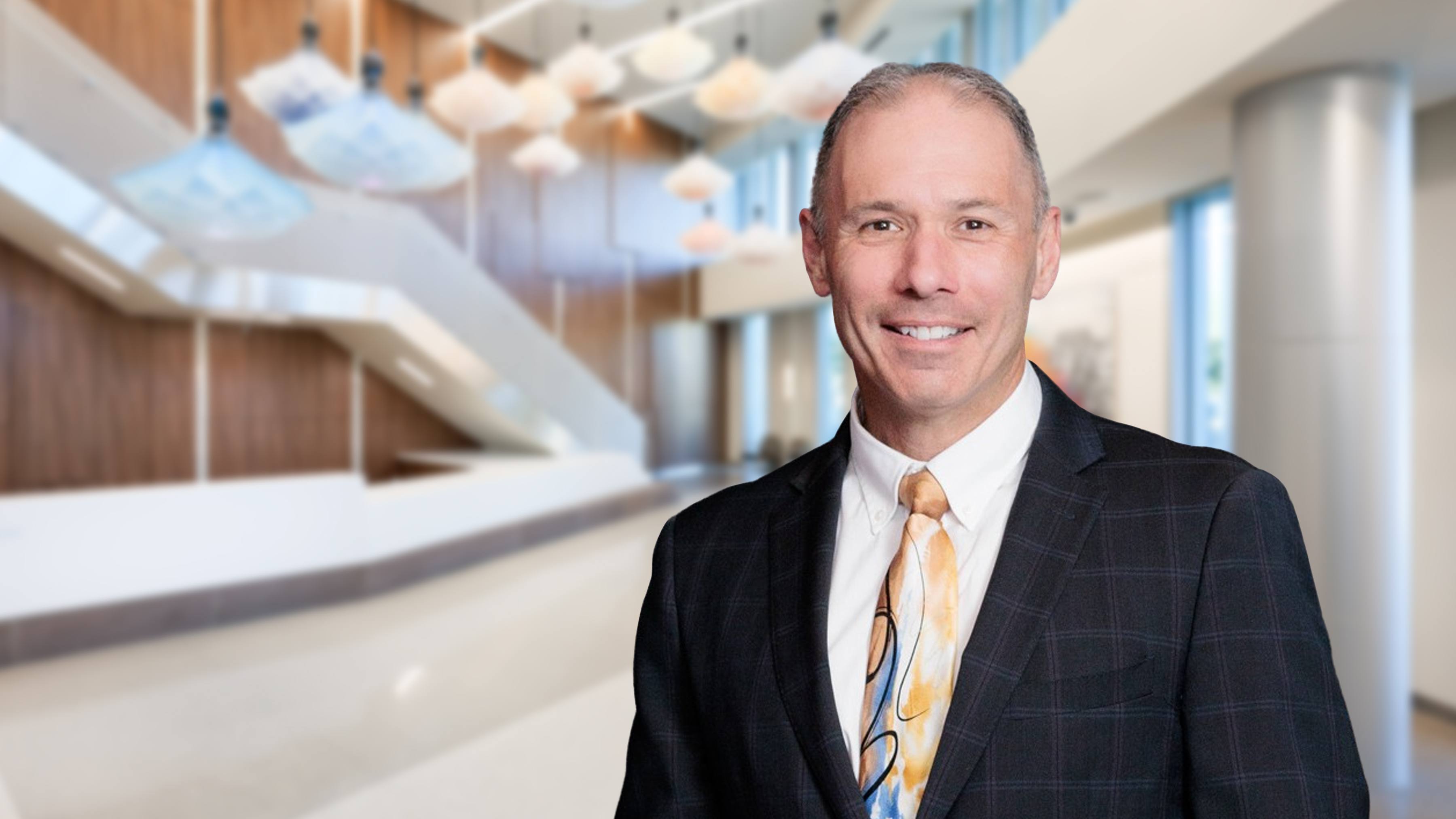
Dr. Brad A. Racette Named Chair of Neurology
Recruited from St. Louis, Missouri by Dr. Lawton, Dr. Racette takes the helm of the Department of Neurology at Barrow. His vision includes establishing a premier program in data science, positioning the department as a leader in global health training and health equity, and expanding the department’s portfolio of federally funded clinical research.
-
2024
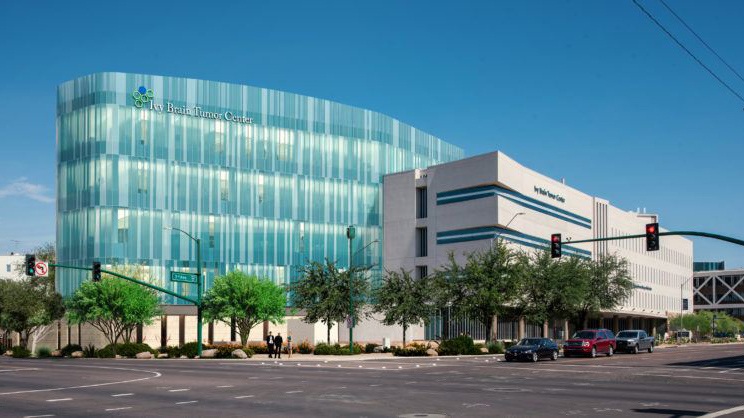
Ivy Brain Tumor Center Global Headquarters Opens
With five stories and 75,000 square feet of research, clinical trial, and patient care space, the new building becomes the largest brain tumor translational research center in the world.
-
2024
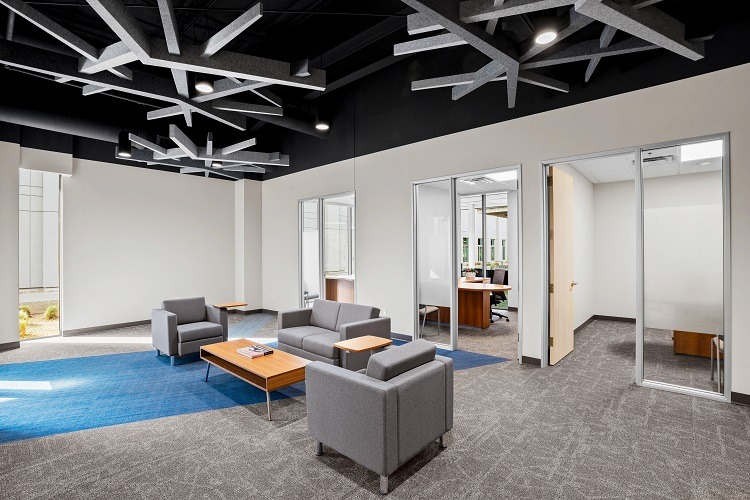
Neuro Analytics Center Opens
The center uses data science to find new insights into the full spectrum of neurological diseases, including neurodegenerative diseases, vascular diseases, headache and pain disorders, epilepsy, neuroinflammatory disorders, and malignant brain tumors.
-
2024
Revolutionary Brain-Computer Interface Research Kicks Off
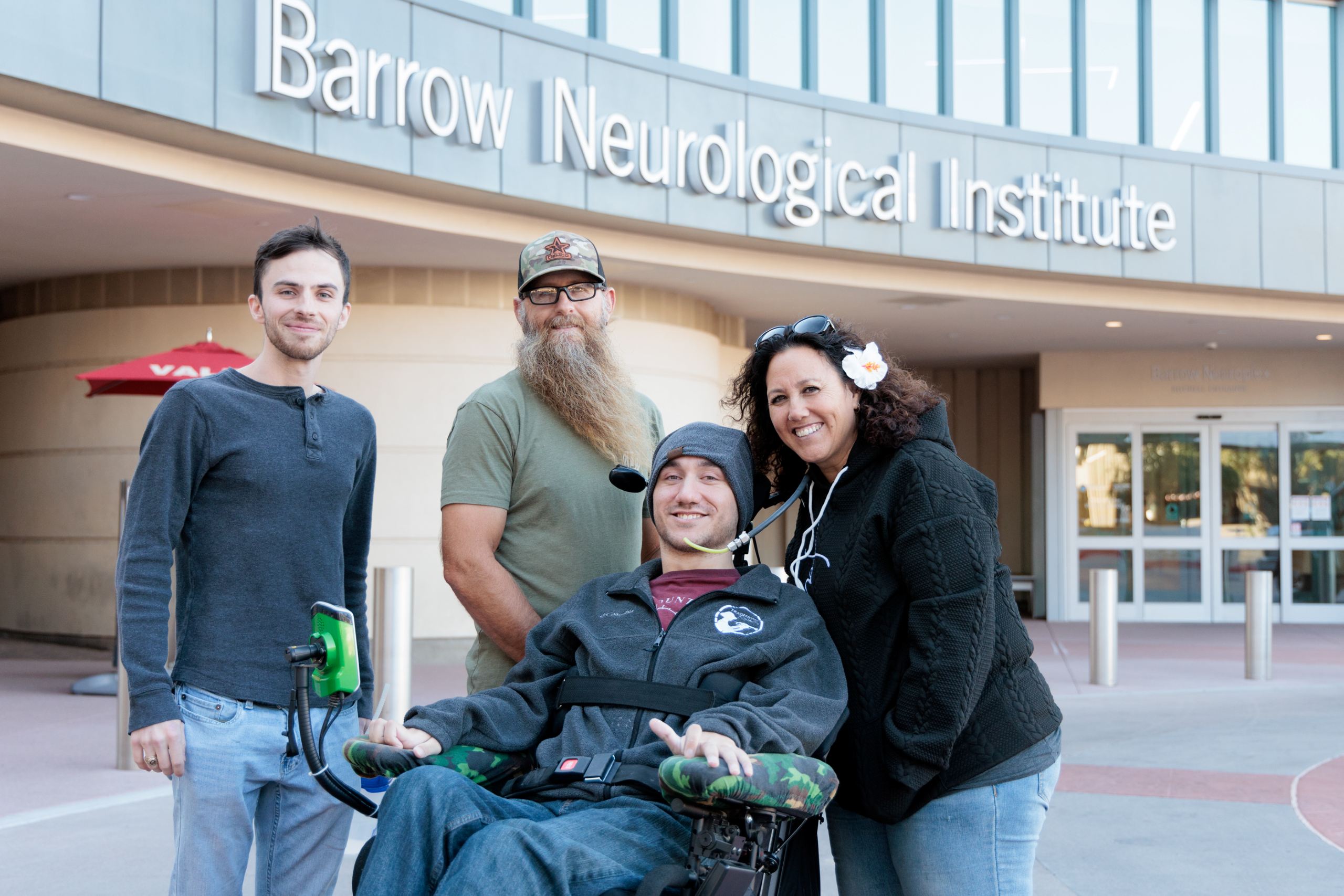
Noland Arbaugh, the first patient to receive a Neuralink brain implant, undergoes his surgery at Barrow. The groundbreaking procedure marks a new frontier in neuroscience, where advanced brain-computer interface technology offers the possibility of restoring movement, communication, and independence for people living with paralysis.
ONWARD…
To advance the knowledge and practice of medicine in neuroscience through basic and clinical research, education of medical professionals, and innovation in clinical techniques and technology.