
Advancing the Quality and Effectiveness of Neurological Care
Barrow Clinical Outcomes Center
Background
Treatment of neurological diseases is primarily aimed at improving quality of life, maximizing function, and extending life expectancy. Delivery of high quality patient care requires a complete understanding of our clinical outcomes so that our treatment paradigms can continue to evolve. Registries are increasingly being utilized across all medical specialties, including the neurosciences, for this purpose.
The advantage of prospective registries over randomized controlled trials lies not only in their timeliness, feasibility, and cost-effectiveness with respect to patient enrollment and data collection, but in their true representativeness of real-world care. Outcomes data are critical to achieving effective and efficient health care and can be used to guide clinical decisions, examine care outcomes, and identify opportunities for improvement.
As a renowned neurological disease treatment institution with high clinical volume and diverse patient population, Barrow Neurological Institute is an ideal setting for the development of an outstanding neurological outcomes program. We aim to develop a neurological disease database and outcomes center in order to identify opportunities for quality improvement and maximize the effectiveness of clinical care here. The Barrow Clinical Outcomes Database has been proposed in an effort to improve the fidelity of our clinical data with the ultimate goal of more sophisticated and reliable analysis of our clinical outcomes. Through this effort, our clinical outcomes can continuously be monitored and treatment strategies adjusted to maximize patient outcomes.

Clinical Outcomes Data & Research
The Barrow Clinical Outcomes Center brings together an expert team, data and research initiatives that drive continuous improvement in neurological care.
About the Barrow Clinical Outcomes Database
The Barrow Clinical Outcomes Database exists on a web-accessible, cloud-based, electronic clinical data capture system, VisionTree Optimal Care (VTOC)®. This interoperable, patient-centered outcomes and engagement platform is 21CFR11 compliant and delivers accuracy of data collection, validation, and multi-center research and registry reporting.
Clinical data such as imaging, neurological status, length of stay, and adverse events are collected via electronic medical record and supplemented with validated patient reported outcomes to assess health-related quality of life metrics and patient satisfaction. Capturing these outcomes at predefined follow-up time points allows for a longitudinal and comprehensive understanding of the patient experience and effectiveness of clinical care. This robust data repository allows for centralization of clinical, functional, health quality, and economic information that can be utilized to inform best medical practices.
Barrow Clinical Outcomes Team
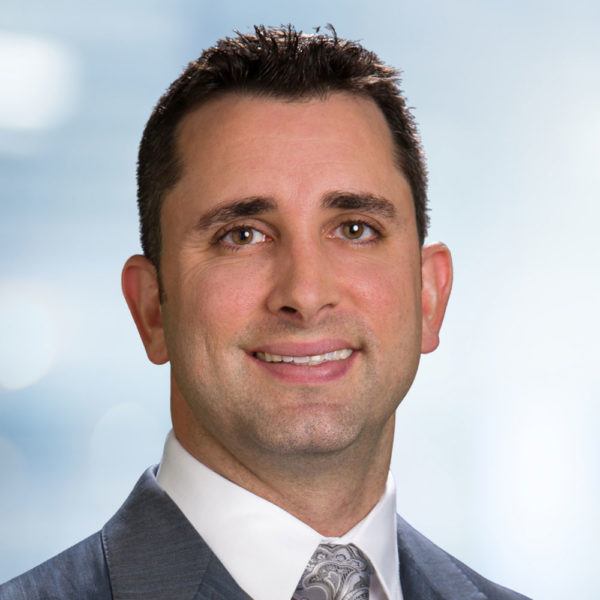
- Ildiko Torok, MD, CCRP
Program Manager
Ildiko.Torok@CommonSpirit.org - Brendan Kirby, MPH
Data Analyst
Brendan.Kirby@CommonSpirit.org
Current Studies
Cerebrovascular Study: BRAVO
The purpose of the BRAVO (Barrow Registry for Aneurysm and Vascular Outcomes) project is to collect detailed clinical data and outcomes on patients who present to our high-volume institute with a variety of cerebrovascular lesions, including aneurysms, arteriovenous malformations, arteriovenous fistulae, cavernous malformations (CM), cerebrovascular bypass, moyamoya disease, stroke, and other ischemic disorders. The study aims to measure and refine treatments to provide optimal evidence-based therapies for patients with vascular lesions.
Investigators
- Michael Lawton, MD
- Andrew Ducruet, MD
- Felipe Albuquerque, MD

Metabolic Therapy for Gliomas
Nutritional ketosis may provide a unique adjunctive therapeutic benefit for patients with gliomas. However, to this point little data has been compiled to demonstrate the degree of benefit as well as dietary tolerance therapeutic ketosis may have for patients with gliomas. As a world-renowned center for neuroscience, Barrow Neurological Institute has access to a diverse patient population allowing a unique opportunity to compile and share data among a large community. This study will initiate further conversation nutritional ketosis may provide as an adjunctive therapy, as well as potentially identifying key genomic information in choosing this therapy as a treatment.
Investigators
- Kris A. Smith, MD
- Alex Bakowski, FNP
SCOPe: Spine Clinical Outcomes Prospective
Spine Clinical Outcomes Prospective has been created for comprehensive, high-quality data collection in patients with a wide variety of spine conditions. This includes clinical data, health-related patient assessments, patient satisfaction, and complication rates. These measures are to be analyzed longitudinally at pre- and postoperative time points in an effort to improve treatment, maximize patient quality of life and outcomes, and evaluate comparative effectiveness of various surgical interventions.
Investigators
Normal Pressure Hydrocephalus (NPH) Outcomes
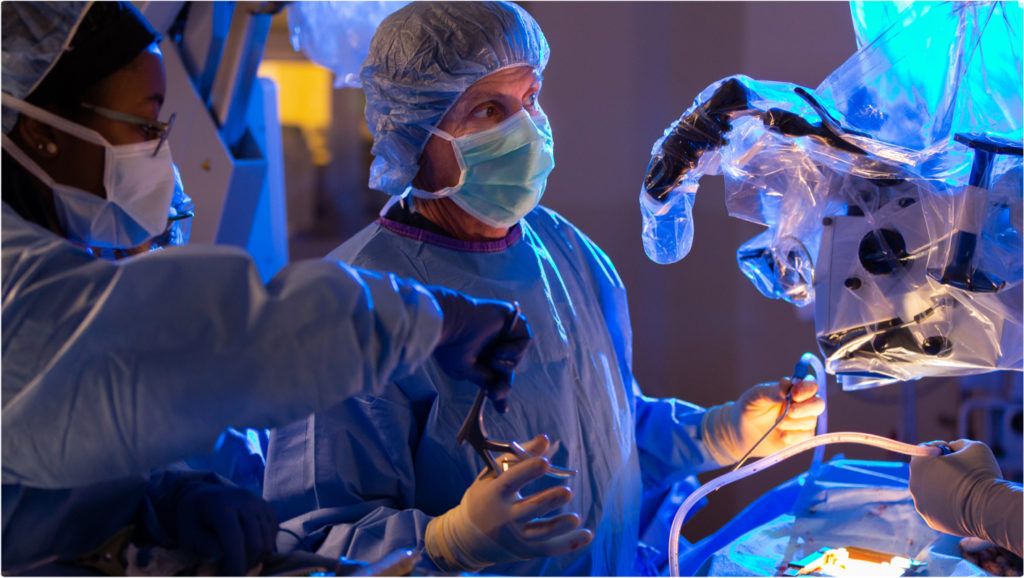
The NPH Outcomes Project will collect detailed clinical and outcomes data on patients evaluated and treated for normal pressure hydrocephalus (NPH) at our high-volume institute. As a leading center for NPH surgery in the country, Barrow Neurological Institute is uniquely positioned to investigate long-term outcomes and the influence of coexisting conditions, including Alzheimer’s disease, on post-surgical recovery. This study aims to clarify the trajectory of patients following treatment, refine therapeutic approaches, and provide optimal evidence-based care for individuals with NPH.
Investigators
Vestibular Schwannoma Outcomes Research (VSOR)
Vestibular schwannoma (also called acoustic neuroma) is a benign and slow-growing tumor of cranial nerve VIII. There are multiple treatment options available, including surgical resection, radiosurgery and observation. Due to the benign nature of the tumor it is important to consider a modality with significant favorable benefit to risk ratio, which makes the decision making for the management of this disease particularly difficult. The absence of a treatment algorithm makes the choice even more challenging.
With these challenges in mind, the VSOR registry aims to:
- Compare the functional outcomes and radiological and audiological progression among patients managed with different surgical approaches: stereotactic radiosurgery versus surgery versus observation alone
- Identify the prognostic factors affecting the functional and surgical outcomes
- Ultimately, propose a decision-making algorithm that can be used on routine basis for the management of this pathology
Investigators
ZAP/Radiosurgery
The Zap-X Gyroscopic Radiosurgery system is a newly introduced stereotactic radiosurgical platform providing a unique patient experience, beneficial patient and operator safety features, and economically improved installation and maintenance costs compared to existing radiosurgical systems. Barrow Neurological Institute is the first center to use this device for clinical treatments, providing an opportunity to share our experience using this technology with the radiosurgical academic community.
Investigators
RAPID Consortium
The RAPID (Registry for Adenomas of the Pituitary and related Disorders) Consortium is a multicenter surgical outcomes collaboration database founded to improve treatments for patients with pituitary tumors. We are studying Cushing’s disease, acromegaly, prolactinomas, and non-functioning pituitary adenomas. The RAPID consortium tracks elements important to studying pituitary surgery patient outcomes, which include patient medical history, surgery, pathology, follow-up, and remission status.