
Cushing’s Disease Awareness Day: Stories from the Community
We observe Cushing’s Awareness Day every year on April 8, which is the birthday of Dr. Harvey Cushing—a pioneering neurosurgeon credited with the discovery of the condition in 1912.
Cushing’s syndrome generally refers to a hormonal disorder characterized by high levels of cortisol in the bloodstream. Cushing’s disease is more specific, describing a type of Cushing’s syndrome in which a noncancerous tumor in the pituitary gland produces excessive amounts of adrenocorticotropic hormone (ACTH). This hormone tells the adrenal glands to release the stress hormone cortisol. Over time, the abnormally high cortisol can cause various symptoms, including weight gain, high blood pressure, short-term memory difficulties, mood changes, and fatigue.
We asked members of our virtual Cushing’s Disease Support Group to share their personal experiences with this rare disease, including their thoughts on how Cushing’s has changed their perspective on life and health and why it’s important to celebrate small wins during the healing process.
Chantal Roberts
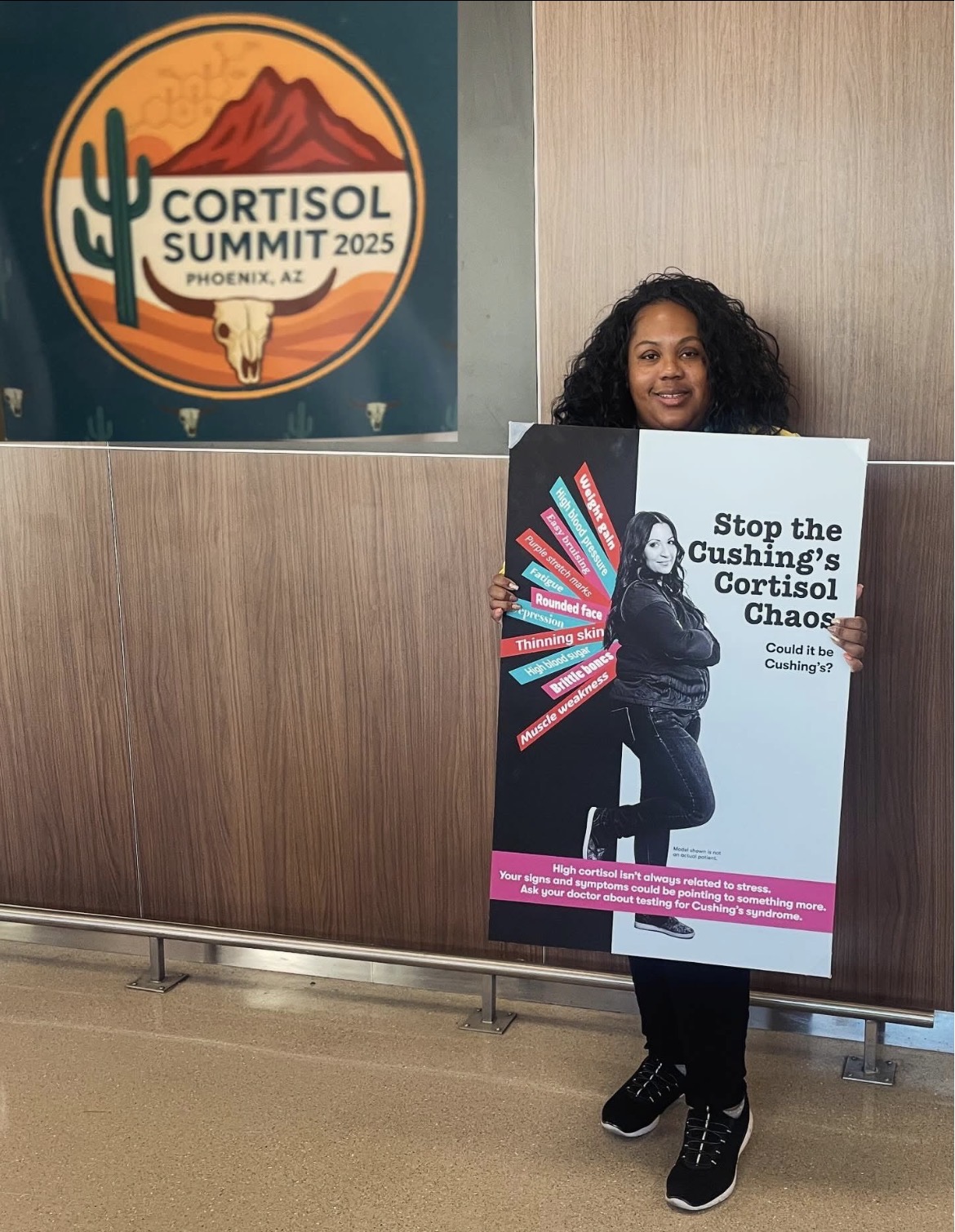
“I’m 2.5 years in remission from Cushing’s disease, and I’m so thankful to God for that. This journey changed me physically and mentally, but it’s also shown me how strong I am. I remind myself often, I survived brain surgery, so I try not to let the little things get to me the way they used to. I’m still learning my body, still finding my balance, and giving myself grace along the way. Healing isn’t what I expected, but I’m moving forward, growing, and learning to embrace this version of myself.”
– Chantal Roberts
Brian Willhide
“…During my healing process the last two years, I have celebrated small wins. This included things like the day I no longer felt constant migraine headaches post-surgery as well as the noticeable physical changes which would occur every day, week, and month in the initial months during the beginning of my recovery. Life can and will improve through healthy lifestyle, working with doctors and medical professionals, and keeping a positive mindset. Cushing’s does not have to rule your life!”
– Brian Willhide
Jessica Shiles Hess
“This disease has not only humbled me, but it has taught me a lot about understanding how my body works and who I am. I’m learning how to be ‘in tune with my body, and when something is wrong, I ask the questions.
When I’m in need of support, I ask for help. When I ask myself, who am I? I remind myself, Cushing’s is a part of who I am but not ME as a person, and love the person l was, I am, and the person I am becoming.”
– Jessica Shiles Hess
Lauri Woolsey
“No matter how awful you feel, how awful the Cushing’s symptoms are, there are blessings to be seen… I got my emotional support from family and close friends, but I wish I had gotten professional help early on. As with most people, I’m sure, my journey was emotional as much as it has been physical. … It took three years from my diagnosis until we found my tumor. Don’t lose hope, and stay optimistic. Negativity never healed anyone or anything.”
– Lauri Woolsey
Mia Matthews
“I’m happy to say I’m three months hydrocortisone free! The journey to now feels like a long, twisty, bumpy, strangely beautiful road. … I’m happy to report that there’s a silver lining around the storm cloud that is Cushing’s; this disease has the potential to be equally as liberating as it has to be devastating. …Cushing’s is a long-game experience. Recovery continues gradually and requires oodles of patience, tenderness, and lots of celebrations along the way. Every ‘small’ win is a big reason to celebrate! Hold tightly to joy, take care, and be gentle with yourself. Things will turn up!”
– Mia Matthews
Pamela Burris
“I felt like being diagnosed with Cushing’s was a prescription for me to take care of myself and eliminate any unnecessary stress. Self-care is so important!
Give yourself grace, and enjoy the simple pleasures in life! There was an ebb and flow in my experience. My symptoms would be out of control at times, but then I would have longer periods where I wasn’t experiencing symptoms and was doing whatever I wanted to do, and I really appreciated those times.”
– Pamela Burris