

An 8-Year, Cross-Country Journey to Spinal Cord Cavernous Malformation Surgery
Sabrina Mancini spent nearly a decade seeking an accurate diagnosis for her worsening neurological symptoms. Finally, she learned she had a rare blood vessel abnormality in her spinal cord that would be risky to treat—but even riskier to leave alone. After requesting an online second opinion from Barrow vascular neurosurgeon Michael T. Lawton, MD, Sabrina traveled from Connecticut to Arizona to undergo surgery for her spinal cord cavernous malformation.
Sabrina Mancini was standing in the shower the first time she lost feeling in her legs. “It happened suddenly,” she recalled. “I felt a ‘pop’ in my back.”
That moment marked the beginning of Sabrina’s exhaustive, eight-year search for a diagnosis and treatment, ultimately leading her to an operating room 2,000 miles from home and across the country at Barrow Neurological Institute. The Middlebury, Connecticut resident traveled to Phoenix, Arizona in January 2025, at age 48, to undergo vascular neurosurgery with Barrow President and CEO Michael T. Lawton, MD, after contacting him through the Barrow Second Opinion online portal.
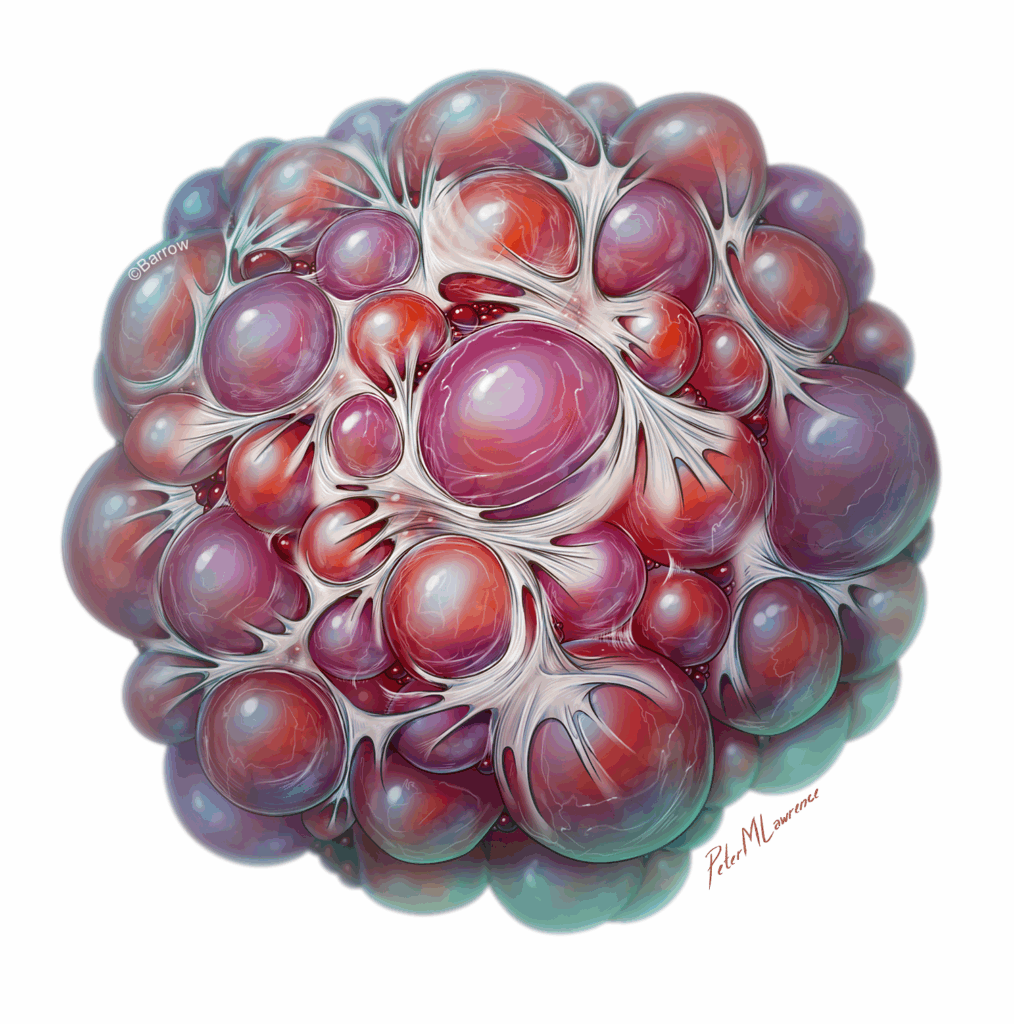
Dr. Lawton successfully removed the mulberry-shaped vascular abnormality that was responsible for the progressive loss of sensation and weakness in Sabrina’s legs. Also known as a cavernous malformation, the lesion had developed in a rare and perilous location—the thoracic region of her spinal cord.
Searching High and Low
The day Sabrina felt that “pop” in her back, her husband drove her to a nearby emergency room. “I didn’t lose complete sensation, but my legs felt incredibly heavy,” she explained. “It was difficult to move, and even standing upright was a challenge.”
The ER team suspected Sabrina had a herniated disc. However, they were limited in what they could prescribe, as Sabrina was pregnant. Soon after, when Sabrina gave birth to her son via C-section, the labor and delivery team placed compression devices on her legs to support blood flow. “I remember saying, something is wrong; my right leg just doesn’t feel right,” she recalled.
After about a year of abnormal sensations and weakness in her legs, Sabrina visited her primary care doctor. The physician referred Sabrina to one specialist after another, a process that spanned several years. One of the referrals led her to a spine specialist, who ordered magnetic resonance imaging (MRI) of Sabrina’s back—but only the lumbar region. He confirmed a disc herniation in her lower spine but deemed it mild in severity.
Over the next eight years, Sabrina tried various conservative therapies to treat her symptoms. These included oral medications, steroid injections, and about a year of physical therapy. She was even sent to a podiatrist at one point, and she was misdiagnosed with other conditions, which led to being prescribed one medication after the next. Still, her symptoms continued to worsen. “Over this time, I was losing more and more sensation, especially in my foot, to the point where I couldn’t feel my toes,” she said. “I remember walking and losing a shoe and not even realizing it was gone.”
After losing her balance and nearly twisting her ankle at her son’s first Communion while wearing sandals with a small wedge, Sabrina swore off shoes with any sort of heel. And with the symptoms progressing in her right foot, she grew hesitant to drive her car.
Exasperated, Sabrina returned to the spine specialist and described the impact of the symptoms on her quality of life. He tested her nerve function, documented nerve loss, and explained that she had “foot drop.” This term describes difficulty lifting the front part of the foot.
“I became emotional thinking, what is foot drop? Why do I have that? How did I get that? There has to be a cause,” Sabrina recalled. However, she received no explanation for the underlying cause, only a prescription for a brace.
Crowdsourcing a Solution
Desperate for support, Sabrina received encouragement to see a neurologist. After a seven-month wait for an appointment, she finally heard some comforting words. “For the first time, someone was determined to find the cause,” she said. The neurologist ordered a slew of tests, including a more extensive MRI scan—this time of her brain and thoracic spine.
After Sabrina underwent the two-hour scan that October, the neurologist called her into his office to review the results. “I’ve never seen this before,” he told her. He referred Sabrina to a vascular neurosurgeon, who diagnosed her in early November with a cavernous malformation in her spinal cord. These tightly packed clusters of blood vessels can arise anywhere in the body, but those that form in the brain and spinal cord are typically the most serious. Cavernous malformations earn their name from the “caverns” that develop from the stretched-out walls of the blood vessels. As blood pools in these caverns, the vessel walls progressively weaken and may rupture. This bleeding can damage surrounding tissues and cause symptoms, as was the case for Sabrina.
“Dr. Lawton, his fellows, and all his people that surround him are phenomenal. The hospital itself was wonderful—the physical therapists there, the ICU nurses—just one more impressive than the next. It was such an overall just wonderful experience.”
Sabrina Mancini, Barrow Patient
The surgeon presented two disheartening options. He could remove the malformation from her mid-back surgically, a procedure that would carry a 50% risk of paralysis, or they could do nothing—a choice that would eventually result in certain paralysis.
The neurosurgeon was willing to operate himself, but because spinal cord cavernous malformations are so rare, he had only performed two such surgeries in his career. Sabrina wanted another opinion.
“Eight years, and I finally had an answer,” she said. “But I still didn’t know what to do. I felt completely on my own.”
A Solution Solidifies
Sabrina found an experienced vascular neurosurgeon in Connecticut, but even with his impressive statistics in the treatment of vascular conditions, he’d only operated on a handful of cavernous malformations in the spinal cord. He encouraged her to look up the centers of excellence certified by the Alliance to Cure Cavernous Malformation. “That’s when I started to become my own advocate,” she said.
She reached out to several institutions for additional opinions, including Barrow Neurological Institute, which is one of the centers of excellence certified by the Alliance to Cure nonprofit. “I ended up contacting Barrow for Dr. Lawton and went through the Second Opinion portal, and I’m so happy I did,” she said.
Sabrina felt confident in Dr. Lawton’s reputation and experience. As one of the world’s leading vascular neurosurgeons, he has operated on just over 100 spinal cord cavernous malformations—more than any other neurosurgeon with whom she consulted.
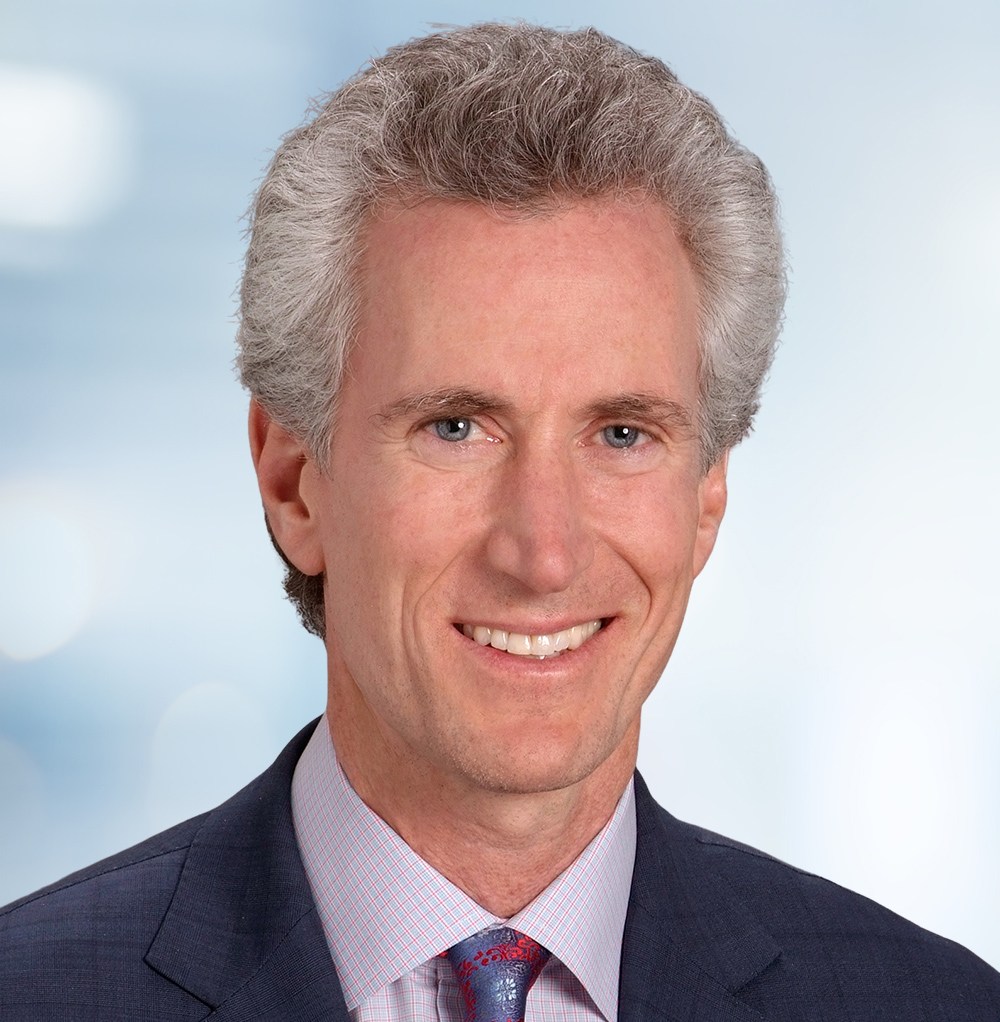
“Spinal cord cavernous malformations are exceedingly rare,” Dr. Lawton said. “That means rank-and-file neurosurgeons have limited experience removing this pathology from a structure so delicate and consequential neurologically. My position at a referral center of excellence has given me the opportunity to decipher this pathology and optimize outcomes for patients like Sabrina seeking expert care.”
A longtime educator herself, Sabrina also felt impressed with Dr. Lawton’s commitment to sharing his knowledge with other neurosurgeons and trainees. She mentioned his inspiring philosophy that “teaching is the great multiplier” and reflected on how it is the most powerful way to multiply positive outcomes.
What really cemented her decision, though, was Dr. Lawton’s personable and calming demeanor. She said the neurosurgeon’s heart is as remarkable as his brain and hands. “Dr. Lawton called me directly,” she recalled. “It meant so much, because I remember asking a million questions, and he was so patient—and I know he was busy. He just put me at ease from that one phone call.”
Sabrina also felt empowered by a testimonial she found on the Barrow website for another patient with a spinal cord cavernous malformation. That patient, just 28 years old at the time of surgery, traveled from Argentina to Barrow. Dr. Lawton successfully removed the lesion, which, like Sabrina’s, had bled and caused abnormal sensations in the leg. “I remember thinking, she’s so young and she did it,” Sabrina said. “She came from another country, so I just felt better about doing something similar.”
Up Against the Clock
Once Sabrina had made her decision, she had no time to waste. The cavernous malformation at the T8 level of her spinal cord was considered large at 2.5 centimeters, around the size of a grape. She hopped on a plane with her mom and sister and flew more than 2,000 miles across the United States. To maintain normalcy for their two young children, she and her husband agreed that he would wait until the day of surgery to join her in Phoenix.
As the operation approached, Sabrina wrestled with fear and uncertainty. Would she lose her ability to walk? Would she and her family have to leave their split-level home? Would she even be able to pack up her own belongings if they had to move? It was beginning to feel surreal.
“But Dr. Lawton really put me at ease,” she said. “I recall being consumed by those anxieties, and he was really so patient, even the day before surgery.”
Dr. Lawton even saw the silver lining in the size of her lesion, explaining that the malformation extending closer to the surface of her back would pose easier access. Although confident he could successfully remove the cavernous malformation, he prepared Sabrina for the possible complications of such a complex procedure.
After about six or seven hours of surgery, Sabrina awoke in the recovery room and couldn’t feel her legs. “But I remember opening my eyes just enough to see my toes wiggle,” she said. “All I wanted to do was tell someone. I was so happy.”
Surrounded by ‘Phenomenal’ Care
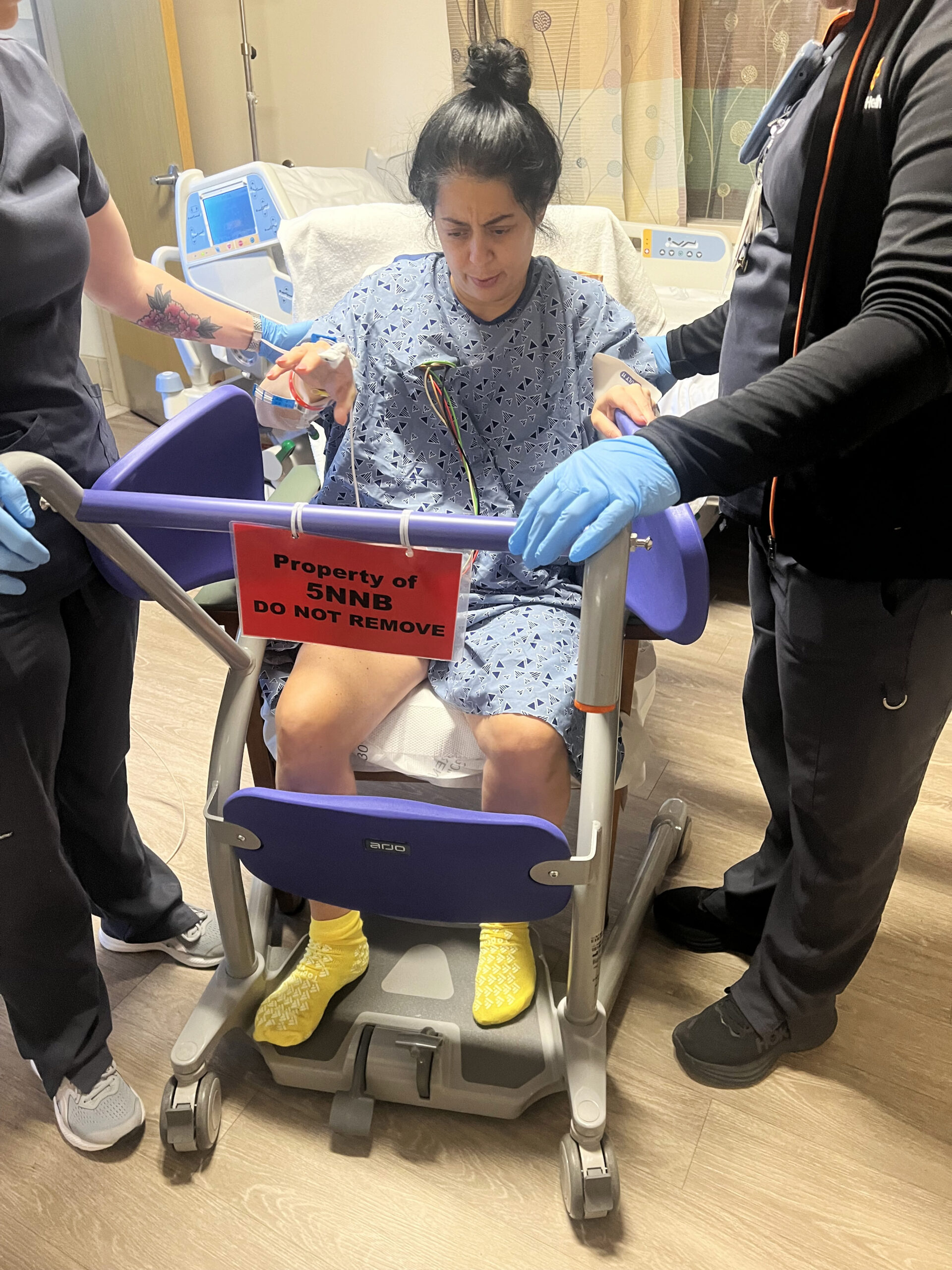
Sabrina spent around 10 days at Barrow, first in the Neuro-Intensive Care Unit and then on the general nursing floor. As Sabrina regained her strength, a resourceful nurse borrowed a special device from another floor to better assist with sit-to-stand transfers. From there, physical therapists helped Sabrina graduate from a wheelchair to a walker, preparing her for discharge to an inpatient rehabilitation hospital closer to her home.
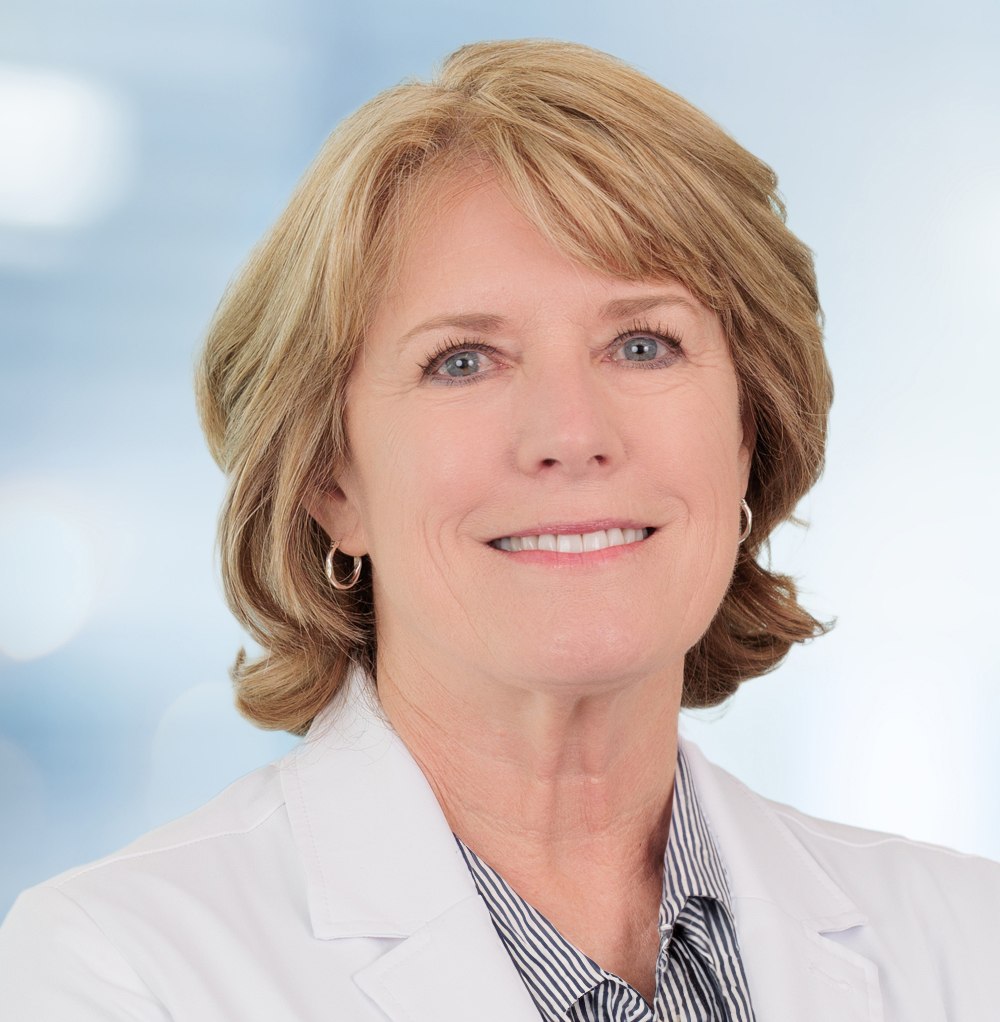
“Every single person I encountered in my journey there was just phenomenal,” Sabrina said tearfully as she recounted her time at Barrow. She appreciated the sense of security provided to her mother by Virginia Prendergast, PhD, the director of advanced practice nursing at the Institute and a mother herself.
Following Sabrina’s successful surgery, Virginia shared in the family’s joy. “She hugged my mother and comforted her ‘from one mother to another,’” Sabrina recalled. “It was just so touching.”
Virginia admired Sabrina, too. “She had courage to keep searching for answers, resolve to face a complex surgery, and the heart to give everything she had in recovery and rehabilitation,” Virginia said. “She was a real trooper, and her story is a great example for others.”
Rehab and Reflections
After about three weeks of inpatient neuro-rehabilitation, Sabrina moved to an outpatient program to continue physical therapy. She started with three days per week, progressing to two and then one before recently being discharged.

Sabrina has traded the walker for a cane, and even that she uses infrequently—keeping a collapsible version handy in case she has to stand for an extended period of time. In addition to walking independently most of the time, Sabrina is close to completing a driver-modification program. Because her left leg is stronger than her right, she’s learned to drive with a left-foot accelerator—a change that’s come surprisingly naturally.
Over the summer, Sabrina returned to one of her favorite vacation spots with her family: Aruba. Just before going under anesthesia at Barrow, she imagined taking a trip to the Caribbean island. “Dream of the place you would most like to visit after surgery,” her neuroanesthesiologist had told her.
Now, as part of a cavernous malformation support group, Sabrina proudly recommends Barrow to others seeking neurological care. “Dr. Lawton, his fellows, and all the people that surround him are phenomenal,” she said. “The hospital itself was wonderful—the physical therapists there, the ICU nurses—just one more impressive than the next. It was such an overall just wonderful experience.”
Sabrina also takes pride in trusting and advocating for herself. After feeling unheard for so many years in her search for an answer, she encourages others to listen to their body—because they know it best.
“Listen to your intuition. Keep persisting until you find the right fit, the right doctor,” Sabrina said. She added, tearfully, “It was the best decision I ever made.”