
Myasthenia Gravis
At a Glance
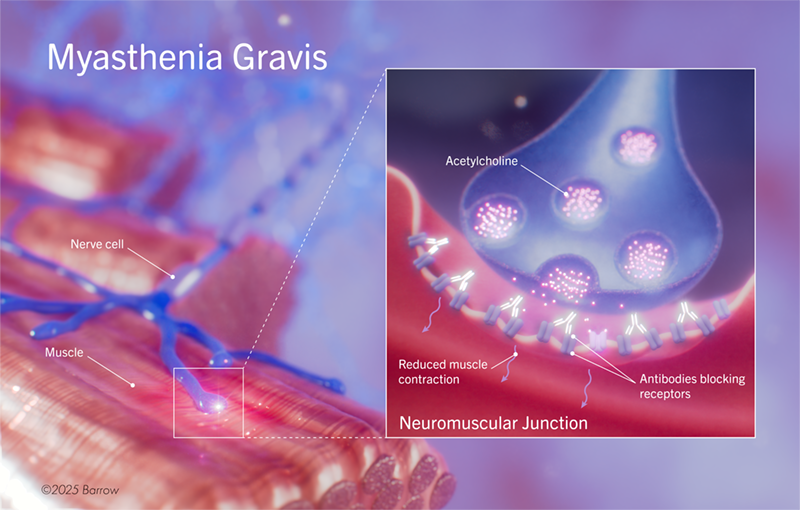
- Myasthenia gravis (MG) is an autoimmune condition where the immune system mistakenly attacks the connection between your nerves and muscles (the neuromuscular junction), impairing nerve signals for muscle contraction. This causes weakness of voluntary muscles like those in the face, neck, throat, diaphragm, and limbs.
- Often, the earliest symptoms involve the eyes and appear suddenly or fluctuate.
- Multiple pharmaceutical options can help relieve symptoms, and a surgical procedure called a thymectomy may, in some cases, lead to remission.
Overview
Myasthenia gravis is an autoimmune disease that causes fluctuating fatigue and weakness in your voluntary muscles that worsens with activity but improves with rest.
In an autoimmune disease, the body mistakenly attacks its own healthy cells. In the case of myasthenia gravis, the immune system creates antibodies that attack proteins at the neuromuscular junction, preventing the neurotransmitter acetylcholine, which is essential for muscle contraction, from working correctly.
While most with myasthenia gravis have antibodies against the acetylcholine receptor, others have antibodies against other proteins that are essential for signal control at the neuromuscular junction.
Generalized myasthenia gravis, which affects nearly all voluntary muscles, is the most common form, accounting for nearly 85% of those with myasthenia gravis. About 50-75% of people have a form of myasthenia gravis affecting the muscles that control eye and eyelid movement.
Some people with myasthenia gravis may also have a thymoma, or a tumor of the thymus gland. The thymus gland is an organ in the upper chest that produces cells used by your immune system. Thymomas are generally benign, but they can become malignant over time. A surgical procedure called a thymectomy may, in some cases, lead to remission of myasthenia gravis.
Did you know?
Muscle weakness from myasthenia gravis stems from a communication problem between muscles and their nerves, rather than from damaged muscles. This is why symptoms can temporarily improve with rest or an ice pack, since cooler temperatures can slow this breakdown in signaling.

What causes myasthenia gravis?
In myasthenia gravis, the immune system attacks the neuromuscular junction, causing an error in the transmission of nerve signals to muscles. This error originates from antibodies blocking or damaging receptors that allow the signal to pass freely from the nerve to the muscle.
Other causes of myasthenia gravis can include:
- Thymus gland involvement: Many people with myasthenia gravis have an enlarged thymus gland or a tumor of the gland called a thymoma. These abnormalities can increase the overall risk of developing myasthenia gravis, as the thymus gland plays a vital role in immune regulation.
- Predisposition: People with myasthenia gravis often have other autoimmune conditions or a family history of autoimmune diseases, since having one autoimmune disorder can increase your odds of developing another.
- Triggers: Autoimmune diseases are more common in women, especially during childbearing years, as estrogen and other hormones can influence immune activity. Infections, surgery, or chronic stress can also unmask symptoms in genetically susceptible individuals because they push the immune system toward autoimmunity.
- Genetics: Autoimmune myasthenia gravis is not directly inherited, but it is more common than congenital myasthenic syndromes, which are rare genetic disorders that impair communication between nerves and muscles. Although myasthenia gravis itself is not inherited, certain genetic factors can increase your susceptibility to developing autoimmune diseases. Autoimmune conditions often cluster in families, though affected relatives may have different autoimmune disorders rather than the same diagnosis.
Myasthenia Gravis Symptoms
Initial symptoms of myasthenia gravis often involve the eyes and can appear suddenly. Muscle weakness in the neck, arms, and legs can also occur, but it tends to happen alongside weakness in other parts of the body, like the face and throat.
Other symptoms of myasthenia gravis can include:
- Drooping eyelids: Also called ptosis, this is when one or both eyelids droop, especially when you’re tired.
- Double vision: Weakened eye muscles make it harder to keep both eyes aligned, leading to double vision.
- Facial muscle weakness: A flat or “masked” smile, trouble whistling, or difficulty chewing are all symptoms of facial muscle weakness.
- Weakness in the arms, legs, hands, and neck: While the exact degree of muscle weakness varies, common symptoms include trouble lifting objects, climbing stairs, holding your head up for long periods, and raising your arms overhead—although these symptoms often improve with rest.
- Difficulty speaking: Myasthenia gravis can cause speech to become slurred or nasal, and can become especially noticeable after prolonged speaking.
- Trouble chewing or swallowing: Fatigue in your jaw or throat muscles can make chewing, swallowing, and eating feel tiring or unsafe.
- Shortness of breath: In severe cases, weakness of the breathing muscles can occur, which requires urgent medical attention.
Approximately 15%-20% of people with myasthenia gravis will experience a myasthenic crisis, when the muscles that control breathing weaken to the point that a ventilator is required to breathe. Infection, stress, surgery, or a reaction to medication can cause myasthenic crisis, which requires emergency medical care.
Symptoms of myasthenia gravis often fluctuate and are worse at the end of the day or after prolonged muscle use. If you’re concerned with any new or recurring symptoms, it’s important to speak with your healthcare provider as soon as possible.
Myasthenia Gravis Diagnosis
Your doctor may use some or all of the following to diagnose myasthenia gravis:
- Physical exam: Your healthcare provider will ask about your symptoms, when they began, your medical history, and your family history. Next, they’ll assess your neurological function, including your reflexes, coordination, strength, and sensation.
In addition to a physical examination and a medical history review, your healthcare provider may use one or more tests to diagnose myasthenia gravis. These diagnostic tools can include:
- Acetylcholine receptor antibody testing: This blood test can identify an assortment of antibodies (including acetylcholine receptor (AChR) antibodies) that cause myasthenia gravis.
- Repetitive nerve stimulation: In this test, a small electrical current activates the nerves and records the response in the muscles supplied by them. Your neurologist can then analyze the recorded signals to determine whether or not you have myasthenia gravis.
- Single-fiber electromyography (EMG): This specialized diagnostic tool can pick up mild cases of myasthenia gravis when other tests fail to find abnormalities. Single-fiber EMG uses a small, fine needle inserted into your muscle to detect signals from individual muscle fibers.
Notably, the FDA discontinued the previously used Tensilon test in 2018 due to a high false-positivity rate and severe safety risks from edrophonium use.
Once you’ve received a myasthenia gravis diagnosis, there are multiple nonsurgical and surgical treatment options available. While it does affect everyday activities, myasthenia gravis is highly treatable, and many people lead full and active lives with proper care.

Myasthenia Gravis Treatment
Although there is no cure for myasthenia gravis, multiple nonsurgical treatments, as well as a surgical approach, can help relieve your symptoms and, in some cases, lead to remission. Overall, myasthenia gravis is highly treatable, and many people can successfully manage the condition with a combination of medications and proper care.
Nonsurgical Treatments
- Medications: Certain medications can rapidly relieve myasthenia gravis symptoms by prolonging the activity of neurotransmitters at the neuromuscular junction, allowing for stronger muscle contractions. Medications used to treat myasthenia gravis can include:
- Cholinesterase inhibitors like pyridostigmine (Mestinon) reduce symptoms of myasthenia gravis by increasing acetylcholine activity at the neuromuscular junction.
- Steroid medications—also known as corticosteroids—reduce immune system activity and inflammation. While highly effective, careful management is required to limit their long-term side effects.
- Immunosuppressants—also known as steroid-sparing agents (SSI)—are used to reduce or calm the activity of your immune system and aid in longer-term symptom control. Immunosuppressive medications include prednisone, azathioprine (Imuran), mycophenolate, mofetil, and methotrexate.
- Infusion therapies: Infusions of antibodies from healthy donors, like intravenous immunoglobulin (IVIG), temporarily alter immune activity. This treatment is typically used during symptom flares or crises or before surgery.
- Plasma exchange: Known as plasmapheresis, this procedure removes harmful antibodies from the blood quickly, similar to dialysis. Plasma exchange can remove antibodies from your blood that disrupt nerve-muscle signaling, although the effects are temporary. This treatment is most often used in severe cases or in the event of myasthenic crisis.
- Biologic or targeted therapies: These newer treatments target specific parts of the immune system involved in myasthenia gravis, and doctors often prescribe them for people with moderate to severe cases or when other medications have not been effective.
- Physical therapy (PT): Physical therapy that focuses on energy-smart movement, such as low-intensity strength training or gentle aerobic conditioning, like short walks, cycling, or water therapy, can help reduce symptoms and build endurance.
- Speech therapy: If the face, throat, and/or voice are affected by myasthenia gravis, speech-language pathology (SLP) can help. Therapists use techniques to slow speech, to over-articulate, and pause often as fatigue sets in, as well as exercises and strategies to make swallowing safer and less tiring.
- Occupational therapy (OT): Your doctor may also prescribe occupational therapy. The goal of OT is to help identify adaptive strategies for day-to-day tasks, plan routines around energy levels, and enlist tools that will reduce energy expenditure, like strategically placed handles or a shower chair.
Alternative therapies and lifestyle modifications may also help manage myasthenia gravis symptoms: Practices such as acupuncture, yoga, deep-breathing exercises, maintaining good sleep habits, and avoiding suspected triggers can reduce your overall symptom severity. So, too, can eating a healthy diet and staying hydrated.
Surgical Treatments
Thymectomy, or surgical removal of the thymus gland, targets the underlying immune problem in myasthenia gravis, and can involve one of two approaches:
- Open surgical thymectomy: This approach may be necessary if you have a thymoma, or thymus gland tumor, or if your thymus gland is abnormally large. Your surgeon will make an incision down the center of your chest and gently separate the sternum, or breast bone, to access your thymus gland. Then, the entire thymus gland—and possibly the surrounding fatty tissue where thymus cells can exist—is removed. Your surgeon will ensure all of your blood vessels are secure before wiring your breastbone back together and closing the incision with sutures or staples. A longer recovery time—including several days in the hospital—will be required as your sternum heals.
- Minimally invasive thymectomy: In this minimally invasive approach, your surgeon will make two to four small incisions in the chest or neck, instead of one large cut. A tiny camera and instruments are then inserted and controlled by the surgeon. Your surgeon will gently separate the thymus from surrounding tissue and remove the gland through one of the small incisions. The incisions are then closed with stitches or surgical glue. Following a minimally invasive thymectomy, most patients can go home within 24 to 48 hours.
Even when no thymoma is present, removing your thyroid gland can reduce symptoms and medication needs over time. Your healthcare provider will help you determine if you’re a good candidate for a thymectomy.
Common Questions
How common is myasthenia gravis?
Myasthenia gravis is a rare autoimmune condition. In the U.S., estimates suggest that about 37 out of every 100,000 people live with the condition, or roughly 75,000 to 100,000 Americans. Greater overall awareness, coupled with the use of specialized diagnostic tools, is contributing to an increase in reported cases over time.
Who gets myasthenia gravis?
Myasthenia gravis can affect people of all ages, genders, and ethnicities. Still, certain groups are more likely to develop the condition.
Generally, it has two predictable peaks: younger adults—most often women in their 20s to 40s—and older adults—typically men over age 60. While myasthenia gravis can occur in children and very elderly adults, it’s much less common.
What is the prognosis for myasthenia gravis?
The prognosis for myasthenia gravis is generally good, especially with modern treatments. While it’s a lifelong condition, many people can manage their symptoms well with ongoing care and live full, active lives.
Specific factors that may influence your prognosis can include:
- Your age at diagnosis
- The severity and distribution of muscle weakness
- The absence or presence of a thymoma
- Your access to specialized care, as well as your response to treatment
In myasthenia gravis, symptoms often fluctuate, especially early in its course. Medications that improve nerve-muscle signaling and suppress immune activity are highly effective, and a thymectomy—the surgical removal of the thymus gland—can also lead to long-term improvement or even prolonged remission.
As with most chronic conditions, ongoing medical care from a specialist is critical, and early diagnosis and treatment produce better long-term outcomes. With proper treatment, many patients can achieve minimal myasthenia gravis symptoms. Learning to pace your activities and to recognize the early signs of fatigue will also help you maintain stability.
While a small percentage of people with myasthenia gravis will experience myasthenic crisis, due to modern care and monitoring, the risk of severe complications from a myasthenic crisis has decreased.
Can myasthenia gravis be prevented?
Myasthenia gravis is an autoimmune condition, which means there’s no known way to stop the immune response that causes it from starting. You can, however, significantly reduce its impact with early treatment, careful management, and personal awareness of triggers.
- Recognizing symptoms and receiving an early diagnosis: When myasthenia gravis is diagnosed early, treatment can begin sooner, preventing symptoms from worsening.
- Avoiding known triggers: Infections, medications, surgery, or chronic stress can worsen your symptoms, but learning to avoid or manage them can help reduce the number of flare-ups you experience.
- Carefully monitor medication use: Some medications can aggravate your myasthenia gravis, so working with your healthcare providers to avoid them when possible is important.
Staying on top of your medical care: Regular appointments with your neurologist will help keep your symptoms well-managed and reduce your risk of serious complications.