

Home Sleep Study
At a Glance
- A home sleep study is a simplified sleep test used to evaluate certain sleep-related breathing disorders, such as obstructive sleep apnea (OSA).
- It can measure complete or partial breathing pauses, blood oxygen levels, breathing effort, and airflow.
- Home sleep studies can help your clinician diagnose and treat sleep-related breathing disorders.
Overview
A home sleep study—also called a home sleep apnea test (HSAT)—is a sleep study that you can do from the comfort of your home. Unlike an overnight sleep study performed in a sleep lab, a home study allows you to sleep in your own bed while wearing portable monitoring equipment.
Although in-laboratory sleep studies remain the gold standard for diagnosing a variety of sleep disorders, they can be inconvenient due to the unfamiliar environment, the need to travel to and from the clinic, and their higher costs. Meanwhile, a home sleep study is more accessible and affordable, and for many people, better reflects a more typical night’s sleep in their own environment. The equipment needed for a home sleep study is also streamlined, typically requiring only a small monitor to measure oxygen levels, a belt or strap to track breathing effort, and a nasal cannula or sensor positioned near the nose or mouth to detect airflow.
That said, home sleep studies are not appropriate for everyone. They’re primarily used to detect obstructive sleep apnea by measuring complete or partial breathing pauses (apneas and hypopneas), blood oxygen levels, and breathing effort and airflow. They don’t monitor brain activity, eye movements, or leg movements the way a laboratory-based study can. These additional measurements are needed to diagnose or evaluate conditions such as central sleep apnea, narcolepsy, hypersomnia, restless legs syndrome, and other complex sleep disorders
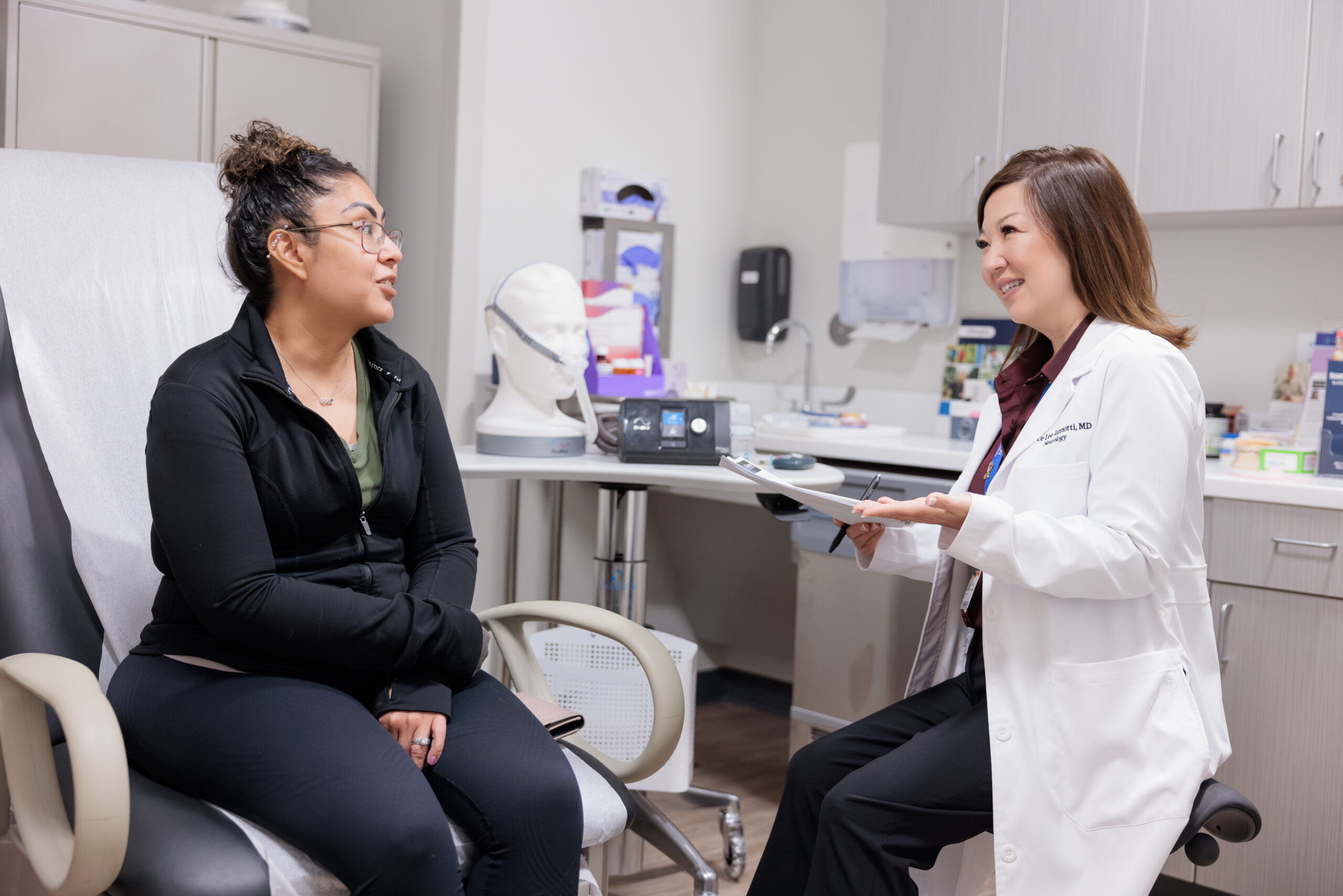
How Home Sleep Studies Work
A home sleep study is a convenient, accessible first step for many people who have persistent snoring, are told by a partner that they experience breathing pauses or gasping for air at night, and/or wake up unrefreshed.
To get started, your sleep specialist’s clinic will ask you to pick up the device or, in some cases, they will mail it to you. The device will include a quick start guide or a link to an instructional video.
There are various types of home sleep study devices. Some newer, simpler at-home devices include a single device, like a wrist-worn unit with a finger oximeter or a patch worn on parts of the body.
Common Questions
How common are home sleep studies?
Over the last two decades, home sleep studies have become increasingly popular, and today they are the primary way sleep apnea is diagnosed for patients with routine symptoms of obstructive sleep apnea. Roughly 67% of adults with obstructive sleep apnea in the U.S. first learned of their diagnosis through a home sleep apnea test (HSAT), according to a 2023 survey.
As the prevalence of obstructive sleep apnea continues to increase, so does the demand for home sleep testing. As of 2024, an estimated 83.7 million adults in the U.S. had obstructive sleep apnea, representing approximately 32% of adults aged 20 years and older.
Are there any risks to participating in home sleep studies?
Home sleep studies carry virtually no medical risk. Rather, the “risks” relate more to the limits of what the test can detect and diagnose. This can include:
- False negatives: The false negative rate, or the rate at which an at-home sleep study misses a diagnosis of obstructive sleep apnea in someone who actually has it, has been reported as high as 17%. This is a significant limitation of home testing. As such, the American Academy of Sleep Medicine recommends an in-laboratory sleep study following a non-diagnostic home sleep study result if there is high clinical suspicion for sleep apnea by your physician.
- Underestimating severity: Not all home sleep studies can detect sleep stages as well as a clinic-based study can. For example, if you spend an hour lying awake, the device may not detect it, and it may spread your breathing disruptions over a longer period than it should. This, in turn, can make your apnea appear less severe than it actually is.
- Equipment failure or user error: Because the device is set up without a technician, sensors may be applied incorrectly or fall off during the night without being noticed. This can lead to incomplete data, requiring the test to be repeated.
Finally, home sleep studies are not the right choice for people with certain medical conditions, including serious heart or lung disease, suspected central sleep apnea, or a severe, more complicated neurological or sleep disorder. In these instances, a more comprehensive in-lab sleep study is needed for better accuracy and patient safety. HSATs are intended for uncomplicated patients with suspected moderate or severe sleep apnea.
Can a home sleep study be conducted using a smartwatch?
Consumer smartwatches from manufacturers like Apple, Samsung, and Garmin provide only rudimentary data about your sleep cycles and vital signs because they lack the medical-grade sensors that come with an at-home sleep test.
For example, smartwatches don’t measure your breathing directly. Rather, they estimate it by monitoring blood oxygen and heart rate changes at your wrist.
While these measurements are good enough for general lifestyle optimization, they lack the accuracy needed to diagnose sleep disorders.
How do I know if I’m a good candidate for a home sleep study?
You’re likely a good candidate for a home sleep study if you have the hallmark symptoms of obstructive sleep apnea and are otherwise in reasonably good health. These hallmark symptoms can include:
- Loud, chronic snoring
- Pauses in breathing during sleep
- Gasping, choking, or snorting during sleep
- Restless or fragmented sleep
- Waking up with a dry mouth or sore throat
If you have several of these symptoms and no major complicating health factors, you’re most likely a great candidate for a home sleep study.
What’s more, if you have any of the following risk factors combined with the symptoms listed above, your case for a home sleep study is made stronger:
- Obesity
- High-risk airway anatomy and structure
- Being a male and over the age of 40
- Family history of obstructive sleep apnea
Ultimately, the decision for a home sleep study can boil down to the question: “Is obstructive sleep apnea the most likely explanation, or could something more complex be happening?” If the answer seems straightforward enough, a home sleep study is a practical and accessible first step.



Request an Appointment