Barrow Patient Begins to Reclaim Independence With Neuralink Robotic Arm After Spinal Cord Injury
When Alex Conley fractured his C4 and C5 spinal vertebrae, doctors told him the result was complete a spinal cord injury (SCI). Complete SCIs usually result in loss of voluntary movement and sensation below the level of injury. For Alex, this meant paralysis in all four limbs and the torso, a condition known as quadriplegia. This diagnosis brought a sudden loss of independence, making him reliant on others for nearly every aspect of daily life.
For a mechanic and handyman like Alex, this loss of independence also meant losing a core part of his identity.
“Before the accident, I was very mechanical and building parts and fixing things was pretty much my whole life,” Alex said. “But then, the accident happened and took all that away. I wasn’t able to express myself the way I usually could.”
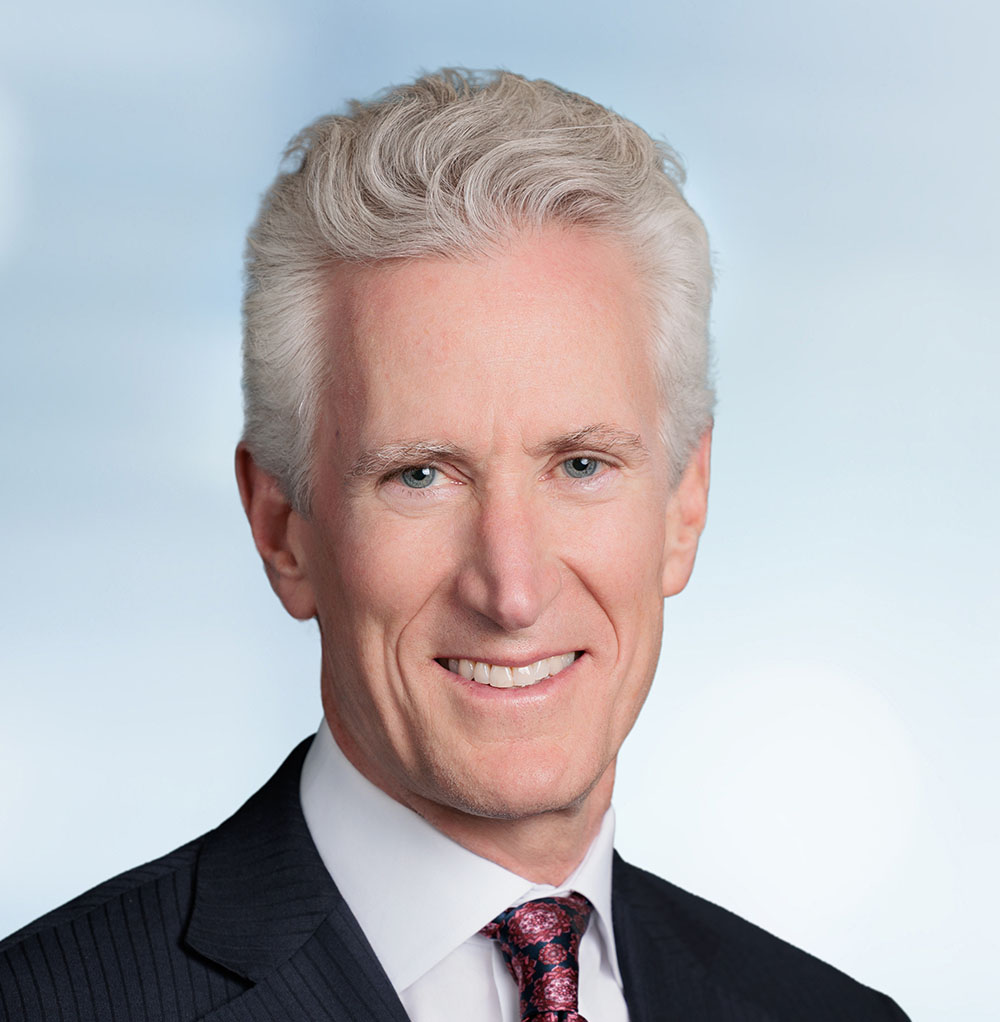
Michael T. Lawton, MD, President and CEO of Barrow Neurological Institute says options for restoring movement have historically been limited for patients with high cervical spinal cord injuries.
“We used to see spinal cord injured patients come in, we would operate and stabilize their necks and then, we would send them on their way to rehab and that was the end,” Dr. Lawton said. “There was nothing more we could do for them.”
Now, breakthroughs in neuroscience and engineering are creating new possibilities. Neuralink, in partnership with Barrow Neurological Institute, is providing hope in the form of an assistive robotic arm controlled by an implanted brain-computer interface. For patients like Alex, this technology represents a new pathway toward restored function and independence.
Neuralink CONVOY Study
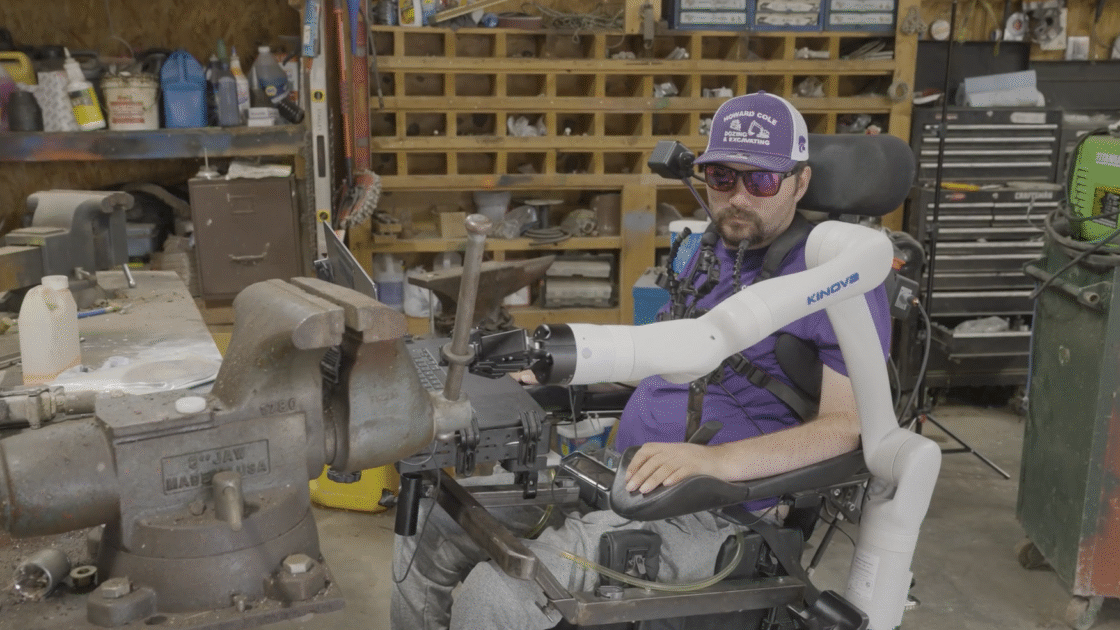
The robotic arm Alex controls with his thoughts is part of Neuralink’s CONVOY study, which explores the use of a brain-computer interface to operate assistive devices in the real world. Alex is the second Neuralink participant and the first to use the system to operate a robotic arm.
The first participant to receive the Neuralink N1 implant at Barrow regained “digital autonomy” through thought-controlled computer use. With Alex, the team was able to go a step further.
“We gave him all that, but now, in addition, he can drive a robotic arm that lets him turn on a light switch, open a door, or move something that’s ahead of him,” Dr. Lawton said.
Jake Paul, a mechanical engineer on the CONVOY team at Neuralink, explained how Alex controls the arm.
“You just think about, ‘I’m going to take my arm and move left. I’m going to take my arm and move right,’” Paul said. “And from that, we issue commands to the robot that then does inverse kinematics and math to make that motion happen.”
For Alex, joining the study felt meaningful and inspiring.
“I feel kind of honored that they picked me to do the robotic arm,” Alex said. “There’s so many people that don’t have the support system that I’ve got and the people that I’ve got. And I know even just a robotic arm sitting on the side of their chair is just another step toward being independent.”
Progress Through Collaboration
To start using the assistive technology, Alex completed a series of calibration exercises. These exercises allowed Neuralink’s team to refine their algorithms while helping participants learn how to generate the correct neural signals.
“We start with an open-loop calibration, where we have a virtual task on the computer screens, and those virtual sessions are practice and training sessions,” Jake said. “We do a lot of them, day after day after day, to make the models better and better, to get Alex familiar with the process that we’re using.”
As training progressed, Alex became so comfortable with the system that he began offering his own technical insights.
“Over time, he gets really familiar with all the numbers and really familiar with all the terms, to the point where he’s suggesting things that we didn’t think of ourselves that are great suggestions,” Jake says. “We spend a night retraining models. We spend a night working on the robot software and a little bit of the hardware even.”
“Most of us take for granted our ability to interact with the physical world. With this technology, we’re giving that back to the patients.”
Dr. Michael Lawton
With Alex and the Neuralink team working together, progress came quickly.
“They got back the next morning, and it was remarkable how much they changed overnight,” Alex says. “It worked 10 times better than it did the day before. I honestly thought it would take longer to get the level of control that I’d gotten. The amount of effort that those guys put in is leaps and bounds above what I expected. It’s a really good feeling seeing what that thing is capable of.”
Moving Toward Greater Independence
The long-term mission of the CONVOY study is to enable participants to use the robotic arm independently in their daily lives.
“I’m hoping that it can eliminate the need for help,” Jake said. “I’m hoping that when the arm comes out in its first iteration, what it can do is demonstrably make someone’s life better by giving them more independence.”
Dr. Lawton says the work represents a new era in what medicine and technology can offer for people with paralysis.
“Imagine a world where we restore things that were lost,” Dr. Lawton said.
With Neuralink, that possibility already feels within reach.
“Most of us take for granted our ability to interact with the physical world,” Dr. Lawton said. “With this technology, we’re giving that back to the patients.”
For Alex, this study isn’t just about innovation, it’s a step toward reclaiming the parts of himself he thought he’d lost.
“It just makes me feel empowered and makes me feel like I can do something myself and not rely on others,” Alex says.
Regaining that sense of autonomy is only part of what motivates him—Alex hopes that by stepping into this role, others will see what’s possible.
“I strive to inspire other people to hopefully reach for new opportunities that are out there,” Alex said.