
Barrow Study Identifies How Wildfire Smoke May Contribute to Neurodegenerative Diseases
Research Reveals a Chain Reaction in Brain Cells That Triggers Harmful Inflammation
Researchers at Barrow Neurological Institute in Phoenix have uncovered how wildfire smoke may trigger harmful inflammation in the brain, offering new insight into why prolonged smoke exposure has been associated with neurological diseases such as Parkinson’s and Alzheimer’s.
The study comes in the midst of wildfire season. More than 44,000 fires have burned more than 4.8 million acres across the United States this year, exceeding the 10-year average for both the number of fires and acres burned, according to the National Interagency Fire Center.
Wildfire smoke is becoming an increasingly significant public health concern as fire seasons grow longer and more severe. Tiny particles produced during wildfires are small enough to enter the bloodstream and, in some cases, reach the brain.
The Barrow study, published in Neurotoxicology, found that wildfire smoke particles activate astrocytes, which are specialized cells that normally protect and support the brain. Once activated by the smoke particles, these cells can go into overdrive, releasing inflammatory molecules that damage nearby neurons they are designed to protect.
“Previous studies have linked wildfire smoke exposure to an increased risk of cognitive decline and neurodegenerative disease. We wanted to understand what was driving this increased risk. Our research revealed a specific immune pathway that appears to contribute to this inflammatory response.”
-Adam Schuller, PhD, Research Scientist, Tjalkens Laboratory
“Previous studies have linked wildfire smoke exposure to an increased risk of cognitive decline and neurodegenerative disease,” said Adam Schuller, PhD, research scientist in the Tjalkens Laboratory at Barrow Neurological Institute. “We wanted to understand what was driving this increased risk. Our research revealed a specific immune pathway that appears to contribute to this inflammatory response.”
The researchers focused on STING, a protein that serves as one of the body’s natural alarm systems. When wildfire smoke particles damage DNA inside astrocytes, STING is activated, triggering the cells to release inflammatory proteins. Those proteins can then damage nearby neurons, which are the cells responsible for sending signals that make movement, memory and thinking possible.
When researchers blocked STING in preclinical models, they found that inflammation decreased and nearby brain cells were better protected.
The research was conducted using laboratory-generated wildfire smoke particles in a preclinical model setting, allowing researchers to closely examine the cellular events that occur after smoke exposure.
“While more research is needed, we hope these findings will help move potential treatments closer to patients,” said Schuller.
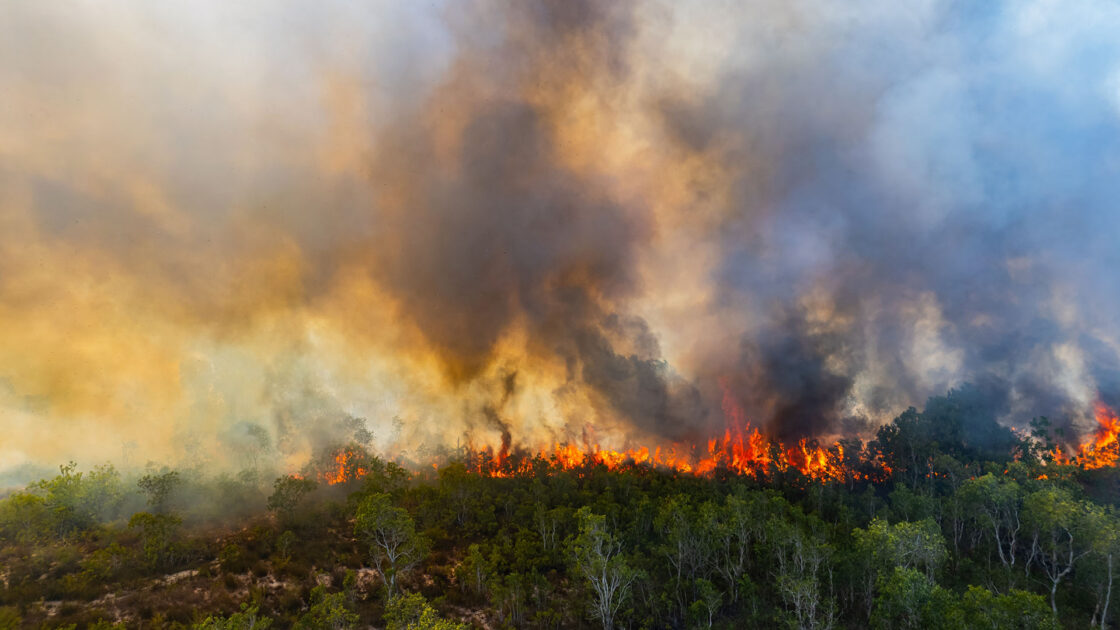
Wildfire photo: apiguide/Shutterstock.com
In the News:
- AZFamily: Study: Wildfire Smoke May Trigger ‘Alarming’ Brain Inflammation, Raising Disease Risks
- KJZZ: Barrow Study Shows How Wildfire Smoke May Harm Brain Health
- Medical Xpress: How Wildfire Smoke May Contribute to Neurodegenerative Diseases