
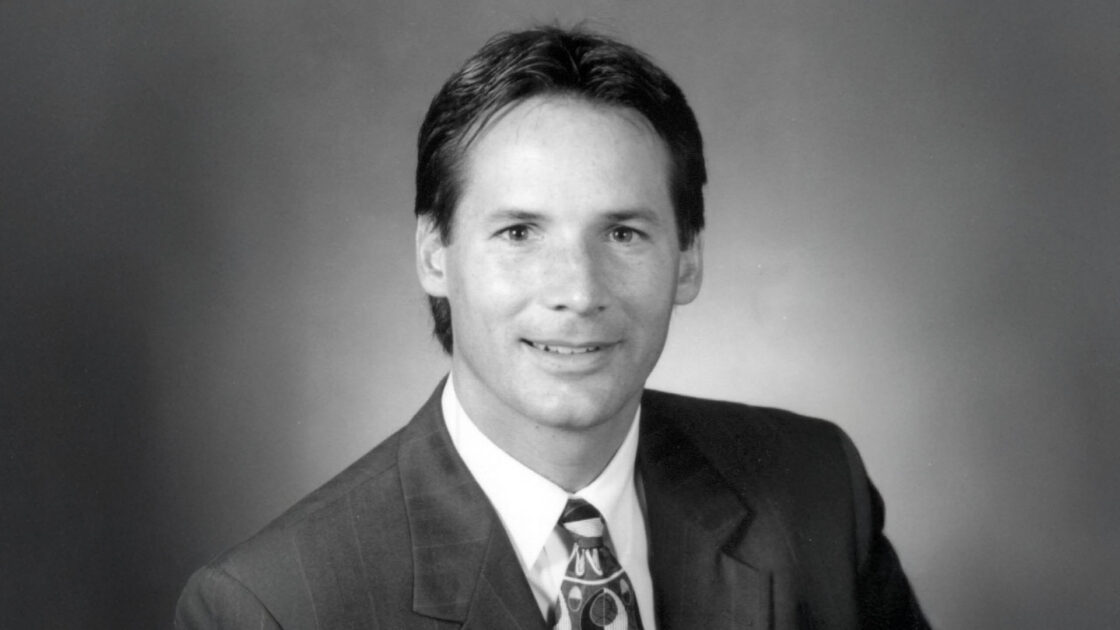
Barrow Neuro-Otology Director Terry Fife, MD, Retires After 30 Years on Faculty
When asked whether a particular moment ignited his interest in medicine, Terry Fife, MD, thinks back to being a sixth‑grader stretched out on the orange shag carpet of his family’s home in Dallas, Texas. The television was tuned to the 1972 Olympics, where American swimmer Mark Spitz was making history, but the young Dr. Fife was also engrossed in a medical book about hepatitis. “I think it was a school assignment,” he recalled. “We had to write some kind of report, and I chose hepatitis because it interested me.”
That project planted the seed for what would grow into a 30-year career in neurology and faculty appointment at Barrow Neurological Institute in Phoenix, Arizona. Now, as Dr. Fife nears his retirement on Jan. 9, he is reflecting on his tenure at the Institute and considering what his next chapter in life might hold.
“We congratulate Dr. Terry Fife for a legendary career as a leader at Barrow Neurological Institute,” said Barrow Chair of Neurology Brad Racette, MD, FAAN. “Terry has been a fixture at Barrow for three decades, having founded the Neuro-Otology Division, served as Interim Chair of the Department of Neurology, and served as the inaugural designated institutional official for the Institute. His contributions to Barrow have been immeasurable, and his departure leaves immense shoes to fill. We wish him health and happiness in his retirement and hope that he remains connected to Barrow.”
The Road that Led to Neurology
At the end of a maze of hallways in the Institute’s 240 Building, Dr. Fife’s naturally lit office is adorned with certificates and other mementos celebrating his achievements in neurology. But it might surprise some of his colleagues to learn that the brain wasn’t top of mind for Dr. Fife when he graduated from medical school at Texas A&M University.
Dr. Fife was halfway through his second year of internal medicine residency and already lined up for a gastroenterology fellowship when he started to have second thoughts. “I had plans to do hepatology, but I began to realize it’s a very narrow subspecialty that would limit where I could live and what I could do,” he said, explaining that he’d have to work at a liver transplant center.
Dr. Fife decided to apply to residency programs for neurology, a specialty he also found intriguing. There was little pressure, as he knew he could fall back on the GI fellowship he’d already secured if he didn’t get an offer from a neurology program. But when he received an acceptance letter from the University of California, Los Angeles, he charted his new career path.

While training in neurology at UCLA in the late 1980s and early 1990s, Dr. Fife got to know his colleagues who subspecialized in neuro-otology. “I just enjoyed them as people, and I enjoyed the topic and everything about neuro-otology,” he recalled. “I think I liked the precision of it and that your examination can make a big difference in clarifying what’s happening. I like that about neurology in general.”
Neuro-otology—also known as otoneurology and vestibular neurology—is a branch of neurology that focuses on the diagnosis and treatment of disorders affecting equilibrium and balance. The subspecialty was still in its infancy at the time, but that was part of the draw for Dr. Fife.
“There was an abundance of patients who needed care, but very few people who could bridge that gap between ENT and neurology,” he said.
Dr. Fife completed both his neurology residency and a neuro-otology fellowship at UCLA, then returned to Arizona with his wife and their kids. He had lived in the Grand Canyon State during his senior year of high school and while pursuing his undergraduate degree in chemistry at the University of Arizona, where he also played baseball for two years.
One Unexpected Move Leads to Another
Dr. Fife briefly worked at a group practice in Arizona before receiving a phone call from Robert Fisher, MD, PhD, the Vice Chair of Neurology at Barrow at the time. The Institute’s Department of Neurology was set to establish a neuro-otology program, but the two specialists expected to lead it had a change of plans and moved across the country. “They had already done the business plan and built out the balance lab and everything,” Dr. Fife said. “That left the availability of funding and the whole plan but no person.”
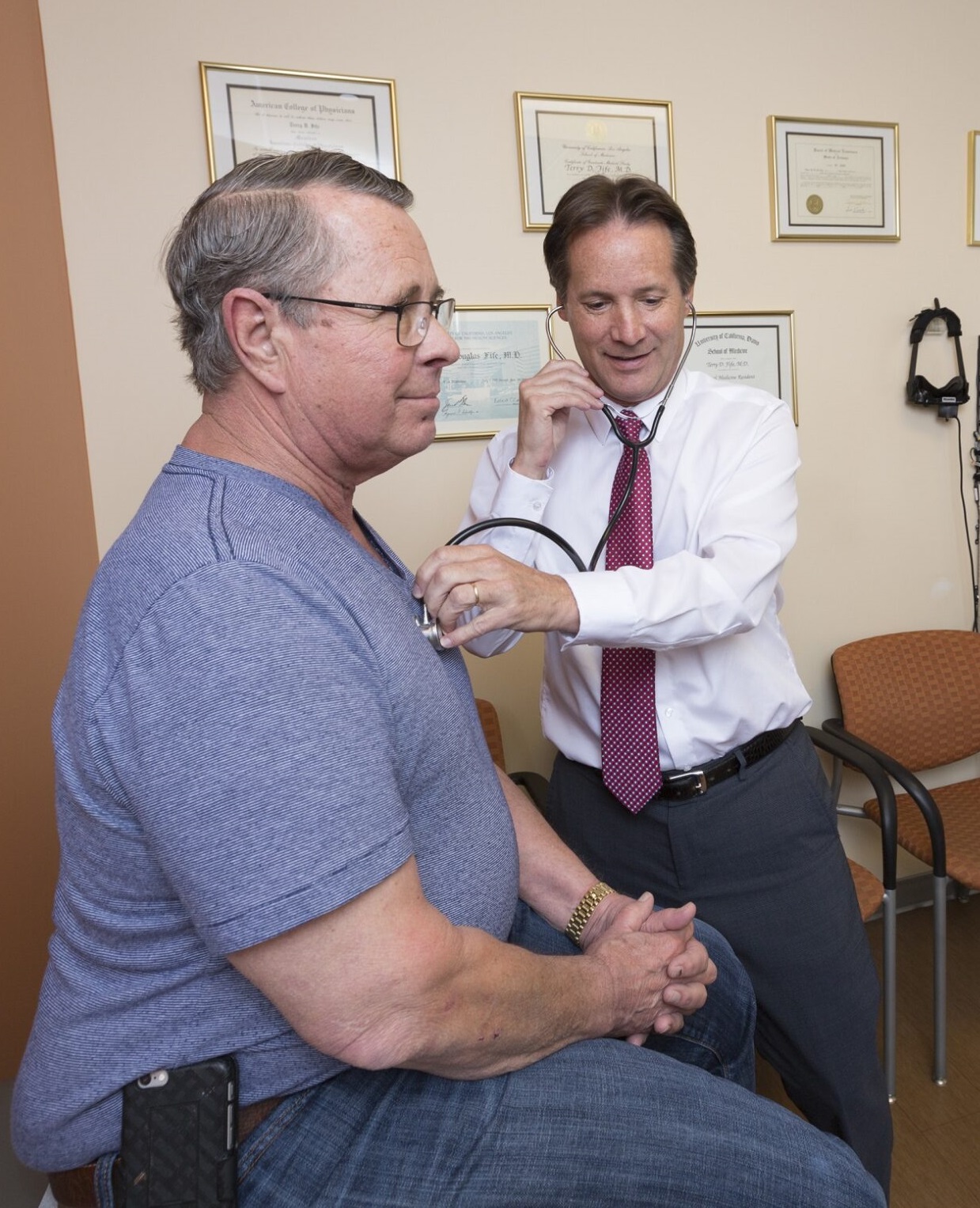
Dr. Fife accepted the offer to launch and direct the program in 1994 and has remained on faculty at Barrow ever since.
At the time, few neurology chairpersons knew what neuro-otology was. Even today, there is still confusion around the differences between neurology-trained doctors who treat hearing and balance disorders and ENT-trained doctors who do the same. Neuro-otology remains an uncommon subspecialty of neurology, but that’s part of why Dr. Fife finds it so rewarding.
Because hearing and balance disorders can have many different root causes, patients in the Neuro-Otology Program at Barrow are referred by various specialists, including neurologists, otolaryngologists, surgical neurotologists, otologists, neurosurgeons, cardiologists, and primary care physicians.
Lessons From the Journey
Dr. Fife recalled a patient who was referred to him after losing her ability to walk and talk. Her symptoms mimicked multiple system atrophy, a progressive neurodegenerative disorder with no known cure or treatment to slow progression. The patient’s husband asked Dr. Fife if they could try changing her antiseizure medication. It seemed like a shot in the dark, but with the patient likely bound for hospice, Dr. Fife agreed to give it a try. After the medication switch, the patient made a full recovery. Dr. Fife published a paper on the case with then-trainee Holly Shill, MD, shedding light on this rare but important side effect that had only been documented once before in world history.
“Those are the kinds of cases that energize me, because I was part of the discovery of something that really helped somebody or I learned something that I’ll never forget the rest of my life,” Dr. Fife said.
Having opportunities to share his knowledge with fellows, residents, and medical students at Barrow has also brought Dr. Fife fulfillment throughout his career. In 2019, Barrow leadership empowered Dr. Fife to oversee the Institute’s residency and fellowship programs by naming him the designated institutional official.
“Those are the kinds of cases that energize me, because I was part of the discovery of something that really helped somebody or I learned something that I’ll never forget the rest of my life.”
Terry Fife, MD
“Nothing makes me happier than to see the success of people who I’ve had a part in training,” Dr. Fife said. “People’s success, for the most part, is their own success. But to be a little part of their story is very rewarding.”
In addition to helping shape the next generation of neurologists, Dr. Fife takes pride in the relationships he’s developed with his patients—some of whom he has known for his entire career. Until now, it hadn’t occurred to Dr. Fife that he would one day say goodbye to these patients. “You always expect to see them again at their next appointments,” he said. “It’s maybe one of the more quietly rewarding things about being a doctor—the gratitude of the patients and the mutual enjoyment of each other.”
Dr. Fife will also miss the camaraderie of his colleagues, as well as the intellectual growth and sense of purpose his work has brought him. But he’s looking forward to finding other ways to fill those needs.
Mapping Out Next Moves
For one, Dr. Fife and a former high school classmate have an idea for a “how-to” book related to health care. He’s not promising anything just yet, but he does have a “pretty decent outline,” he said.
He also intends to improve his conversational Spanish, which will come in handy when he and his wife visit their vacation home in Spain.
“And I think there’s enough other stuff to keep me busy after that that we don’t even realize, just life itself, so we’ll see,” he said, jokingly adding, “It’s the first time I’ve ever retired.”