
Barrow Patient Nears 1 Year Seizure-Free After Epilepsy Surgery
When George Zapien arrived at Barrow Neurological Institute in Phoenix, Arizona, to have a small portion of his brain surgically removed, he didn’t feel worried or afraid—he felt happy.
George had already spent 30 years living in fear. Behind his positive disposition lurked anxious thoughts about when and where his next seizure would strike. “Am I going to be at work?” he said. “Am I going to be in church? Am I going to be shopping?”
As George prepared to undergo epilepsy surgery on Nov. 21, 2025, he felt like he’d finally received admission to a rollercoaster he’d spent years watching in anticipation. Just before going under anesthesia, he held up an imaginary ticket in his hand. “I’m ready to ride that ride,” he told the preoperative team.
“I had that glimmer of hope that I was getting ready to enter a world I hadn’t been to,” George explained. “All I knew was a life of seizures and pills.”
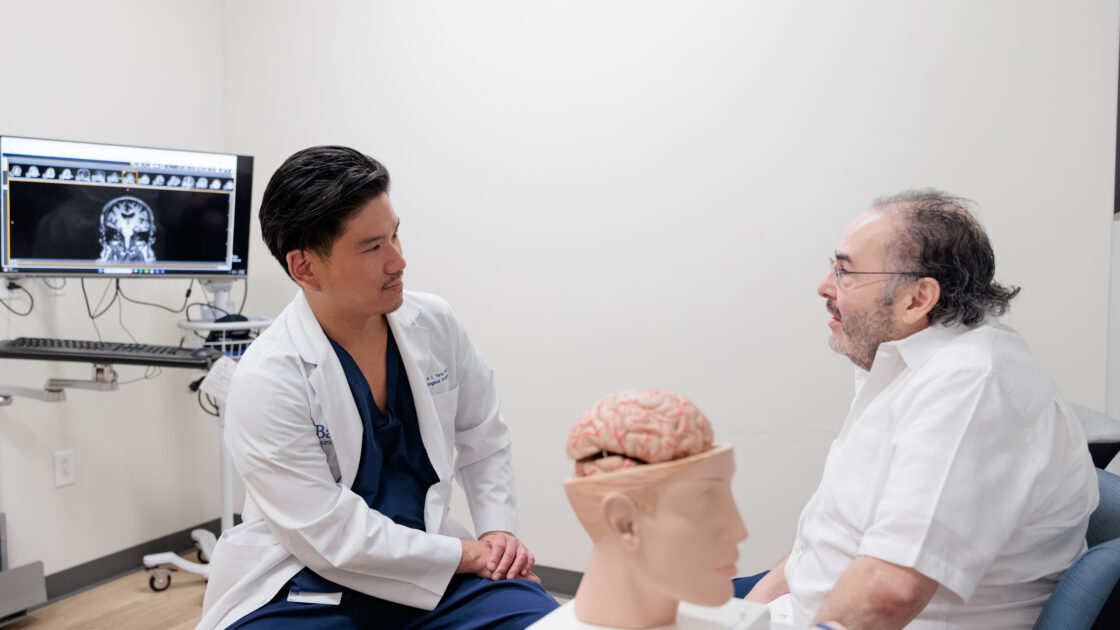
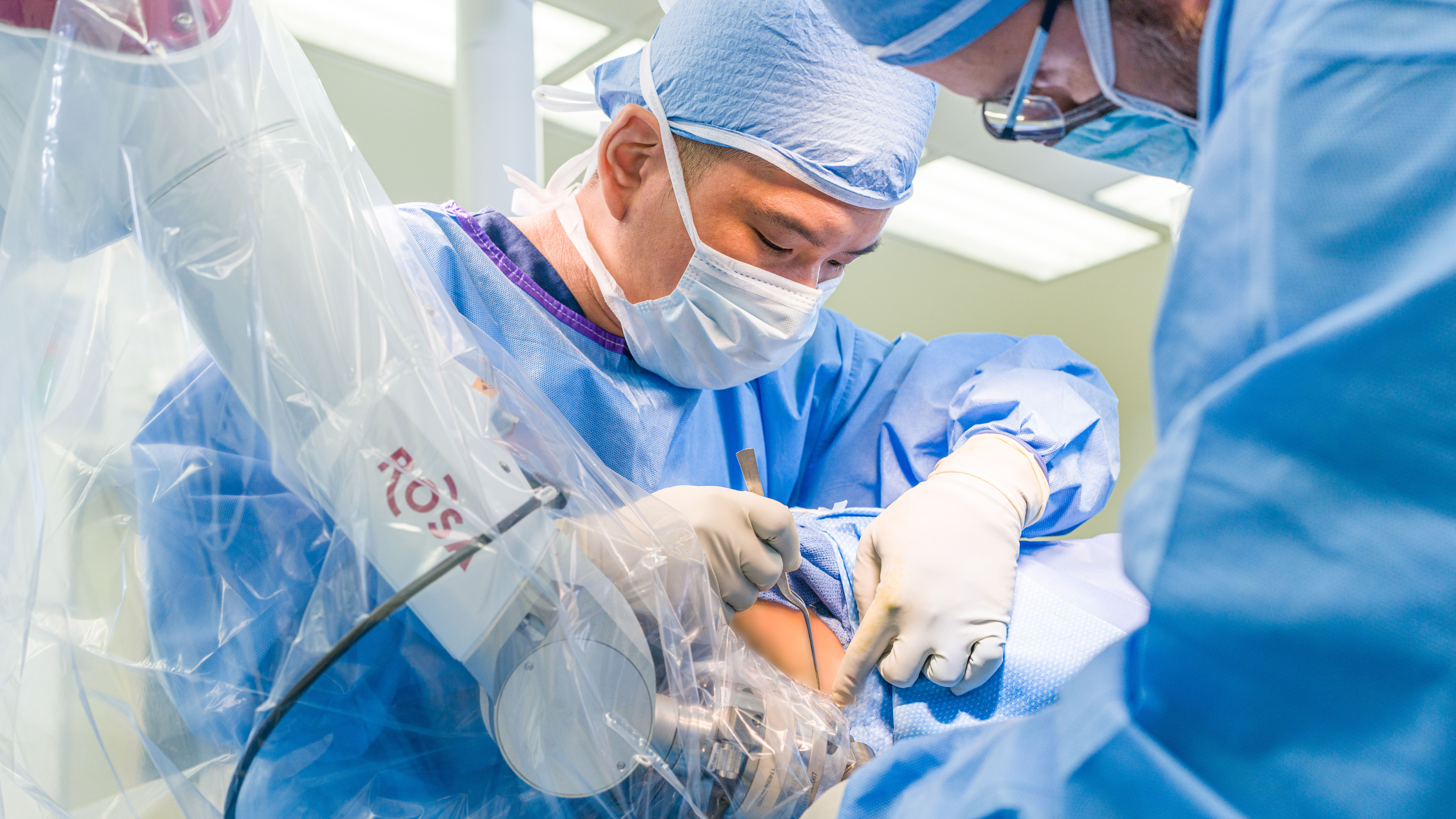
On that late November day, Barrow neurosurgeon and Epilepsy Surgery Program Director Andrew Yang, MD, MS, performed an anterior temporal lobectomy. In other words, he removed the front part of George’s right temporal lobe—the area of the brain that sits behind the right ear and, in George’s case, the area responsible for his seizures.
In the 10 months since his epilepsy surgery, George hasn’t had a single seizure. It’s something he never thought possible when he was experiencing multiple seizures per week.
“Anterior temporal lobectomy is one of the best surgical interventions we can offer in some patients with epilepsy,” Dr. Yang said. “George’s response has been transformative. He remains seizure-free and has not experienced any negative changes to his overall brain functions.”
A Life on Alert
Although George, now 61 years old, didn’t receive his epilepsy diagnosis until adulthood, he realizes in hindsight that he likely began having seizures as a child.
The word “seizure” often evokes an image of a person suddenly losing consciousness, stiffening and falling to the ground, then jerking uncontrollably. These “tonic-clonic” seizures, formerly known as “grand mal” seizures, occur when abnormal electrical impulses storm both sides of the brain.
Focal seizures, however, originate in a specific area of the brain and can look very different from generalized seizures. A person experiencing a focal seizure may simply appear to “zone out.” They may also perform repetitive behaviors unconsciously, like smacking their lips or rubbing their hands together. “I just thought I was daydreaming,” George recalled. Eventually though, George’s seizures evolved to include the tonic-clonic type, making them unmistakable to people around him.
“It was unspoken a lot of times, but my family was scared,” he said. “No one likes seeing their loved one have a seizure. They feel helpless.”
For some people with epilepsy, warning signs may precede seizures. When George had these “auras,” they often included an unusual taste in his mouth, a strange feeling in his stomach, and a sense of euphoria followed by sheer terror. In those moments, George found himself saying a prayer as he grasped for some semblance of control.
“Seizures are scary as hell,” he said. “You don’t know the outcome. You really have no control.” To add to their unpredictability, George couldn’t just pick up his day where he left off after a seizure. The recovery, or “postictal,” phase would leave him with headaches, fatigue, and irritability. A normally friendly and loquacious person, George wanted to be left alone entirely following a seizure. And if it wasn’t a seizure leaving George tired and unmotivated, it was his antiseizure medication—a common side effect of this class of drugs.
George also struggled with reading comprehension and memory for most of his life. While working as a manager in the grocery store industry, he’d look over planograms with confusion. “A planogram is how you set up a shelf,” he said. “Everybody could understand those, but to me, it was like learning Greek.” He later learned that difficulty with these and other cognitive domains is not uncommon for people with epilepsy.
“Seizures themselves can disrupt cognitive function in different ways, depending on the brain region they involve,” said Deana Gazzola, MD, George’s neurologist in the Barrow Epilepsy Center. “Temporal lobe seizures, for example, can impact memory formation and language. Antiseizure medications can also have negative cognitive side effects by making it difficult to maintain focus and concentration.”
Before meeting Dr. Gazzola, George had spent years bouncing from one doctor to the next and trying different medications. (There are more than 30 antiseizure drugs available in the United States.) Each one he tried brought him little benefit and a lot of side effects.
That all changed when he arrived at Barrow. “You could say Barrow had me in love at first sight,” he recalled. “They had me unconditionally—my trust, my belief, my faith, everything—on my first visit.”
‘Trusting the Process’ and the Path Ahead
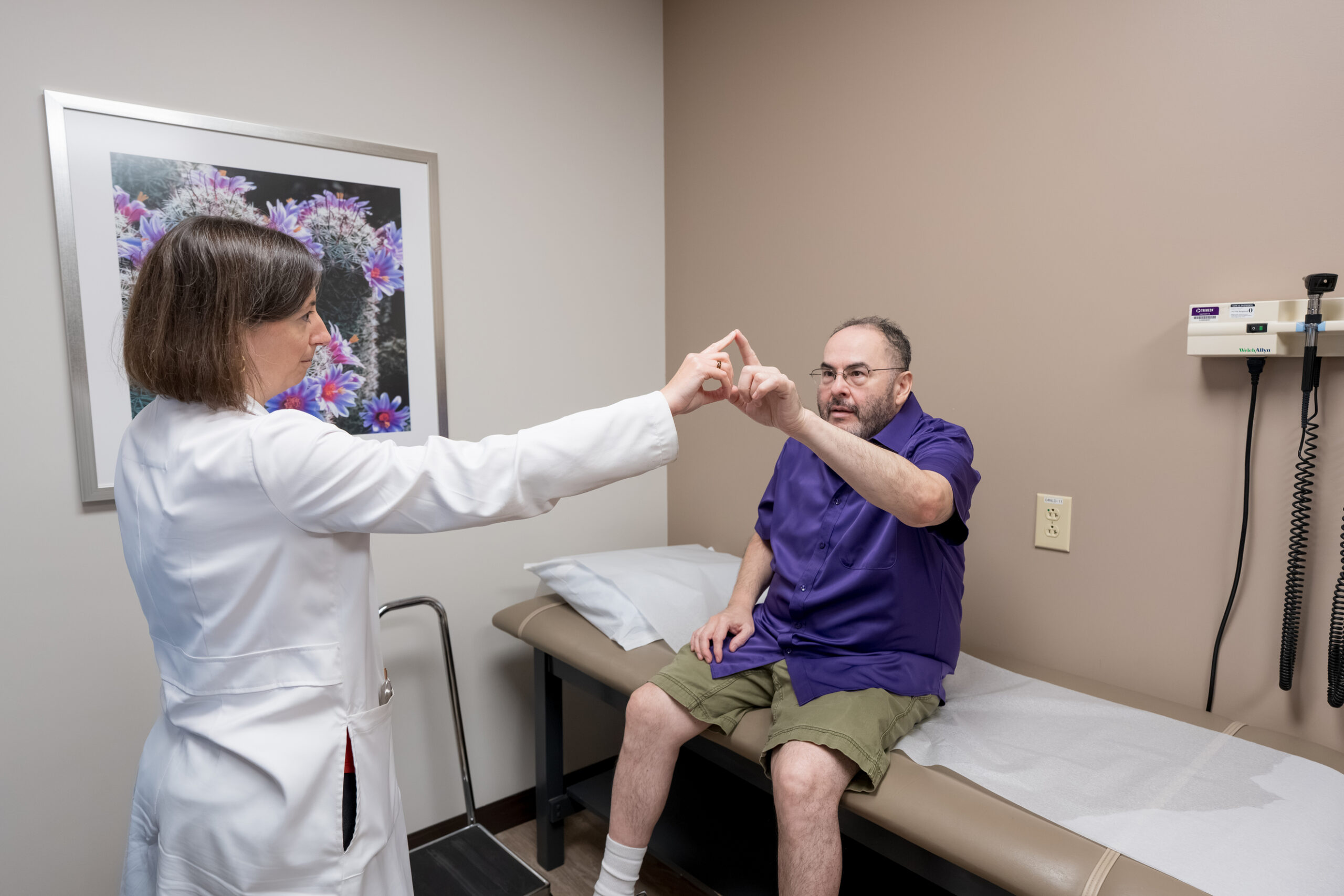
Dr. Gazzola’s first step was to help George find a more tolerable antiseizure medication. But with his seizures still not fully controlled, she began discussing surgical options. “Epilepsy surgery is often considered when a person’s seizures have failed to be fully controlled after two or three adequate drug trials,” she explained, “and when seizures negatively impact quality of life or pose a physical or cognitive risk.”
To determine whether George was a candidate for epilepsy surgery, however, Dr. Gazzola needed more information about his seizures.
In September 2025, George spent several days in the Epilepsy Monitoring Unit (EMU) at Barrow, which is directed by Dr. Gazzola and serves as one of the largest and most technologically advanced units of its kind in the country.
Between playing games of solitaire, George had seizures—a lot of them. In the EMU, patients temporarily pause their antiseizure medications. They undergo continuous monitoring with audio/video recording and with electroencephalography (EEG) to measure electrical activity in their brains. This allows clinicians to learn more about a patient’s seizures, including where in the brain the abnormal electrical impulses originate.
As George had repeated seizures in his hospital bed, he reminded himself to “trust the process.” This mantra carried him through the next step in his workup, a test known as stereoencephalography (SEEG), which requires surgery. Unlike EEG, in which electrodes sit on the scalp, SEEG involves surgically placing temporary electrodes beneath the skull to precisely record the brain’s electrical activity.
“There are several types of epilepsy surgery, so we strive to personalize our recommendations to each individual patient,” Dr. Yang said. “Everyone’s brain is unique, and every patient with epilepsy has a unique seizure network. SEEG is recommended as a final diagnostic test when we need high-definition mapping of the patient’s seizures to finalize the surgical recommendations.”
Although it meant having surgery, George felt grateful for the SEEG. “I looked at it as very professional, very knowledgeable for myself, and a way to get answers I never got in 30 years,” he said. His struggles in school, his confusion at work, his “daydreaming”—it all started to make sense.
Choosing Epilepsy Surgery
After reviewing the data from George’s EMU stay, the multidisciplinary team at the Barrow Epilepsy Center discussed his case at their case conference. They reached a consensus: George would likely benefit most from an anterior temporal lobectomy, contingent on the results of a Wada test.
The brain has two temporal lobes, one on each side of the head. A Wada test—typically performed by an epileptologist, a neuropsychologist, and a neurointerventionalist—can determine which temporal lobe plays the dominant role in a person’s memory and language functions. The test involves temporatily putting the brain to sleep with medications, one half at a time, and asking the patient to perform memory and language tasks.
The results indicated that removing the front part of his right temporal lobe would not cause significant memory or speech deficits, so George scheduled his surgery for the week before Thanksgiving.
Jumping Headfirst Into Hope
Not only did George feel ready for the possibility of a seizure-free life, but he fully trusted his team at Barrow. He knew Dr. Yang was an expert in epilepsy surgery, but he was pleasantly surprised to find the neurosurgeon so personable. “I could laugh with Dr. Yang,” he said. “I could be myself and talk to him. I could ask any questions, and he’d explain things. I didn’t feel like I was going through a turnstile.”
Between George’s confidence in his medical team, the support from his family members, and the power of his faith, he felt at ease heading into epilepsy surgery. He also said everything he’d been through beforehand—his numerous orthopedic procedures, his sobriety journey, and navigating the stigma of epilepsy—all helped him to develop his fortitude.
“George was highly motivated to obtain seizure control from the moment I met him,” Dr. Gazzola recalled. “He was patient with the evaluation process, progressed through various stages of testing, and when faced with a setback, he approached it with optimism and a great attitude. I have no doubt George’s strong spirit and determination significantly contributed to his recovery.”
“I’m enjoying this different, wonderful life that Barrow gave me. I’m not feeling that dread and fear of having a seizure. I’m having too much fun with my new life.”
-George Zapien, Barrow Epilepsy Surgery Patient
After surgery, George temporarily moved in with his aunt as he focused on his healing, and he remained patient and committed to trusting the process. In June 2026, he returned to his Moon Valley home, which he hopes to be able to decorate for Christmas this year. George’s neighborhood has a reputation around the Phoenix metropolitan area for its extravagant Christmas light displays.
“I am very proud of George for his perseverance and resilience in fighting his disease, as epilepsy surgery requires extensive prior workup to characterize the seizure network,” Dr. Yang said. “I’ve been very impressed by how he has endured years of seizures with such a positive outlook and by his generosity in sharing his story for the benefit of other patients who are also suffering from epilepsy.”
Turning the Page from Fear to Freedom
As George approaches one year seizure-free, he looks forward to working with Dr. Gazzola to gradually taper his antiseizure medication.
Although he can’t say with 100% certainty that he’ll never have another seizure, he finally doesn’t feel preoccupied with worries of when and where the next one will occur. “I’m enjoying this different, wonderful life that Barrow gave me,” he said. “I’m not feeling that dread and fear of having a seizure. I’m having too much fun with my new life.”