

How Multidisciplinary Migraine Care Gave a Veterinarian Her Life Back
Just six months into her dream job as a veterinarian, Dr. Nisha Parasher found herself on a medical leave that would last more than two years due to daily migraine attacks. Thanks to a team of clinicians at the Lewis Headache Center at Barrow Neurological Institute, Nisha has returned to work with a new, resilient perspective.
When physical therapist Juliana Kroese, PT, RYT, C-IAYT, first met Nisha Parasher, DVM, MPH, she asked what her new patient hoped to achieve. “I meant therapy goals,” Juliana recalled, “but Nisha answered with her life goal: to own a mobile veterinary clinic and offer free care to the pets of homeless people.”
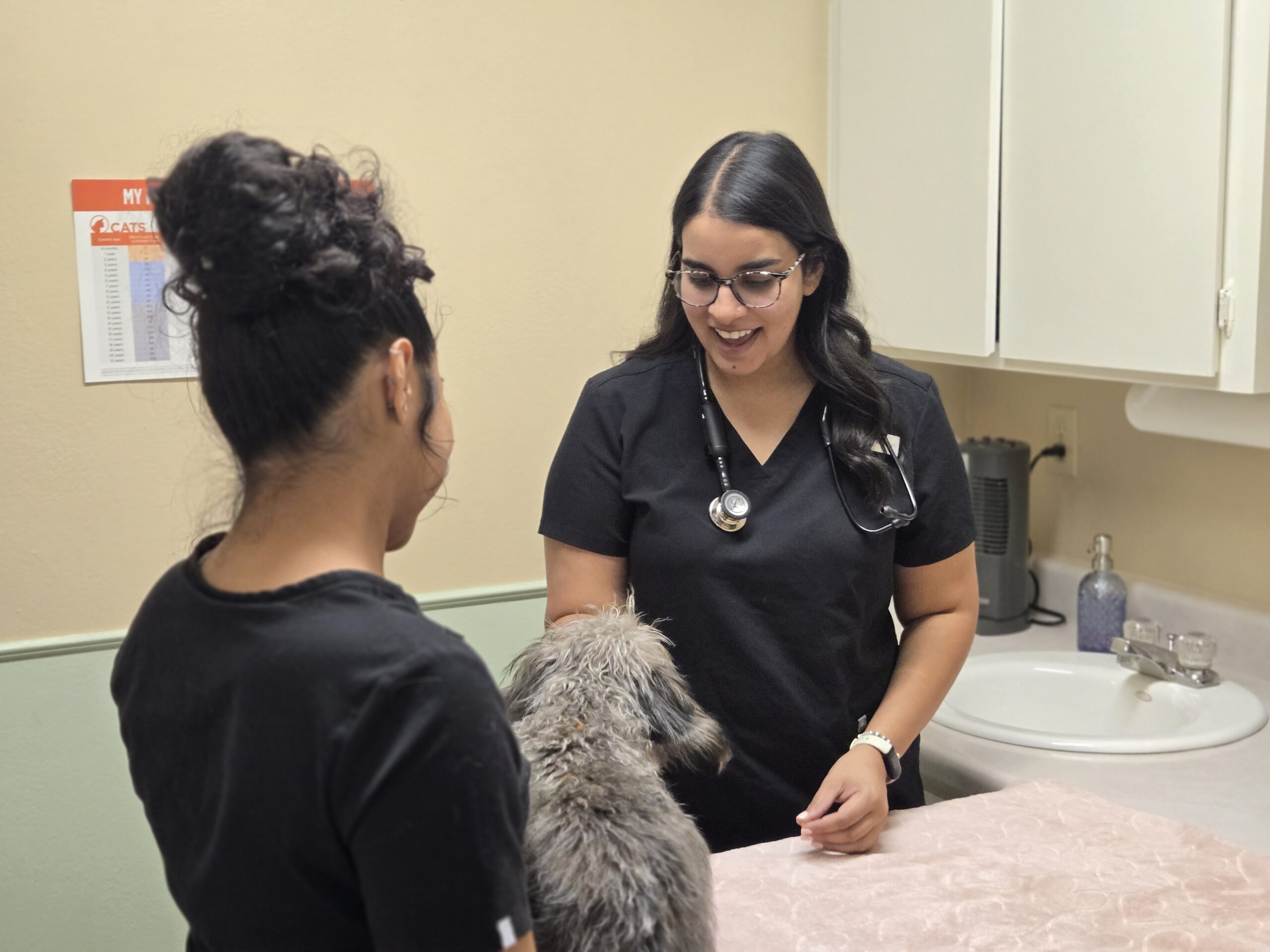
Nisha discovered her path as a veterinarian when she was just 10 years old, after her family rescued a golden retriever named Scout. While in high school, she attended pre-vet camps and shadowed veterinarians around the Phoenix metropolitan area. “My dad would drive me around when I was 15, and I’d give these vet clinics my sad little resume and ask if they would take me,” she remembered with a laugh.
Fast forward to 2022: Nisha graduated from Midwestern University in Glendale, Arizona, with her Doctor of Veterinary Medicine degree and a Master of Public Health degree. She joined a veterinary practice in north Phoenix and began caring for small animals, mainly dogs and cats.
But only six months into the career she’d worked so hard for, then-26-year-old Nisha found herself on medical leave due to headaches that weren’t responding to standard treatments.
Coming Face-to-Face With Migraine
Nisha was traveling with her family in December 2022 when she had her first-ever migraine attack. Although she’d had occasional headaches before, this was unlike anything she’d experienced. “I just remember feeling so nauseated, disoriented, foggy, confused, and in so much pain.”
“That’s what really stood out to me about Barrow, is it felt very holistic and very well rounded. The thing about migraine is it can be managed in so many ways. You can change your sleep, your diet, your workout habits, your medications, and even your mindset and perspective. All of those things have to sort of come together.”
-Nisha Parasher, Barrow Patient
From then on, her headaches struck every day—the pain usually reaching seven or eight on a scale of 1 to 10 and lasting for hours. “And with migraine, I learned, it’s not just a headache,” she said. “Your body aches, you’re nauseated, you feel out of it, and you’re exhausted. It’s very all-encompassing.”
Nisha wasn’t only sidelined from her job; her symptoms seemed to interfere with every aspect of her life. She no longer felt well enough to participate in the activities that used to bring her joy: going on dates with her boyfriend, attending sporting events, and trying new restaurants.
The Barrow Difference
Nisha did leave her house for doctors’ appointments, feeling like a burden on her parents as they chauffeured her from one referral to the next. But when she arrived at the Lewis Headache Center at Barrow Neurological Institute, she finally felt heard and finally received answers. “They seemed to really understand how debilitating migraine is,” she said.

Migraine is a primary headache disorder that is thought to be caused by a combination of predisposing factors, like genetics, a person’s sex and hormones, and environment. People with migraine have genetic differences in the excitability of the sensory nerves of the head, neck, and brain compared to those without migraine. This can lead to abnormal coordination of signaling between certain parts of the brain, which ultimately leads to the development of pain and other migraine-associated symptoms.
Nisha already had a prescription for a rescue medication to take at the onset of a migraine attack, but at the Lewis Headache Center, she learned more about preventative medications for chronic migraine.
What really impressed Nisha, though, was what the Center offered beyond medication. She received referrals for physical therapy, as well as the Center’s dedicated clinical psychologist, Jennifer Gray, PhD. “That’s what really stood out to me about Barrow, is it felt very holistic and very well rounded. The thing about migraine is it can be managed in so many ways. You can change your sleep, your diet, your workout habits, your medications, and even your mindset and perspective. All of those things have to sort of come together.”
Providing individualized, comprehensive care is at the core of the Center’s mission, said Lewis Headache Center Director Kerry Knievel, DO, FAAN, FAHS. “A multidisciplinary approach to headache treatment is vital for success,” she explained. “Addressing headache triggers, other medical conditions, and mindset gives patients more tools to manage their symptoms and empowers them to play an active role in managing their headaches.”
Small Steps Still Move You Forward
Although Nisha finally had answers and a treatment plan, she had a long and challenging road ahead, as her case is complex. “Progress isn’t linear, and I know she still has a way to go,” Juliana said.

But Juliana is proud of the strides Nisha has made since their first few sessions together, when Nisha considered quitting. “She was brave to keep at it, and it started to pay off,” Juliana said.
Through stretches, strengthening exercises, posture correction, and soft-tissue treatment, physical therapy has helped Nisha reduce muscle tension and relieve pain.
Nisha’s progress extends far beyond physical improvements, though. She credits her team at the Lewis Headache Center with supporting her through moments when she felt little hope that she would get better.
The Power of Psychological Support
Migraine and mental health share a bidirectional link: Chronic pain can trigger conditions like depression and anxiety, and these mental health conditions can increase the frequency and severity of migraine attacks. Both conditions also carry a social stigma, which can contribute to feelings of isolation.
“Patients often present to psychology with valid questions about how therapy can help them,” Dr. Gray said. “An important part of the therapeutic process is to show patients that changing their mindset and behavior can positively impact their physical health and result in real change in their quality of life.”
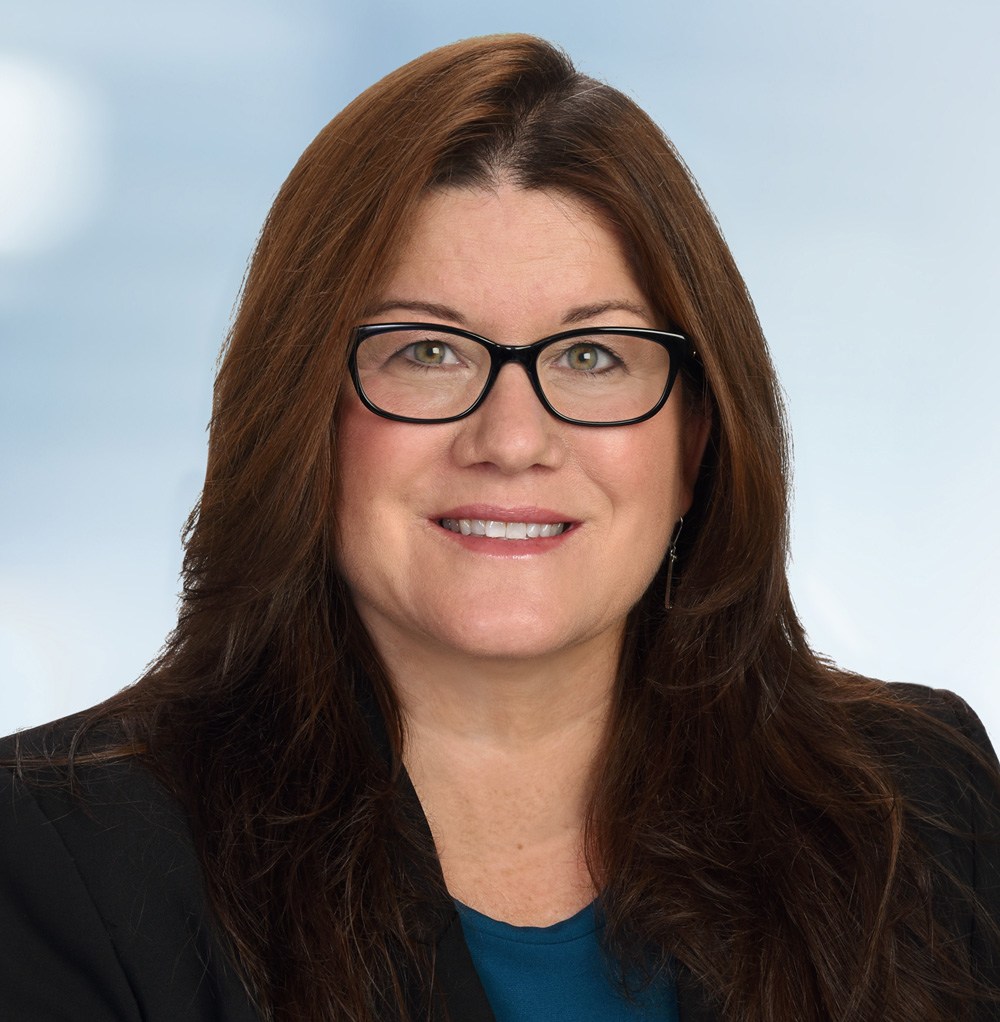
Dr. Gray impressed Nisha with her knowledge of both psychology and migraine, something Nisha hadn’t found in other therapists she’d seen. “I felt like Dr. Gray was able to connect with me and understand what I was going through in a way that no one else had previously,” Nisha said.
According to Dr. Gray, “Individuals experiencing chronic pain often benefit from psychological intervention to cope effectively with the distress and interference caused by their medical condition.” But therapy does more than just provide social support, she explained. “Studies show that cognitive behavioral therapy is effective in reducing the frequency of migraine, decreasing migraine-related disability, and improving the individual’s quality of life.”
Through her sessions with Dr. Gray, Nisha began to see migraine as more of a passenger alongside her, rather than feeling defined by her diagnosis. This mentality allowed her to put herself back into the driver’s seat of her life.
The less pressure Nisha put on herself to return to work, the more she found she was ready to do just that.
Practice Makes Progress
One of the signals to Nisha that she was ready to get back to work was her confidence in making plans. “I felt like I could live my day-to-day life comfortably,” she said. “It’s not to say that I was symptom free by any means, but I was able to go to the grocery store, I was able to go out to dinner with my boyfriend, and I was able to get coffee with a friend—probably not all in the same day,” she added with a laugh.

That’s where Nisha’s pacing skills come in, which she developed with Amy Berryman, OTR, MSHSA, CBIS, an occupational therapist in the Barrow Neuro-Rehabilitation Center.
“Busy young professionals like Nisha are used to pushing themselves to their physical, emotional, and mental limits, and they adapt well to juggling full social, leisure, and professional responsibilities,” Amy said. “When chronic pain and fatigue become new factors, it is harder for their brains to adapt, and they run out of fuel much faster. When they try to go full speed, their symptoms flare significantly, causing them to crash, withdraw, and recover to full speed, only to repeat the cycle. This ‘boom and bust’ pattern makes participation in meaningful activities inconsistent and frustrating. Activity pacing is a technique that helps people participate in meaningful activities in smaller bites, staying within their symptom threshold to increase more consistent, comfortable participation.”

Nisha also decided to try Botox after about six months of hesitancy due to a fear of needles, and she credits the injections with making a huge difference in her symptoms. She now undergoes the treatment with nurse practitioner Laurie Bell, MSN, APRN, FNP-C, every three months. “Laurie is so good about my needle phobia, and she’s so patient with me,” Nisha said.
Laurie said this ability to provide multidisciplinary, individualized patient care is what she loves most about the Lewis Headache Center. “Not all patients have the same needs, and incorporating holistic care for patients is important to me as a provider,” she said. “Seeing a patient begin to live life again and have hope for the future is very rewarding.”
A New Outlook in a Familiar Place

Nisha returned to work a little over a year ago, starting with one half-day per week and gradually adding hours to reach the 16-hour week she’s at now. She’s hopeful she’ll be able to increase to 20 or even 24 sometime this year.
While it felt gratifying to return to a sense of normalcy and to the job she considers her calling in life, Nisha emphasized that she went back with a more balanced perspective.
“I don’t want to lose sight of all the growth I did when I wasn’t working,” Nisha said. “I have this sort of wider perspective that I didn’t have before, that work is just part of life. It should be meaningful and you should enjoy it, but you should feel like you have other hobbies and people and things in your life.”
And when it comes to the people in Nisha’s life, she focuses on surrounding herself with those who offer support rather than judgment. One of her biggest supporters has been her boyfriend of 10 years, Ronnie, who sat with Nisha through her darkest moments and helped her find hope. “I thank him so much,” she said. “He was so patient with me; he never pushed me; he never made me feel bad for what was going on.”
Gratitude Paves Her Path

Nisha became teary-eyed as she thought back to a few years ago, when she deeply believed she would never get better. “But that feeling is not permanent,” she said. “You can change your medication. You can change what provider you’re seeing. You can change your diet or your habits. You are in control of so much that even if the migraine never changes, you will get better at managing it.”
As for Nisha’s dream of owning a mobile veterinary clinic, she admits she has a lot to learn before she’s ready to make it come true. While she works toward that ultimate goal, she reminds herself to celebrate the small successes.
Whether it’s going to work, cheering on the Phoenix Suns (Nisha’s a big fan), or simply shopping for groceries, Nisha now approaches the “normal” moments with gratitude. It’s something she encourages others with chronic pain to do. “It sucks to be in chronic pain,” she said. “It’s debilitating. It’s life-altering. It’s probably not what you ever would have wished for yourself, but that can be true at the same time as saying, ‘I’m going to do everything I can in my power to manage it.’ The first step is changing your perspective.”