Interns Bring Global Perspectives to Neurology Residency Program
Health equity and global neuroscience serve as pillars of the Neurology Residency Program at Barrow Neurological Institute. We’re proud to introduce three first-year adult neurology residents at Barrow who embody this commitment, bringing unique perspectives from their experiences in Mexico, Central Africa, and South Africa.
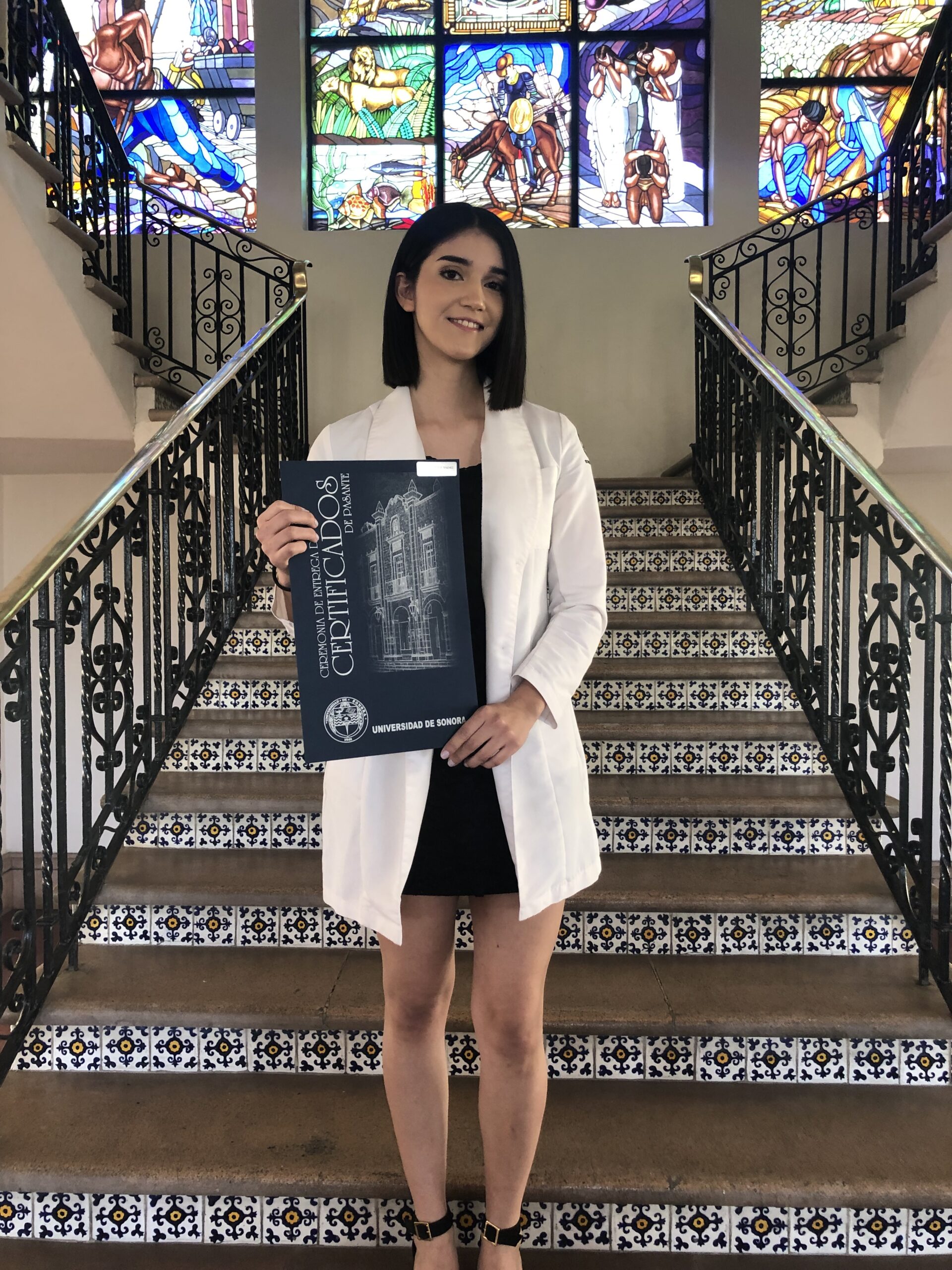
Diana Monge-Sanchez, MD
Birthplace: Sonora, Mexico
Medical School: University of Sonora, Sonora, Mexico
Can you tell us a little bit about your background?
I’m from Ciudad Obregón, Sonora, a state in Mexico bordering Arizona, where I grew up in a hardworking family with strong ties to agriculture. Though we lived simply, my parents always made sure we had food on the table and the support we needed for our education. My parents raised my brother, two cousins (whom I consider sisters), and me in a loving home grounded in discipline and gratitude, encouraging us to leverage our opportunities to make a positive impact on others.
This supportive environment inspired my passion for sports, specifically basketball, which played a significant role in shaping who I am today. Playing gave me the chance to travel across Mexico, allowing me to gain a deeper appreciation for the beauty and diversity of my country—something I might not have seen otherwise.
I completed my early education in Obregón before moving on to college in Hermosillo, where I pursued a seven-year medical program at the University of Sonora. During my time there, I witnessed firsthand the challenges of working in a low-resource environment, where most clinicians didn’t have the time or support to pursue research or innovation. It was through this experience that I recognized the urgent need for progress in medical research. My introduction to research came from my mentor, Marcelino Montiel-Herrera, PhD, who encouraged me to explore these gaps. Together, we established a neurophysiology core, and I became the first medical student from my school to conduct neuroscience research focused on intracellular calcium movements in glioblastoma multiforme tumors.
These experiences opened the door for me to pursue a postdoc at the University of Arizona in the Department of Translational Neurosciences, where I studied neuronal injuries caused by traumatic brain injury (TBI). I was mesmerized by the world of possibilities that advanced technology offered in the field. Throughout my time there, I learned so much from my lab members, especially Analisa, whose guidance and encouragement made a significant impact on my journey.
Why did you choose to apply to Barrow Neurological Institute for your residency program?
I chose to apply to Barrow Neurological Institute for its residency program because of its mission to shape future leaders in neurology and its state-of-the-art facilities that support excellence. The opportunity to learn from exceptional mentors such as Ruchira Jha, MD, whose enthusiasm and dedication to research and clinical practice I deeply admire, is invaluable as I progress through my training.

Moreover, the Institute’s location in Phoenix allows me to stay closely connected to my roots. The city’s large Spanish-speaking population offers a meaningful opportunity for me to continue serving a community that feels like my own, reminding me of where I come from. Additionally, no other residency program I’ve encountered demonstrates the same level of dedication to improving health care in underserved regions around the world. Having grown up in a country with limited hospital resources, I understand the significant challenges these communities face when they lack access to quality care, making the commitment of Barrow to this cause an initiative I greatly admire.
What are your career aspirations within neurology, and how do you think Barrow will help you achieve them?
I aspire to pursue subspecialty training after completing residency. While I am still exploring my options, I am particularly interested in stroke and neurocritical care. Alongside my clinical pursuits, I am eager to engage in research that deepens our understanding of neurological diseases and translate findings into practice, particularly in the areas of stroke and neurodegeneration. I see Barrow as the perfect place to help me achieve this. With a strong reputation for training outstanding residents who excel in various fields nationwide, the Institute’s focus on developing well-rounded physicians and its state-of-the-art facilities empower residents to follow their individual passions.
Ryan Wagner, MD
Birthplace: Waukesha, Wisconsin, United States
Medical School: The University of the Witwatersrand, Johannesburg, South Africa
Can you tell us a little bit about your background?
I grew up in the Midwest and traveled south (to Nashville for my undergraduate degree), where I studied neuroscience and history. I had been interested in the brain (and what later turned out to be the neurosciences) since reading a book about the separation of twins, conjoined at the back of the head. I was in fourth grade, and I remember being amazed at the delicacy and complexity of the human brain. And as I reflected on it, I was in awe of how a three-pound mass of tissue could be responsible for everything that we see, do, and are. Given how much there is that we still don’t know about the brain, I was—and continue to remain—invigorated to learn more.

In college, I developed an interest in understanding why people do certain things and how their background and environment contribute to their actions and inactions (this later led me to appreciate social determinants of health and the burden of health inequity). This interest caused me to apply for an ambassadorial scholarship through the Rotary Foundation to pursue a master’s degree in South Africa. I planned to spend one year there and ended up spending 16 years. During the majority of this time, I lived and worked in rural South Africa. There, I was able to combine my interests of neurology and population health to lead several neuroepidemiological studies—one on epilepsy, which culminated in my PhD from Umea University in Sweden, where I sought to characterize a cost-effective intervention to reduce the epilepsy treatment gap in rural South Africa.
It was through this work that my interest in clinical medicine was rekindled and I applied for, and was accepted into, South Africa’s only graduate entry medical program at the University of the Witwatersrand in Johannesburg (known locally as Wits). I had the privilege to study under some amazing clinicians at Wits and worked in some very challenging urban and rural environments, but through it all, knew that clinical medicine was right for me.
Why did you choose to apply to Barrow Neurological Institute for your residency program?
There are several reasons that drew me to apply to Barrow. Having spent the last 16 years in South Africa, I couldn’t imagine returning to the snow of the Midwest or East Coast. But more seriously, it is both the culture and people of Barrow that resulted in me applying to the Institute.

Having spent considerable time working in South Africa and studying health inequity, I wanted to train at an institution that acknowledged this—both domestically and internationally; and I found this at Barrow. More than acknowledging health inequity, I wanted to come to a program that was seeking innovative ways to address it. I also found this at Barrow—through continuing work with the local St. Vincent de Paul clinic and the growing work of Barrow Global; I found like-minded people at Barrow—folks who saw the bigger picture and were also deeply invested in quality clinical care.
There is an excitement in the atmosphere here—where one is both encouraged and supported to dream big. Only after arriving here did I learn that the Institute’s creed is: “Accept Challenges. Reject Norms. Push Boundaries.” This absolutely resonates with me and, in my opinion, sets Barrow apart.
What are your career aspirations within neurology, and how do you think Barrow will help you achieve them?
I aim to ultimately marry my twin passions of research and clinical neurology and become a physician-scientist. This is something that is encouraged and supported at Barrow, with amazing support from the Chair of Neurology to the program director and faculty attendings. The resources at Barrow are impressive and, even in the short time that I have been here, I have felt overwhelming support to pursue my interests. Part of this support comes in the form of mentorship, which is something I both appreciate and recognize will help me to continue to develop as a physician-scientist.
Furthermore, the clinical exposure is outstanding. The variety of patients seen, the access to attendings across 13 subspecialties, and cutting-edge therapies available here ensure that I will emerge from Barrow as an amazingly competent neurologist. I look forward to using these skills to advance global neurology as we seek to improve the lives of neurology patients here, near, and far. Barrow is an incredible place with amazing opportunities.
These responses have been edited for style and clarity.