Awards & Recognitions – February 2026
AANS Vesalius Award
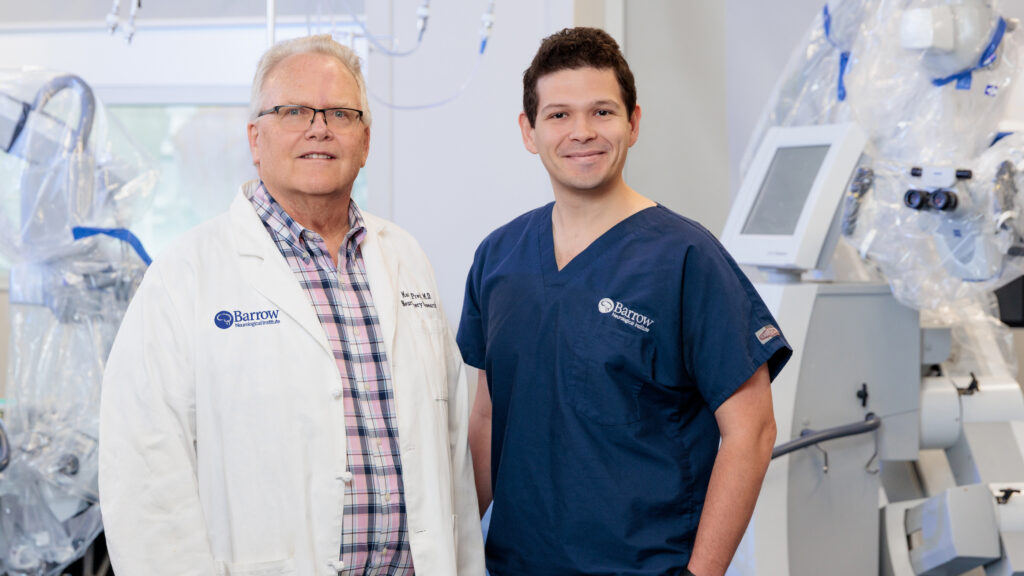
Kivanc Yangi, MD, a postdoctoral research fellow at Barrow Neurological Institute, has been selected by the American Association of Neurological Surgeons (AANS) to receive this year’s prestigious Vesalius Award.
Named after the founder of modern human anatomy, Andreas Vesalius, the award recognizes the highest-scoring abstract and paper submitted by a resident or fellow on the history of neurosurgery. Since its establishment 25 years ago, the Vesalius Award has been given to a Barrow trainee 16 times.
Dr. Yangi’s award-winning project focused on the birth and evolution of the far lateral approach, a widely used surgical technique to access the region where the base of the skull meets the top of the spine.
Dr. Yangi (right) performed this work in The Loyal and Edith Davis Neurosurgical Research Laboratory at Barrow, under the mentorship of Director of Neurosurgery Research Mark Preul, MD (left). The study traces the historical and technical lineage of this transformative neurosurgical corridor, from the surgeons who pioneered the approach to its contemporary refinements, and highlights how anatomical insight has continuously shaped surgical innovation.
Dr. Yangi will present this study at the 2026 AANS Annual Meeting in San Antonio, Texas in May.
AANS Samuel H. Greenblatt Award
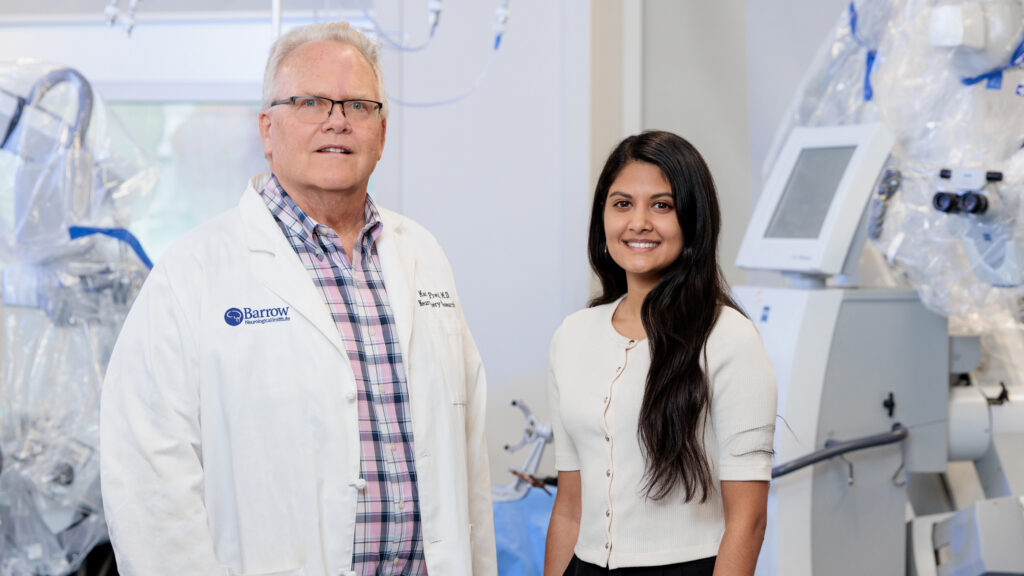
Michell Goyal, a first-year medical student at Creighton University, has been selected by the American Association of Neurological Surgeons (AANS) to receive the inaugural Samuel H. Greenblatt Award.
Named after a neurosurgeon who made significant contributions to the history of medicine and the study of cerebral functional localization, the Samuel H. Greenblatt Award honors the highest-scoring abstract and paper on a historical topic submitted by a medical student.
Michell’s award-winning paper is the culmination of a multi-year project of The Loyal and Edith Davis Neurosurgical Research Laboratory at Barrow Neurological Institute. The project began in the Thomas Edison archives of Rutgers University with a focus on describing the first attempts to acquire an image of the living human brain with X-rays.
Fueled by their fascination with the brain and the desire to understand how it worked, Edison and his assistants experimented with X-rays around the clock for three months in 1896, unknowingly exposing themselves to harmful amounts of radiation. Newspapers, scientific journals, and other organizations sent representatives to Edison’s lab to document the rigorous work. This documentation is housed in various library archives, which were accessed for this project.
“It was the start of what became modern brain imaging, and its story has not been told,” said Mark Preul, MD, director of neurosurgery research at Barrow. “Michell synthesized all of this information, collected images, explored others who were also investigating at the same time as Edison, and turned this into a marvelous paper that brings to life the incredible advances and even circus-like sideshow of these heady months.”
Dr. Preul also credited Teo Dagi, MD, a well-known medical historian, and Paul Israel, PhD, director and curator of the Edison archives at Rutgers and the foremost biographer of Edison, for their contributions to this project.
Michell will present the paper at the AANS Annual Meeting in San Antonio, Texas in May.
“Seven Cavernomas” Textbook Published
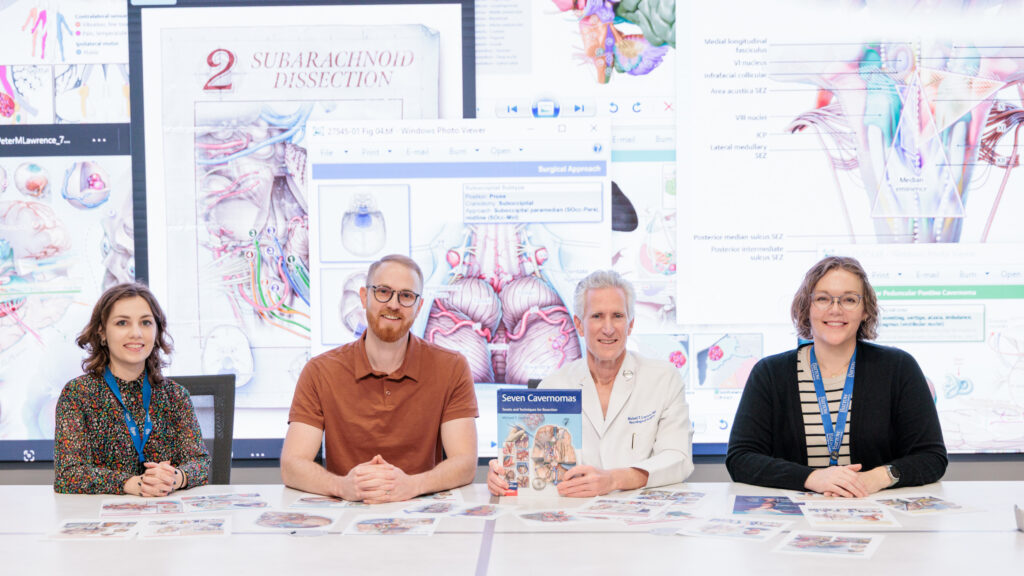
The highly anticipated “Seven Cavernomas” textbook has finally hit the shelves, but Barrow President and CEO Michael T. Lawton, MD, says you might want to keep it on your coffee table.
“Seven Cavernomas” is the fourth textbook in Dr. Lawton’s “Seven Series” and currently holds the No. 1 spot for neurosurgery textbooks on the Amazon Best Sellers list. Like its predecessors, the book is solo authored and provides anatomical and surgical insights from a world-renowned vascular neurosurgeon. However, it has a distinct difference from the original trilogy.
“The other books had intraoperative photos; this one has almost all artwork,” Dr. Lawton said. “I want to shout out my amazing illustrators who created the breathtaking artwork.”
The certified medical illustrators who worked on the book are part of the Barrow Neuroscience Publications department, and they met with Dr. Lawton nearly every week for more than five years to bring his vision to life.
Neuroscience Publications Manager Kristen Larson Keil and Senior Medical Illustrator Peter M. Lawrence developed illustration guides and color palettes, for everything from tissue color to the various taxonomy classifications, to maintain a cohesive look throughout the 452-page tome.
“Dr. Lawton enjoyed being part of the creative process, offering valuable surgical insights about the specific color or textures of anatomical structures,” Peter said.
Senior Medical Modeler/Animator Dani VanBrabant used these color guides to ensure consistency across the 2D and 3D animations but also worked independently with Dr. Lawton and neurosurgery residents on illustrations featuring functional networks of the brain.
Dr. Lawton’s creative approach is apparent in the original trilogy with his use of metaphors: dance choreography for aneurysm clipping, battle plans for resecting arteriovenous malformations, and architectural blueprints for cerebral bypass surgery. He continues this approach with “Seven Cavernomas,” using a central theme of cartography. This allowed the illustrators to imagine different ways to visualize “neurosurgical roadmaps.”
“It was a very collaborative process,” Kristen said. “Dr. Lawton wanted a lot of detail and accuracy, which really shows up in the final images. It was an incredibly rewarding project to work on.”
CommonSpirit Acts of Humankindness
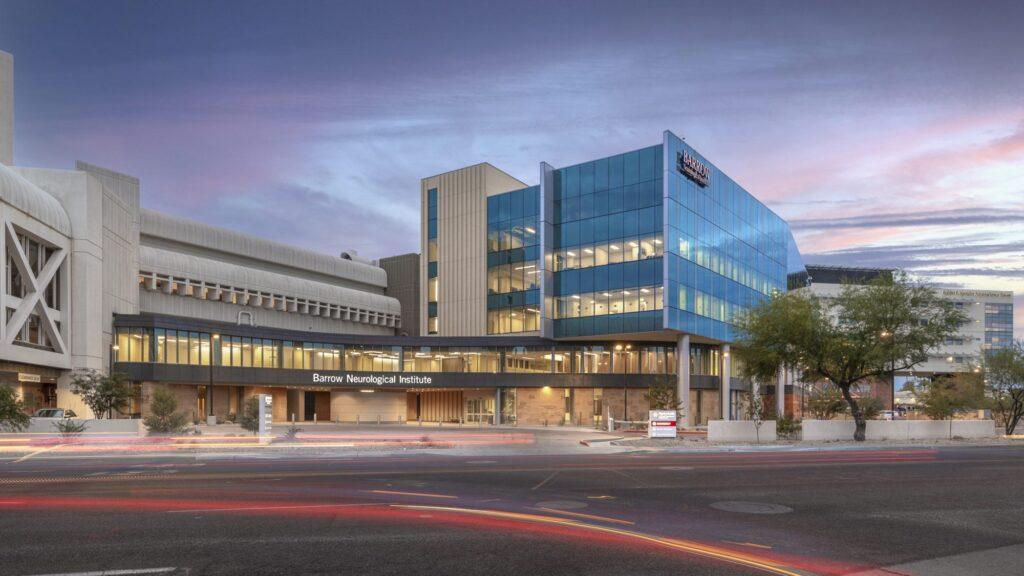
CommonSpirit announced its 2025 Acts of Humankindness Awards, recognizing four Barrow Neurological Institute team members. The award acknowledges CommonSpirit employees who embody the values of the organization: compassion, inclusion, integrity, excellence, and collaboration. The Barrow team members who received this honor are as follows:
- Nathan Calderon, Program Manager, Muhammad Ali Parkinson Center (Category: Collaboration)
- Geetika Chahal, Clinical Research Program Manager (Category: Compassion)
- George Karway, Postdoctoral Research Fellow, Barrow Neuro Analytics Center (Category: Integrity)
- Maria Vela, Medical Assistant Lead, Barrow Physical Medicine and Neuro-Rehabilitation (Category: Collaboration)
PHOENIX Top Docs
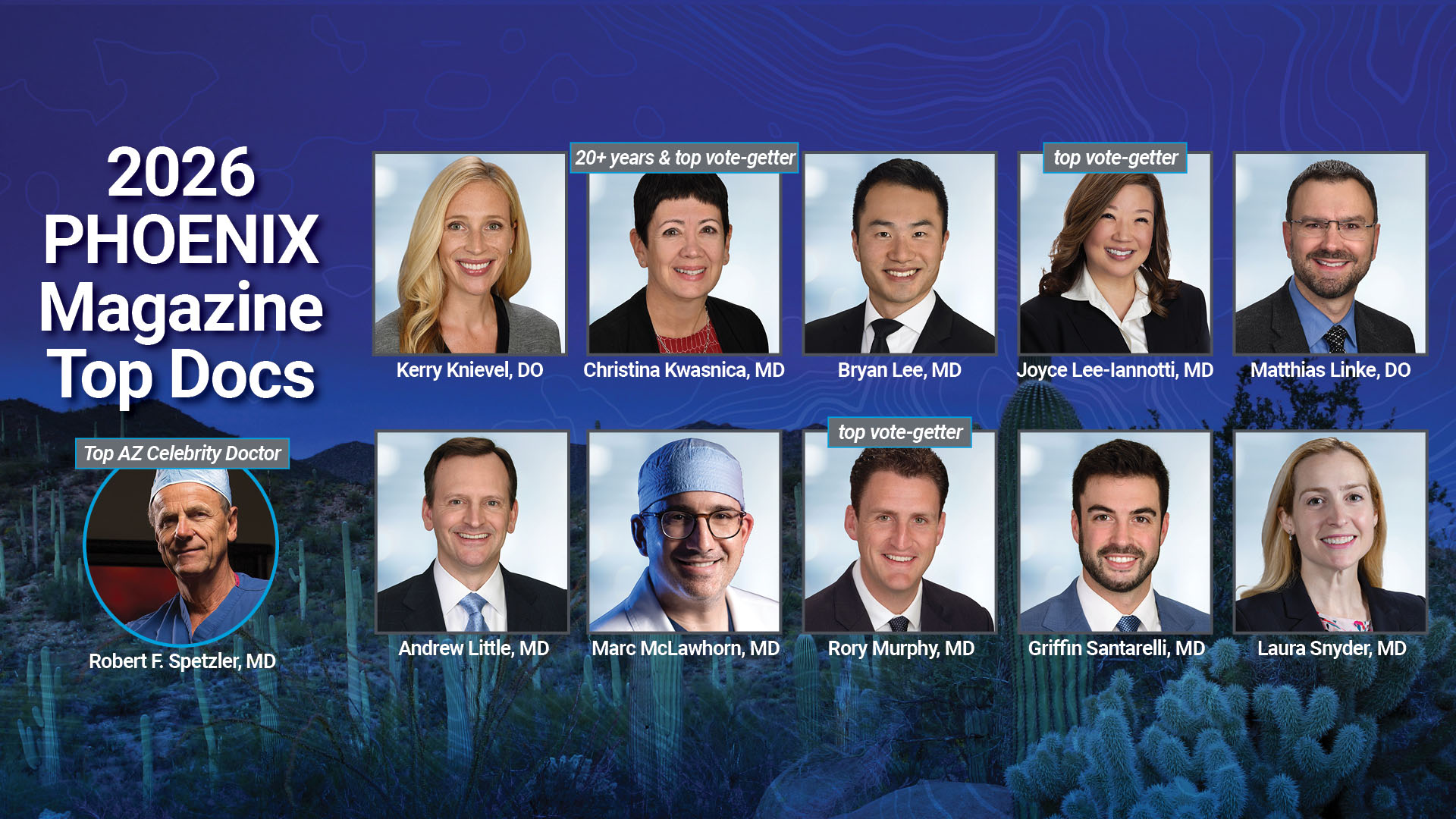
The following physicians at Barrow Neurological Institute among PHOENIX magazine’s 2026 Top Docs:
- Kerry Knievel, DO – Neurology
- Christina Kwasnica, MD – Physical Medicine & Rehabilitation
- Bryan Lee, MD – Neurosurgery
- Joyce Lee-Iannotti, MD – Sleep Medicine
- Matthias Linke, DO – Physical Medicine & Rehabilitation
- Andrew Little, MD – Neurosurgery
- Marc McLawhorn, MD – Anesthesiology
- Rory Murphy, MD – Neurosurgery
- Griffin Santarelli, MD – Otolaryngology
- Laura Snyder, MD – Neurosurgery
Each year, the magazine invites all physicians in the Phoenix metropolitan area to nominate their peers across dozens of specialties.
Dr. Kwasnica, a Top Doc of more than 20 years, made the 2026 list in PM&R for both pediatrics and adults. In the pediatric PM&R category, she earned more votes than any other doctor. Drs. Murphy and Lee-Iannotti were also top vote-getters in their categories, and Drs. Knievel and Santarelli were selected by the magazine for Q&A features.
Additionally, PHOENIX magazine polled its Instagram audience to determine Arizona’s most famous celebrity doctor of all time. Of the four contenders, Barrow Emeritus Chair of Neurosurgery Robert F. Spetzler, MD, was declared the winner with 54% of the vote.
Finally, the magazine gave a special shoutout to Terry Fife, MD, in its “in absentia” section. Dr. Fife, who established the Neuro-Otology Program at Barrow, recently retired after more than 30 years on our faculty. He was named a PHOENIX Top Doc in 1996, 1998, 2002, 2004, 2015, and 2016.