
Epilepsy and Clinical Neurophysiology Fellowships
Fellowship Highlights
- Flexible training options: One- and two-year fellowship tracks are available, with a preference for two years of training.
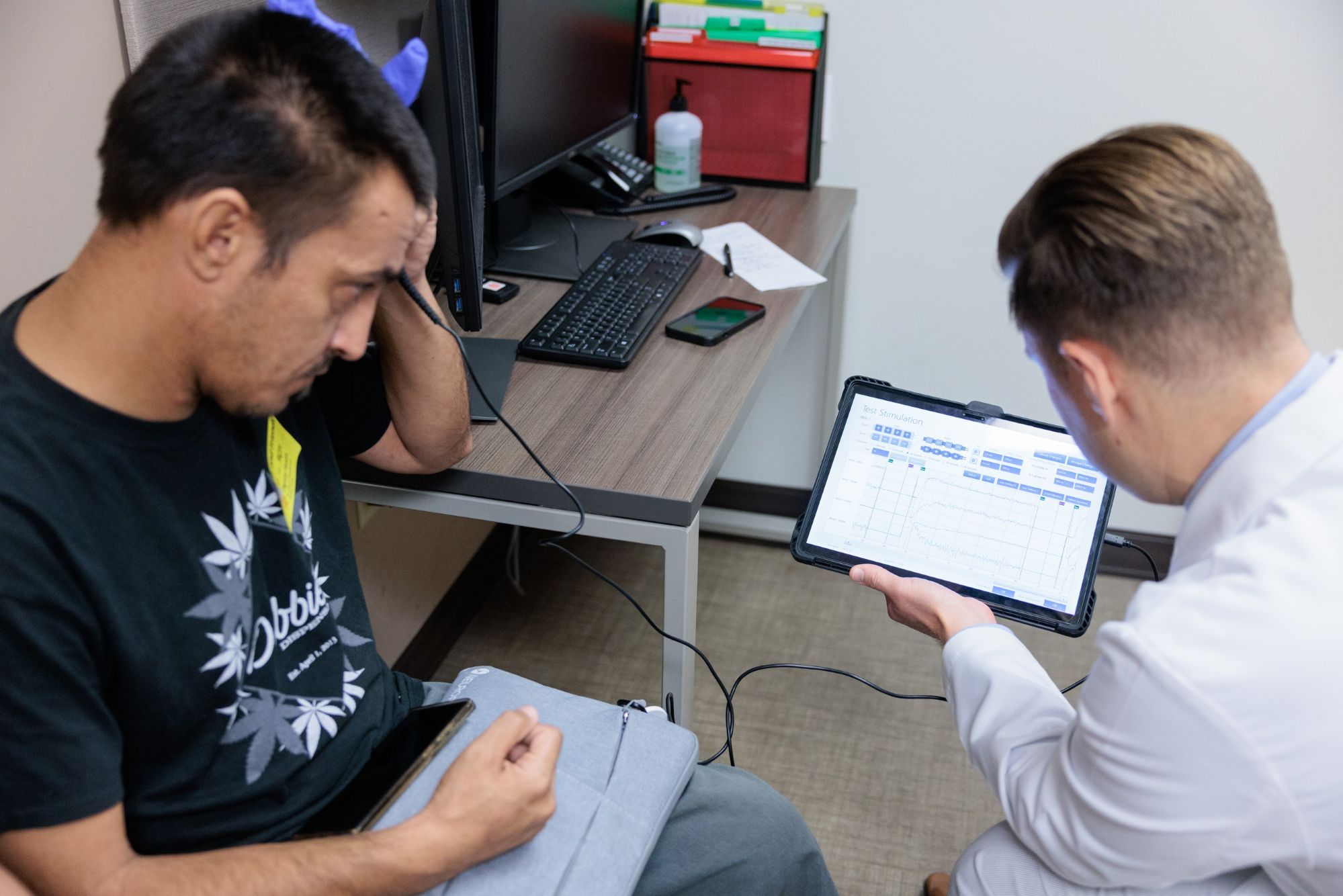
- Comprehensive clinical experience: Fellows gain exposure to a broad range of epilepsy and clinical neurophysiology services, including magnetoencephalography (MEG), high-density EEG, stereo-EEG, intraoperative monitoring, and specialized clinics focused on neuromodulation, pregnancy, and genetics.
- Specialized faculty expertise: Fellows train alongside physicians with extensive experience in epilepsy diagnosis, treatment, and clinical neurophysiology.
- Research opportunities: Fellows have opportunities to participate in clinical trials and investigator-initiated research projects.
- Multidisciplinary care: Our NAEC Level 4 comprehensive epilepsy center brings together 10 epileptologists, two epilepsy surgeons, one advanced practice provider, five fellows, one psychologist, one neuropsychologist, one social worker, four medical assistants, four research coordinators, and three nurses.
- High-volume surgical experience: Fellows benefit from a high-volume epilepsy surgery program and close collaboration with epilepsy surgeons and other multidisciplinary specialists.

- Diverse patient population: Fellows care for patients from a wide range of backgrounds, with opportunities for outreach to Latin American and Native American communities.
- Comprehensive educational curriculum: Regular didactic sessions, multidisciplinary epilepsy surgery conferences, and dedicated research time complement clinical training.
- Faculty mentorship: Fellows receive individualized guidance and mentorship from experienced, nationally recognized faculty members.
rare headache subtypes
About Our Fellowships
Barrow Neurological Institute is a National Association of Epilepsy Centers Level 4 Comprehensive Epilepsy Center and one the busiest epilepsy centers in the Southwest. Its multidisciplinary team comprises:
| Professional | Number |
|---|---|
| Faculty | 11 |
| Neurosurgeons | 2 |
| Advanced Practice Providers | 1 |
| Nurses | 3 |
| Social Workers | 1 |
| Coordinators | 4 |
| Medical Assistants | 4 |
| Psychologists | 1 |
| Neuropsychologists | 1 |
| EEG Technologists | 34+ |
We offer one- and two-year fellowship programs, although two years is preferred. Our fellowship is electroencephalogram (EEG) focused and we do not offer a 50-50 EEG-electromyography (EMG) split in our fellowship programs.
The goal of our program is for trainees to develop expertise in the following areas:
- Diagnosis and treatment of primary central nervous system seizure disorders and all forms of epilepsy
- Assessment and management of all aspects of seizure and epilepsy care
- Reading routine and continuous EEGs, evoked potentials, intraoperative monitoring studies, and intracranial EEG
- Presurgical workup and intracranial EEG monitoring of patients with epilepsy
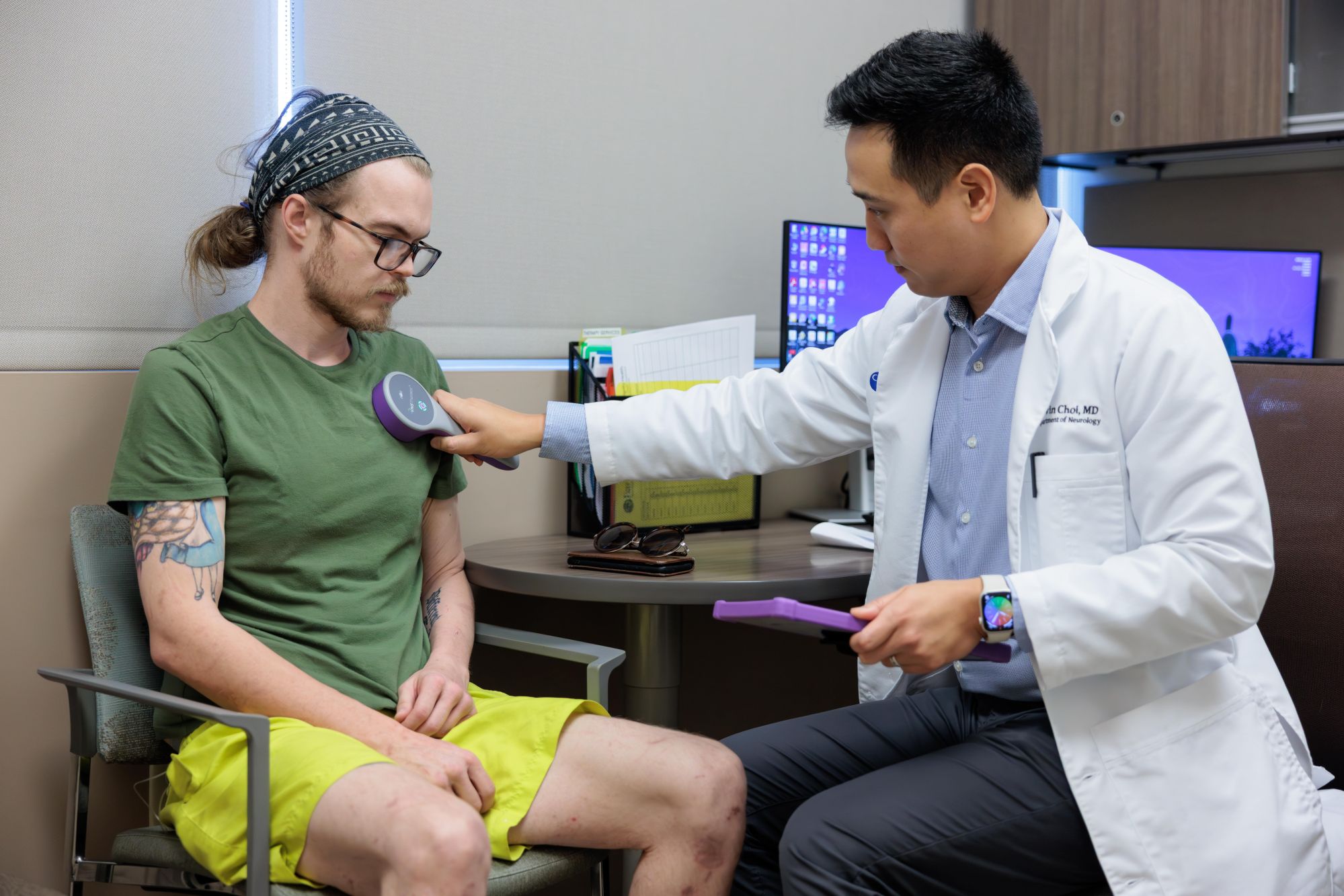
- Outpatient clinical care of patients with epilepsy, including management of seizures with antiseizure medications (AEDs), vagus nerve stimulator (VNS), responsive neurostimulation system (RNS), deep brain stimulation (DBS), and modified ketogenic diet
- Techniques of clinical research
Our ACGME-accredited training fellowship programs include:
- Clinical training in the outpatient epilepsy clinic
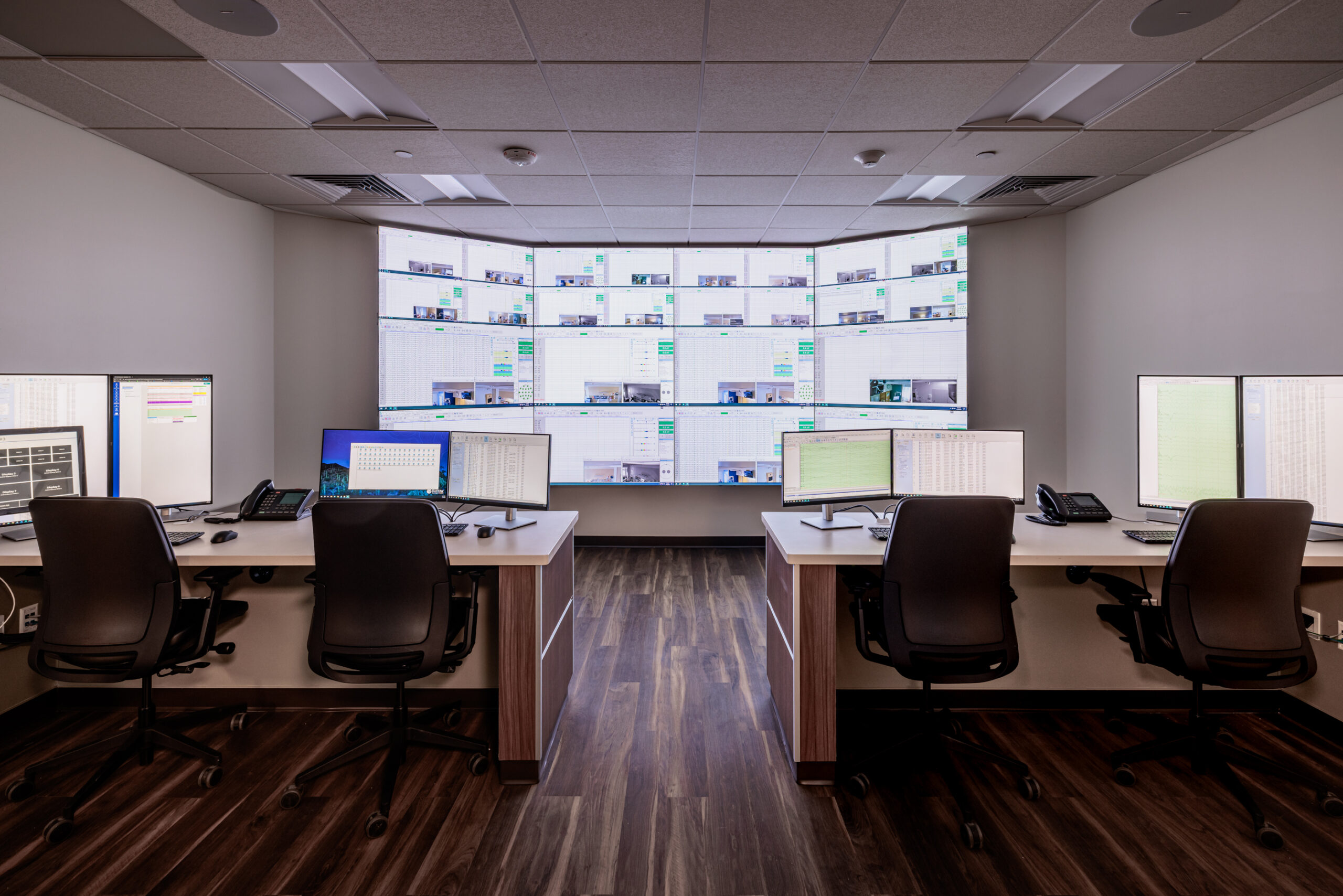
- Primary care for patients in the 16-bed Epilepsy Monitoring Unit
- Long-term EEG monitoring of ICU and critical patients
- Reading outpatient and inpatient evoked potential studies
- Clinical research
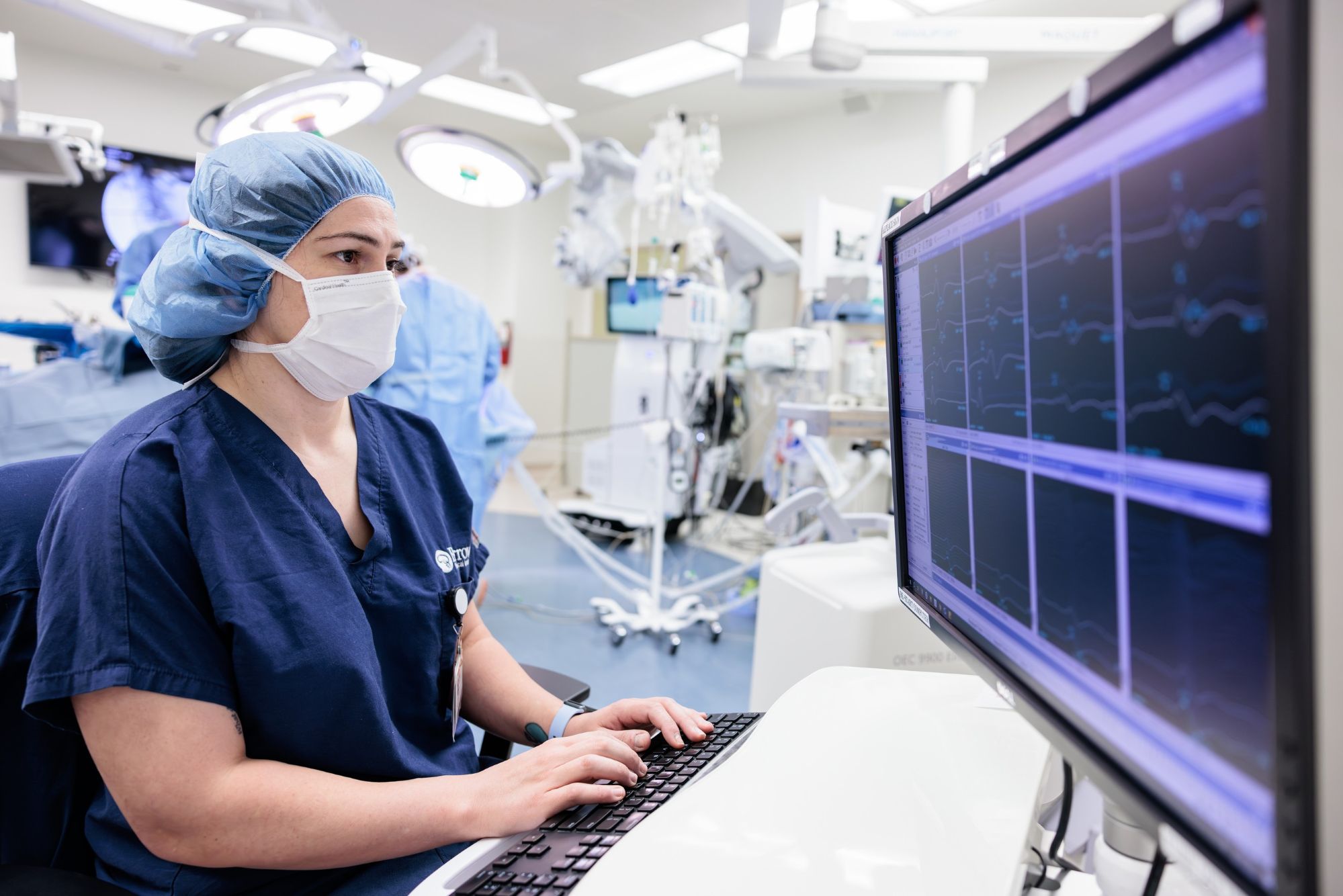
- Elective experience in intraoperative monitoring (IOM) or electromyography (EMG).
Fellows will expand their clinical expertise through rotations in magnetoencephalography (MEG) and HD EEG, neuromodulation, genetics, and epilepsy pregnancy clinics.
Upon completion of the two-year training, candidates will be eligible to sit for both clinical neurophysiology and epilepsy board examinations. Graduates are well-equipped to practice in academic institutions of various sizes across the country, private healthcare systems, and outpatient private practices.
Tracks and Sample Schedules
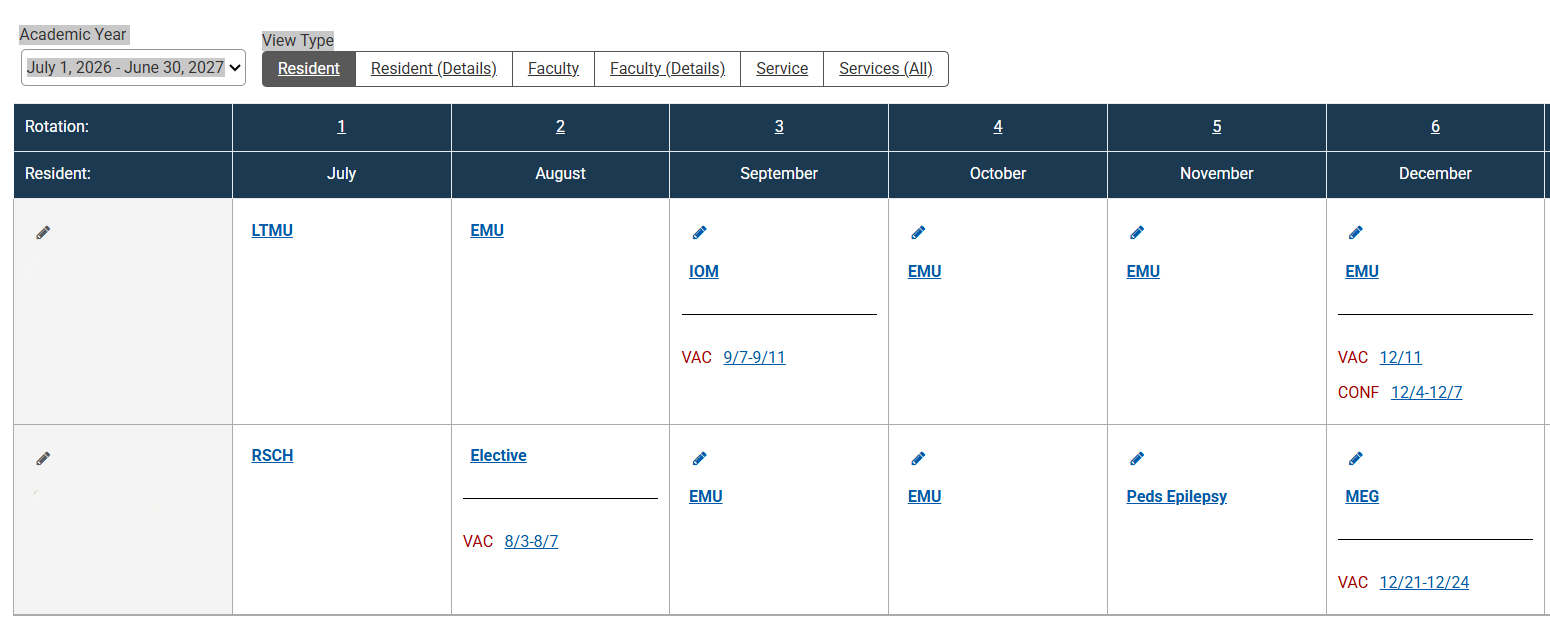
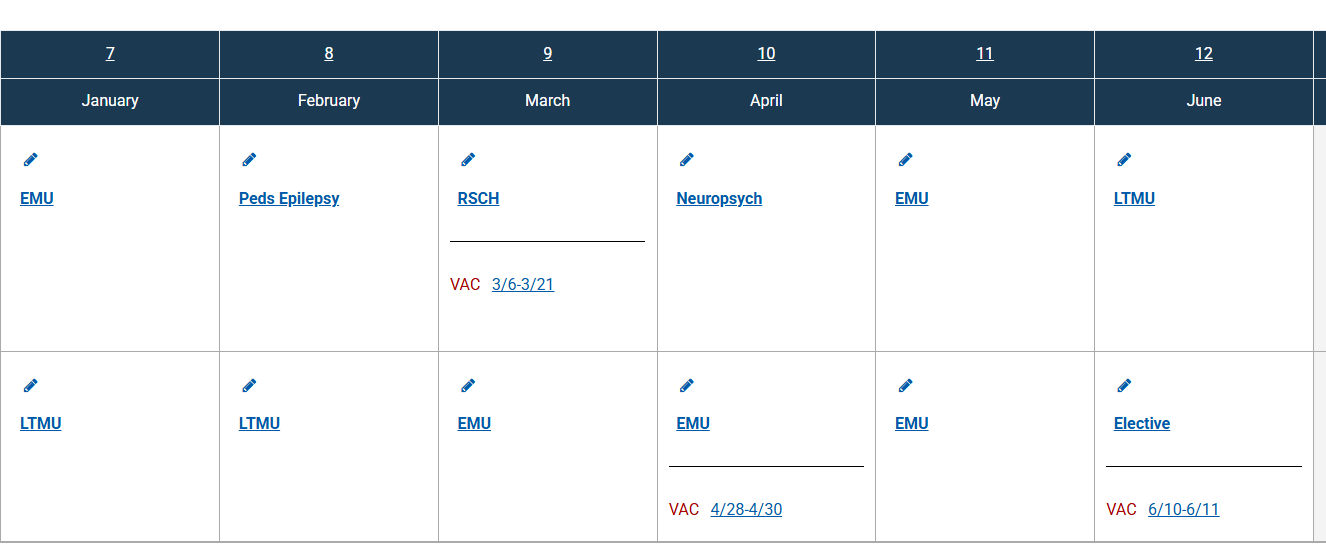
Our Epilepsy and Clinical Neurophysiology (CNP) Fellowship Program features an EEG-focused curriculum. Please note that we do not offer a 50-50 EEG-EMG split in our training schedule. First year and second year fellows complete a half-day continuity clinic each week.
A visual illustration of the standard fellow track schedule is provided below.

Educational Conferences
Our fellowships pair high-volume, diverse clinical training with a robust, year-round didactic and conference schedule.
Fellow Conference (Monday, Wednesday, Friday)
Weekly multispecialty (epilepsy, clinical neurophysiology, neuromuscular, sleep, psychiatry, neurosurgery, wellness) didactic sessions presented by faculty as well as integrated, fellow-led in-service examination review course.
SEEG Case Conference
Weekly case discussion led by fellows and attending on interactive invasive EEG (predominantly stereoEEG) from the initiation of noninvasive, presurgical surgical work-up to postsurgical outcomes.
Multidisciplinary Adult Epilepsy Surgery Conference (Thursday)
Weekly conference presenting potential adult epilepsy surgery candidates to a multidisciplinary group of epileptologists, neurosurgeons, neuroradiologists, neuropsychologists, biomedical engineers, and physicists.
Research Conference (Monthly)
This monthly conference is led by attending faculty for the benefit of faculty and fellows. Clinical researchers share ongoing or new clinical research projects and present opportunities for fellows to get involved with their projects.
Fellow-Led Conferences and Presentations
Wiley Chapter Review (Monthly)
Fellows select and present chapter topics during this interactive monthly session. An assigned faculty member supports each discussion with expert commentary, clinical context, and mentorship.
Antiseizure Medication Conference (Monthly)
Each fellow-led session provides an in-depth review of one antiseizure medication, along with discussion of key topics in clinical epilepsy and surgical treatments.
Journal Club
Fellows typically present one or two selected journal articles for discussion with participating faculty and fellows.
Research or Quality Improvement Project
Fellows present an independent research or quality improvement (QI) project as a requirement for program completion.
Grand Rounds (Annually)
Fellows are typically expected to deliver one Grand Rounds presentation per year during their first and second years of fellowship.

Research Opportunities
Fellows in both the one- and two-year tracks have opportunities to participate in basic and clinical epilepsy research through the Department of Neurology. Research opportunities include clinical trials and investigator-initiated studies, supported by dedicated research time and faculty mentorship.
Learn more about current projects and ongoing faculty investigations below.
Enrolling Studies
EpiNet SUDEP
Principal Investigator: Harris
This case-control survey study investigates sudden unexpected death in epilepsy (SUDEP). Researchers interview the next of kin or another informant within two years of the individual’s death to gather information for the study.
RISE2
Principal Investigator: Schusse
This Phase 2/3, multicenter, randomized, double-blind, placebo-controlled study evaluates the efficacy, safety, and tolerability of BHV-7000, an investigational medication, in patients with refractory focal-onset epilepsy. Study visits occur on day one and at weeks 2, 4, 8, and 12, with an optional two-week safety follow-up.
Accelerated Resolution Therapy for PNES
Principal Investigator: Lehnhoff
This randomized controlled trial evaluates accelerated resolution therapy (ART) for patients with psychogenic nonepileptic seizures (PNES). Participants in the intervention group receive one ART session, while those in the control group receive standard care. All participants complete telephone follow-up surveys at one, three, and six months.
Epilepsy Localization and Network Mapping
Principal Investigator: Foldes
This study combines retrospective chart review with prospective enrollment of patients scheduled for high-density EEG (HDEEG) and magnetoencephalography (MEG) as part of standard clinical care. Prospectively enrolled participants agree to share their medical records for research. Investigators apply advanced signal processing and image analysis methods to EEG, MEG, and MRI data to evaluate whether these approaches can help localize epileptic foci.
LERA
Principal Investigator: Herman
This prospective observational study examines whether early seizures and periodic discharges following acute brain injury are associated with the later development of epilepsy. Participation includes one high-density EEG assessment and telephone surveys at 6 and 12 months.
Active Studies
EMU SUDEP
Principal Investigator: Schusse
This retrospective case-control study collects data from patients at comprehensive epilepsy centers whose seizures were recorded on video-EEG. The study’s sample size depends on the number of sudden unexpected death in epilepsy (SUDEP) cases identified within this patient population at each participating center.
NORSE
Principal Investigator: Herman
This study collects specimens and data donated by patients diagnosed with new-onset refractory status epilepticus (NORSE) to support research into the condition.
Studies in Startup
COMBAT NORSE
Principal Investigator: Herman
This randomized study compares the effects of anakinra and tocilizumab on outcomes in patients with new-onset refractory status epilepticus (NORSE). The study also includes an observational cohort for patients who are not randomized within the required time frame. Assessments occur during hospitalization, at six months and one year, and annually thereafter for up to 3 years.
FOCUS 2
Principal Investigator: Herman
This Phase 3, randomized, double-blind, placebo-controlled study evaluates the efficacy and safety of an investigational medication in adults with focal seizures. Participation lasts approximately 30 weeks, with the option to transition to a long-term safety study.
EPIDIOLEX
Principal Investigator: Herman
This Phase 3, multicenter, randomized, double-blind, placebo-controlled study evaluates the safety and efficacy of cannabidiol oral solution in participants aged one year and older with developmental and epileptic encephalopathy (DEE). The study includes a 10-week double-blind phase followed by a 28-week open-label extension.
Neurosurgical Epilepsy Studies (Andrew Yang, MD)
- Epilepsy electrophysiology with SEEG, DBS, RNS recordings
- Human neurophysiology of cognition & emotions with SEEG recordings
- ADAPT-LGS: Sleep-Driven Adaptive Neuromodulation in Lennox-Gastaut Syndrome (NIH UH3NS145998)
- Neuronal mechanisms of learning and utilizing abstract representations (R61DC022835)
- Multimodal epileptogenic substrate identification
Surgical and Procedure Volumes
| Operation or Procedure | Calendar year 2025 | Calendar year 2026* |
|---|---|---|
| VNS Placement | 23 | 16 |
| DBS Placement | 23 | 15 |
| RNS Placement | 22 | 9 |
| sEEG | 44 | 24 |
| Resections | 14 | 10 |
| HD EEG | 14 | 4 |
| MEG | 72 | 62 |
| EMU (Including Boarders) | 766 | 326 |
| Study Type | Calendar year 2025 | Calendar Year 2026* |
|---|---|---|
| Routine EEG (Inpatient & Outpatient; 20-23 Minutes) | 361 | 229 |
| Ambulatory | 309 | 241 |
| Evoked Potentials | 91 | 104 |
| LTMU | 1,758 | 1,795 |
| EMU | 765 | 322 |

Eligibility
- A current valid and unrestricted license to practice medicine in the United States or Canada or its territories
- Graduate status from a ACGME-accredited residency program
- Board certified, or eligible for certification, in a primary ABMS or RCPSC specialty (as specified by the Subspecialty)
- Completion of USMLE steps I, II, and III
Foreign medical graduates with equivalent qualifications are also eligible to apply provided the following criteria are met:
- Graduate status from an ACGME accredited residency program
- Completion of all three of the USMLE examinations
- Completion of a CSA exam
- ECFMG certificate (if applicable) – Foreign applicants must have ECFMG certification. We only accept J1 Visa; we do not sponsor H1 visa
How to Apply
Application process for all applicants applying to the Barrow Epilepsy and Clinical Neurophysiology Fellowship Program:
- Apply through NRMP/ERAS: https://www.nrmp.org/
The following documents are required of all applicants
Required documents obtained through ERAS:
- Curriculum vitae
- Personal statement
- Three letters of recommendation, may include PD letter (waived rights to view/must be sent by letter writer or program coordinator)
- Medical school transcript
- USMLE/COMLEX results
Additional documents that will be requested:
- Barrow Application (application will be forwarded to you after you apply through ERAS)
- Medical school diploma
- Letter of good standing
- ECFMG certificate (if applicable)
- Prelim Certificate of Completion (if applicable)
Please do not hesitate to contact our program directly with any questions that you might have at [email protected].
Program Director
Ritika Suri, MD
Director, Clinical Neurophysiology and Epilepsy Fellowship
Assistant Professor of Neurology
Program Coordinator
Felisha Tso
GME Program Coordinator
Barrow Neurological Institute
350 West Thomas Road
Phoenix, Arizona 85013
[email protected]
Epilepsy and Clinical Neurophysiology Faculty


Current Fellows


Virtual Campus Tour